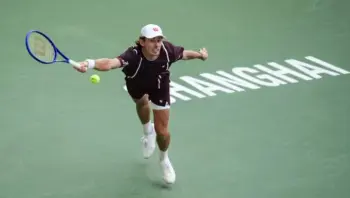
One may be forgiven for looking at certain reshuffles in coaching set-ups in recent weeks and thinking that perhaps high-profile tennis players are engaging in some manner of reciprocal straight-swap deals.
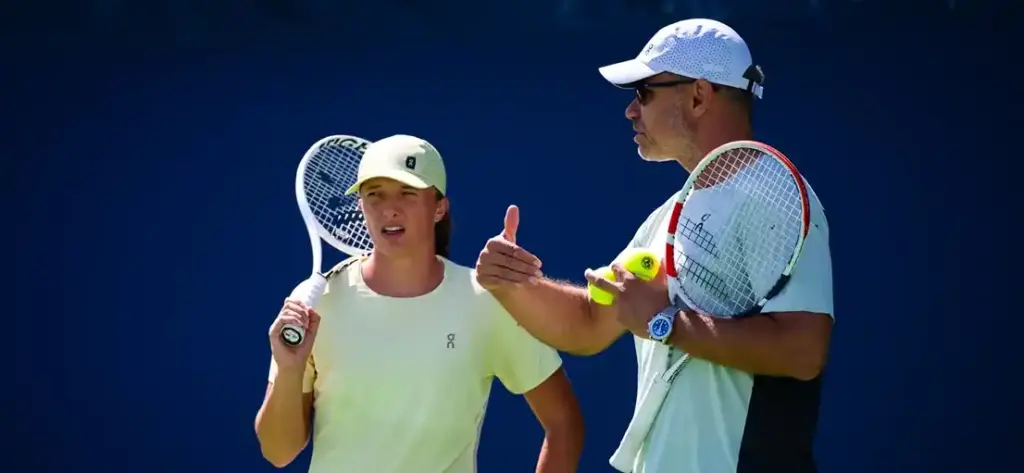
Case in point. As recently as a year ago, former world No 1s Iga Swiatek and Naomi Osaka employed coaches Tomasz Wiktorowski and Wim Fissette to head up their respective teams.
Twelve months later, via Osaka’s ten-month detour with Frenchman Patrick Mouratoglou, the pair have effectively swapped. After parting ways with Wiktorowski in October last season, following a phenomenally successful three-year spell, Swiatek turned to Fissette to help steer her career through the next phase of its evolution.
The Belgian had only recently been made available, having had his own partnership with Osaka terminated a month prior. That put an end to a long-standing relationship between the two, who had worked together since 2019 with a hiatus midway through.
The nature of their reunion in late 2023 exposed the cut-throat, often brutal reality of coaching partnerships, as well as casting a foreshadowing irony over how this cycle perpetuates itself.
Fissette’s arrival back into Osaka’s team in September 2023 was already shrouded in acrimony, with the Belgian allegedly and unexpectedly having broken his contract with rising Chinese star Zheng Qinwen in order to reunite with his former charge – something that Zheng publicly revealed she was upset by.
A happy chapter followed for the Chinese, who herself reunited with a former coach in the form of Pere Riba, the Spaniard having departed Coco Gauff’s team soon after helping guide her to a maiden Grand Slam title in New York, alongside Brad Gilbert.
If this rapidly expanding web of names and collaborations are beginning to confuse and irritate, then the point here is being proved.
Fissette’s return to the Osaka camp was a much less productive venture than had been hoped. As the four-time Grand Slam champion struggled to rediscover the form of her glory days following her return to tour after giving birth, the fate of Fissette’s tenure quickly seemed inevitable.
And so it was. A little over a year later, in November 2024, the Belgian was let go by Osaka, who turned to Mouratoglou for a mixed ten months before landing on her current trial with Wiktorowski.
The net result of this chain of, frankly, rather tedious events is that Osaka and Swiatek have simply swapped coaches.
The changing dynamics of modern-day approaches to coaching
This largely pours cold water on any notion that there is a unique component to player-coach relationship, that a certain magic is created when two combine to create something more than the sums of their individual parts, or that some coaches are better suited to particular players, based on game style, personality and working habits.
Instead, it highlights yet another aspect of a deeply competitive, results-based industry that leaves little remaining room for more long-term projects.
True, long-standing coaching partnerships are thankfully still present within the sport. Indeed, the three greatest men’s players of all time each sustained years-long collaborations that defined their record-breaking careers.
But the trend is now moving in the opposite direction. As the sun sets ever lower on the era of the ‘Big Three’ and what defined it, a new generation living in a world more fast-paced and attention-starved than ever before is taking a rather different perspective.
Osaka and Swiatek are very different players, both technically and personally. Yet, they each see the capacity to improve under the tutelage of the long-term coach of the other.
One only has to look at Emma Raducanu’s approach here, for example, to understand that a new philosophy regarding coaches and the role they play is beginning to develop.
What about the ATP tour?
On the ATP, things are following a similar trajectory. Stefanos Tsitsipas’ ill-fated stint with Goran Ivanisovic has led him full-circle back to his father, despite a public criticism last summer that appeared near impossible to come back from.
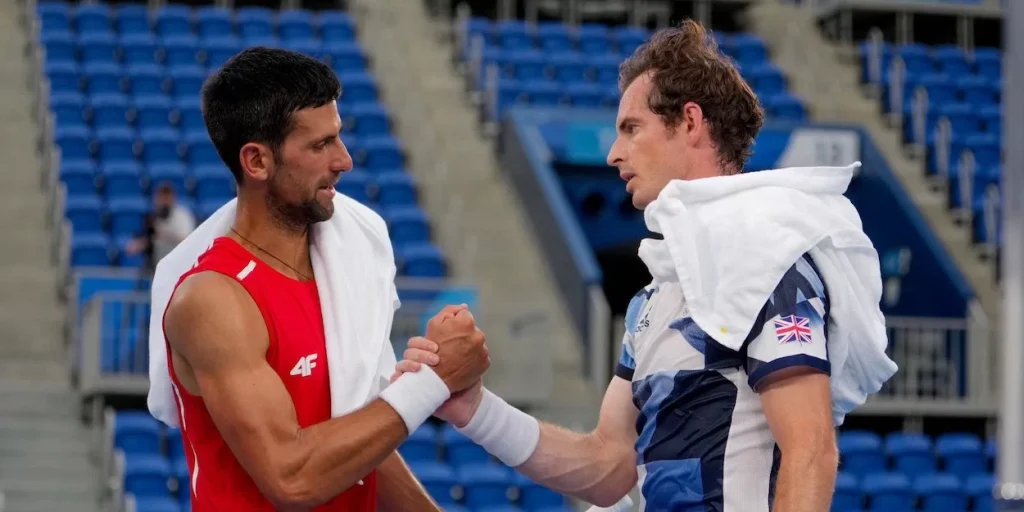
Then there is the bizarre appointment of lifelong rival Andy Murray to Novak Djokovic’s coaching team across the start of this season. A move which, again, lasted only six months despite all the furore it had initially generated.
Chopping and changing between coaches is beginning to feel more akin to experimenting with racquet-string tensions than it does to building a long-lasting team.
Fortunately for coaches, there will now always be as many players looking for a new direction as there are coaching contracts being terminated.
Thus, the eco-system maintains itself, as the unrelenting tennis coaching carousel continues to spin at an ever-greater pace.