
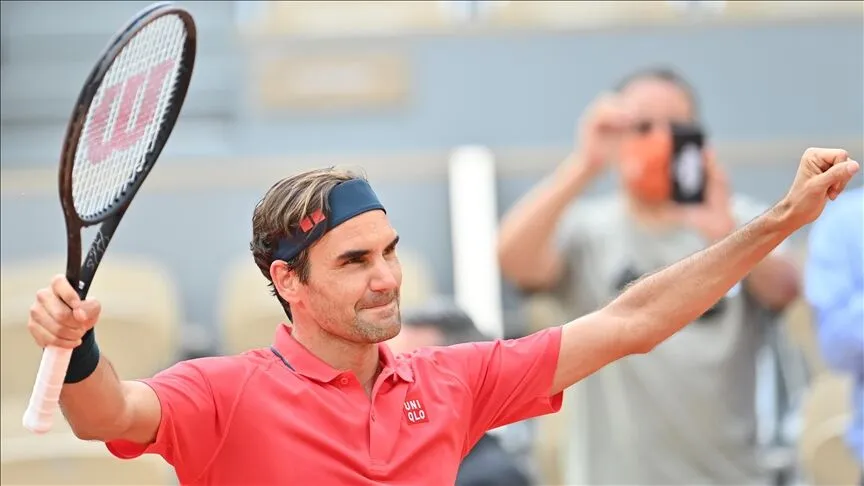
Tennis has always had a cruel relationship with age. The moment a player’s legs slow down even slightly, the questions start. But every so often a player comes along who simply refuses to read the script, and keeps competing, and winning, well past the point where most careers have quietly ended.
If you follow live sports odds on the men’s and women’s tours, you will have noticed that oddsmakers rarely write off these players completely, even deep into their 40s. The reason is simple: history keeps proving that doing so is a mistake.
With that in mind, let’s talk about the players who made a habit of shining long after most of their rivals had hung up their racquets.
Jimmy Connors
No list like this can start anywhere else. Connors reached the US Open semifinals in 1991 at 39 years old, a run that is still talked about as one of the great fairytale performances in tennis history, and he continued competing on tour into his 43rd year.
What made Connors special was not just his age but his refusal to change his game to suit it. He played with the same snarl and same flat, punishing groundstrokes at 39 that he had at 19, and crowds loved him for it.
Roger Federer
Federer built his game on effortless movement and a serve-forehand combination that never seemed to age, and that economy of motion turned out to be the secret to lasting longer than almost anyone thought possible.
On 15 September 2022, he announced his impending retirement from the ATP Tour, confirming that the Laver Cup in London would be his final event. His farewell came at 41, a three-set doubles loss alongside long-time rival and friend Rafael Nadal against Jack Sock and Frances Tiafoe, the 1,750th match of his career.
Ivo Karlovic
At nearly 6-foot-11, Karlovic built a career around one of the biggest serves the sport has ever seen, and that serve barely lost a mile per hour as he aged. He was still competing on the ATP Tour in his 40s, picking up wins over players two decades younger, and he only retired from professional tennis in 2021 at 42. Few players have ever proven so clearly that a single elite skill can keep a career alive well beyond its expected shelf life.
Kimiko Date-Krumm
Date-Krumm retired from tennis in 1996, made an improbable comeback in 2008, and kept playing competitively into her late 40s. She reached a WTA final at 40 and continued playing tour-level matches until she was 46, an achievement that still stands as one of the most remarkable second acts in the sport. Her comeback reshaped what people believed was physically possible for a professional tennis player past 40.
Feliciano López
López was a fixture on the ATP Tour for over two decades, and he kept his classic one-handed backhand and serve-and-volley instincts sharp well into his 40s. He made his final Grand Slam appearance at Wimbledon in 2022, aged 40, while a year later, he played his final tournament (Mallorca Championships), reaching the quarterfinal stage.
Venus Williams
Few comebacks in recent memory have captured attention quite like Venus Williams’ return to the tour. At 45, she beat world No. 35 Peyton Stearns in Washington, D.C. for her first singles win in nearly two years, then went on a run to the doubles quarterfinals at the US Open alongside Leylah Fernandez.
She followed that up with a wildcard appearance at the 2026 Australian Open, becoming the oldest woman to compete in the tournament’s main draw.
Honorable Mention: Novak Djokovic
And then there is Djokovic, who at 39 is doing something that still feels almost unbelievable given the modern game’s physical demands. His run at Wimbledon 2026 has been a perfect example of just how far pure competitive will can carry a player deep into his 40s. Djokovic is approaching that milestone birthday, but he remains in elite physical shape, and few would bet against him finding another gear when it matters most.
In the Djokovic vs Auger-Aliassime preview, we called it for Djokovic in five sets, but even we did not expect him to have to fight for every single point across five hours and 15 minutes on Centre Court, the longest quarterfinal in Wimbledon history.
Judging by how he is moving and competing right now, there is little reason to think Djokovic is done shining in his 40s just yet.







Venus Williams shouldn’t be on this list, all the others played and actually won matches, they didn’t just turn and lose which is what Williams is doing these days. She hasn’t been relevant in what seems like 20 years and I can’t understand why tournaments keep giving her wild cards when there are other up and coming younger players who are more deserving. Venus Williams has had her time in the sun, she’s not playing often enough and winning matches when she does play and she definitely will not be getting any better. Time to hang it up.