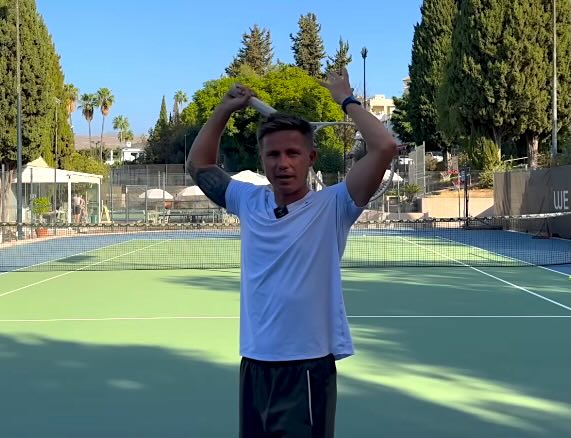
On our second YouTube channel, Tennisnerd2, (please subscribe), we create coaching videos featuring coach Adri. Such as this Kick Serve Masterclass.
Coach Adri is short for Karl Adrian Ringdal, the current coach of ATP pro Roman Safiullin. You can check out coach Adri’s other videos on this page.
If you’ve spent any time tinkering with your serve (and let’s be honest—which tennis nerd hasn’t?), you already know the kick serve can be an absolute game-changer. It’s that trusty second serve you can swing at without feeling like you’re handing your opponent a short ball to feast on. And when you get it right? It jumps, spins, annoys your hitting partners, and generally makes you feel like you know what you’re doing out there.
In a recent video with coach Adri, he unpacks the mechanics of the kick serve and why it’s such an essential tool for players at every level. Let’s break it down. Or watch the video below.
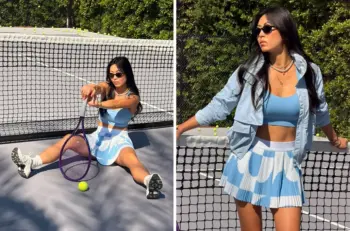
Ps. Adri is using the racquets and clothes from Nordicdots. Get 15% off using the code Tennisnerd. Ds.
What Makes the Kick Serve Special?
Unlike the flat or slice serve, the kick serve is all about topspin and shape. You’re not trying to blast through the court, you’re trying to create a ball that climbs up off the bounce and drags your opponent into awkward positions.
Adri emphasizes that the grip is what unlocks this serve. Most players use a continental grip, but shifting slightly toward an “eastern backhand” feel often makes it easier to roll up the back of the ball. It’s the spin that gives you margin, safety, and that signature kick up and away.
Think of it as a serve you can trust, even on pressure points.
Grip & Toss
A good kick serve starts long before the racket meets the ball.
- Grip: Start with continental. Rotate slightly toward backhand if you want more bite. The goal is to expose the edge of the racket to the ball so it can brush upward.
- Toss: This is where most club players struggle. Your toss should land somewhere between your left shoulder and your left ear (for right-handers). Too far to the right and you’ll end up hitting a weak slicey hybrid that does nothing. Too far back and you’ll fall off balance.
A higher toss helps you create that upward swing path, giving the ball room to drop into your strike zone.
The Contact Point
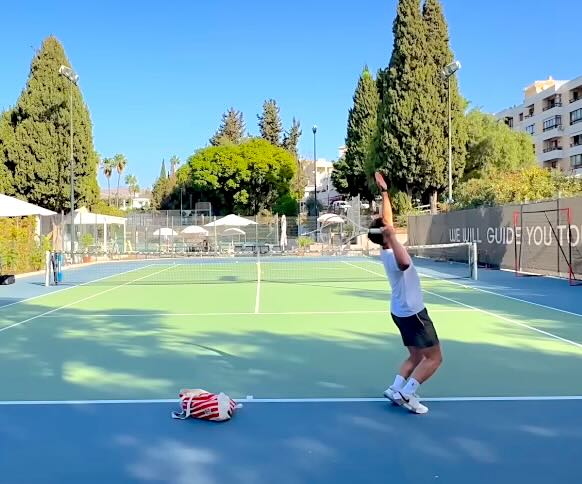
Flat serves are struck at the apex of the toss. The kick serve? Not so much.
Ringdal explains that letting the ball drop slightly before contact gives you the ability to swing up and through the ball. This is what generates that reliable arc over the net. You’re brushing, not smacking. Think of coming from 7 o’clock to 1 o’clock on the ball.
And yes, you’ll want to repeat this motion a lot before it feels natural.
Body Positioning
Your stance heavily influences the spin you create. Players who rely on raw pace can disguise serves by keeping their stance narrow and stable. But if you’re a spin-first server (which many of us mortals are), a wider base can help you access more angles around the ball.
It all comes down to personal style. Your body type, flexibility, and serving philosophy determine the stance that’s going to work for you. The key is experimenting and figuring out how to extract maximum spin without sacrificing balance.
Practice
As with most things in tennis, there’s no cheat code here. Shadow swings are your best friend. Groove that upward motion without the ball, feel the racket path, and build the confidence to swing aggressively once you incorporate the toss.
Once the motion becomes second nature, start hitting slow kick serves with intention. Accuracy first. Speed later.
Final Thoughts
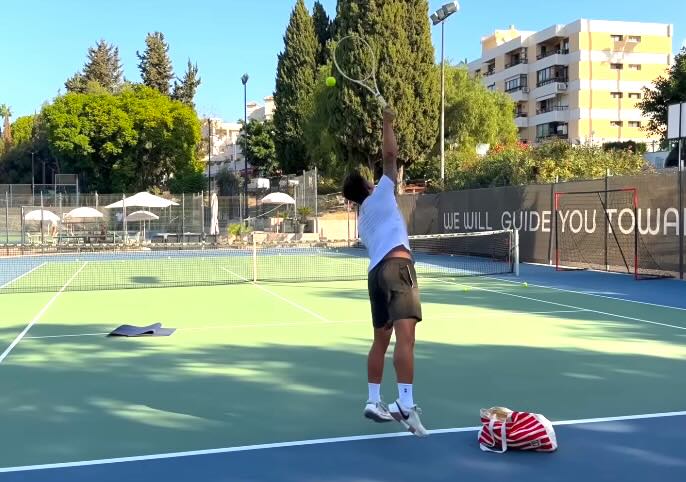
The kick serve is one of those shots that rewards patience. Get the grip right, place your toss consistently, hit the ball on the drop with an upward motion, and use your body positioning to your advantage. Do that, and suddenly your second serve stops feeling like a liability and becomes a weapon.
Key Takeaways (Tennisnerd Edition)
- A slight grip adjustment can unlock more natural topspin.
- Toss location is everything—too far right kills the kick.
- Let the ball drop into your ideal brushing zone.
- Your stance should complement your style, not work against it.
- Repetition is the true magic ingredient.
See all of the lessons from Adri here!