
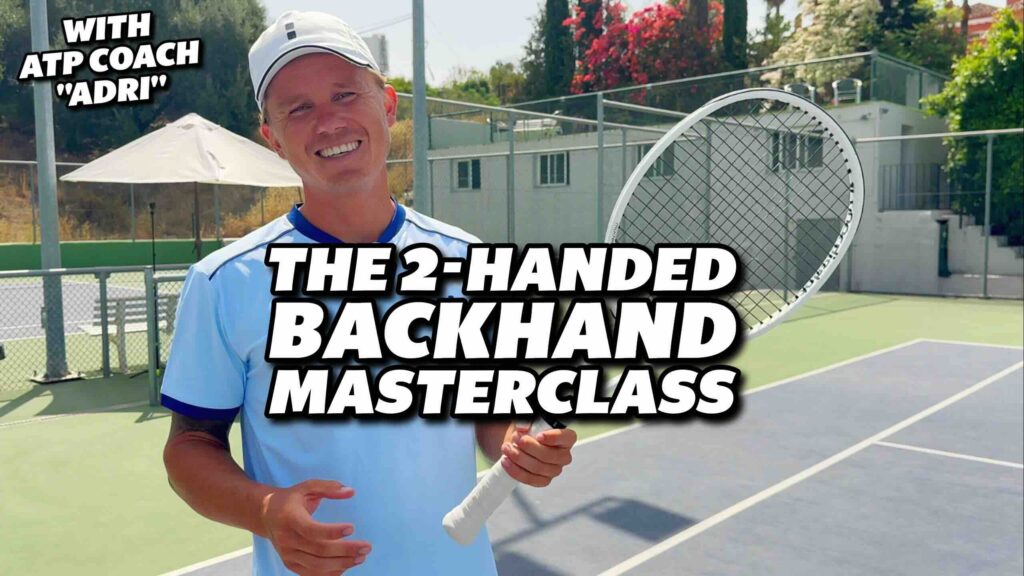
It is one of the most reliable and popular strokes in modern tennis. In this video, coach Adri talks about mastering the two-handed backhand.
Whether you’re an aspiring junior or a club player looking to shore up your game, mastering this shot can open up new dimensions of control, consistency, and aggression. In a recent video, Tennisnerd’s Jonas teams up with Coach Adri—who works with ATP pro Roman Safiullin—to break down the key technical components, biomechanics, and footwork behind a powerful and repeatable two-hander.
Here are the standout tips and coaching gems from their session.
Grip: Keep It Simple, Yet Specific
The grip is often a point of confusion, especially for one-handed backhand players learning the two-hander. Adri simplifies it:
- Right hand (for righties): Use a hammer grip or slightly closed (Eastern backhand).
- Left hand (non-dominant): Place your palm on the string bed, slide it down the grip, and wrap around.
Some pros use more extreme grips (like a Western left-hand grip), but Adri advises a more neutral setup that promotes a clean, repeatable stroke.
“You want to avoid facing your strings downward in preparation, especially when defending. Keep them more open—facing the side fence—to avoid hitting into the net.”
Mechanics: Let the Left Hand Do the Work
One of Adri’s core principles is using 80% of your non-dominant hand on the two-hander. The dominant hand should merely support the racquet.
- The left hand (for righties) initiates the backswing, drops the racquet tip, brushes the ball, and finishes the stroke.
- Practicing left-hand-only backhands (in the correct grip position) can dramatically improve your feel and control.
“Don’t just hit lefty forehands with the wrong grip. Practice from the correct position, choke up a bit, and really feel the brush over the net.”
Footwork & Stance: Open and Committed
Adri emphasizes open-foot stances, particularly a front foot at a 45-degree angle. This allows better post-contact rotation and body momentum.
- Step pattern: Left foot first, then right before contact.
- This forward-stepping rhythm ensures you hit with balance and acceleration, rather than leaning back and lifting the ball.
“If you step right then left, you’re hitting on your back foot. Step left then right, and you naturally swing through the ball with forward momentum.”
Preparation: Repeatability Is Key
Whether the ball is high or low, the racquet take-back should be parallel to the floor with a slight upward tilt of the tip to create lag. Avoid radical changes based on incoming ball height.
- Keep the stroke simple, repeatable, and biomechanically sound.
- Exotic take-backs (like Norrie or Medvedev) work for some pros, but aren’t beginner-friendly.
“Take the racquet back straight, drop it, and brush through. Finish over the shoulder—ideally around the head—for optimal spin and depth.”
Spin, Power, and Margin
Accelerating through the ball is essential—even if it feels counterintuitive.
- More acceleration = more spin = more control.
- Hitting softly isn’t the answer to balls sailing long—brushing more is.
“Alcaraz and Sinner hit harder than any of us—and their balls stay in. Why? Spin. RPM. Acceleration.”
Equipment Insight: Don’t Let Weight Hold You Back
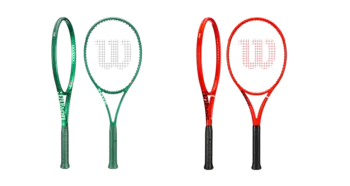
Jonas shares a vital gear tip: Don’t overdo it with racquet weight. Many club players choose frames that are too heavy to swing efficiently.
- If you can’t accelerate your racquet, you’re limiting your ability to generate spin and hit confidently.
- Modern pros are trending lighter to maximize racquet head speed.
“It’s not about ego and swinging a 330g racquet. Choose a racquet that lets you rip the ball. That’s where the fun is.”
Final Thoughts: Commit to the Shot
The session closes with a universal truth: commitment is everything. Whether you’re hitting a backhand, forehand, or serve, commit fully to your stroke.
- Don’t bail out mid-swing.
- Don’t train technique during matches—do the work beforehand so you can play free during competition.
“If you’re going to miss, miss with intention. Miss with acceleration. That gives you something to work with.”





great video