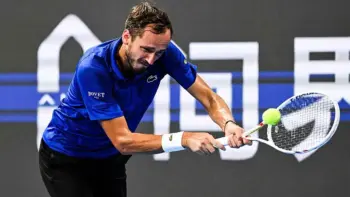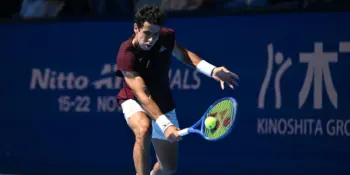
Most tennis players are quite happy to spend another 30 minutes hitting forehands. Convincing ourselves to spend the same amount of time strengthening the smaller muscles around the shoulder, elbow and knee can be considerably more difficult. The problem is that tennis is highly repetitive.
We serve with the same arm, accelerate the racquet thousands of times and repeatedly push off, stop and change direction. Even when no single movement feels particularly demanding, the total amount of stress can gradually add up. This is where prehab and accessory exercises can be useful.
The idea is not to predict or prevent every possible injury. That would be unrealistic. Instead, these exercises aim to improve the strength, control and capacity of areas that regularly have to absorb the demands of tennis. You also do not necessarily need a complicated professional-athlete programme on top of your full tennis schedule. The following seven exercises cover the shoulders, elbows and knees and can be completed with a resistance band, a light dumbbell and a small step.
What exactly is prehab?
“Prehab” is generally used to describe exercises performed before an injury occurs. In practice, however, there is not always a clear difference between prehab, strength training and rehabilitation. Many of the exercises used to rebuild an injured area are also useful for improving its capacity while it is healthy.
The main difference is the starting point. If you are pain-free, these movements can be treated as accessory exercises alongside your normal tennis and strength training. If you already have persistent pain, the correct exercise, resistance and range of motion may need to be selected by a medical professional or physiotherapist. Prehab should not be painful rehabilitation performed without a diagnosis.
Read more about prehab in the tennis season.
1. Band external rotations
The rotator cuff consists of relatively small muscles that help control and stabilise the shoulder. They are particularly relevant for tennis players because serving and hitting overheads repeatedly place the shoulder in demanding positions. Band external rotations are one of the simplest ways to train this area.
How to do them
Attach a light resistance band at around elbow height.
Stand sideways to the attachment point and hold the band with the outside hand. Keep your elbow bent to approximately 90 degrees and lightly pressed against your side.
Rotate the forearm away from your body while keeping the upper arm relatively still. Return slowly to the starting position.
Suggested volume
Perform two or three sets of 12 to 20 repetitions on each side.
The band should be light enough that you can complete every repetition without twisting your torso or lifting your shoulder.
Common mistake
Many players use too much resistance and turn the movement into a full-body exercise. The range does not need to be large. Control is more important than pulling the band as far as possible.
2. Band face pulls
Tennis naturally involves a lot of movement in front of the body. We hit forehands, backhands and serves, but rarely train the muscles around the shoulder blades with the same enthusiasm. Face pulls strengthen the upper back and the back of the shoulders while encouraging the shoulder blades to move and stabilise.
How to do them
Attach a resistance band at approximately face height and hold it with both hands.
Step back until the band is under light tension. Pull your hands towards either side of your face while bringing the shoulder blades gently back.
Pause briefly and return under control.
Your elbows can move outwards, but your shoulders should not rise towards your ears.
Suggested volume
Perform two or three sets of 12 to 20 repetitions.
A light or moderate band is usually sufficient.
3. Scaption raises
Standard lateral raises move the arms directly out to the side. Scaption raises use a slightly more forward angle, which often feels more natural around the shoulder. They are a useful accessory exercise for building strength and control through the shoulder without requiring heavy weights.
How to do them
Stand with a very light dumbbell in each hand. Your thumbs should point upwards.
Raise the arms at an angle roughly halfway between directly in front of you and directly beside you. Stop at or slightly below shoulder height.
Lower the weights slowly.
Do not lean backwards or use momentum to lift the dumbbells.
Suggested volume
Perform two or three sets of 10 to 15 repetitions.
Start lighter than you think. Even one or two kilograms can be enough when the movement is performed slowly.
Common mistake
This is not supposed to become a heavy shoulder exercise. If you need to swing the weights or shrug aggressively, reduce the resistance.
4. Slow wrist extensions
The wrist extensor muscles on the outside of the forearm work hard when we grip the racquet and control it through contact. Slow wrist extensions allow us to train these muscles directly. They are simple, but they should not be confused with a complete treatment plan for tennis elbow.
How to do them
Sit down and support your forearm on your thigh or a bench, with your palm facing the floor and your hand extending over the edge.
Hold a very light dumbbell and lift the back of your hand towards you. Lower the weight slowly over approximately three seconds.
Keep the forearm supported throughout the movement.
If necessary, use the other hand to help lift the weight and perform only the slow lowering portion with the working arm.
Suggested volume
Perform two or three sets of 10 to 15 repetitions on each side.
Begin with a very light weight. The forearm muscles are small, and adding resistance too quickly can create more irritation rather than useful training.
What should you feel?
You should feel the muscles on the outside of the forearm working. Sharp or increasing pain around the elbow is a reason to stop rather than push through more repetitions.
5. Forearm pronation and supination
The forearm does not only move the wrist up and down. It also rotates, turning the palm towards the floor and towards the ceiling. This rotation is involved in many tennis strokes, particularly around the serve and forehand. Training it with a small amount of resistance can complement wrist extension work.
How to do it
Sit with your elbow bent and your forearm supported.
Hold a light hammer, small dumbbell or similar object vertically. Keeping the elbow still, slowly rotate the forearm so that the palm turns downwards. Then rotate in the opposite direction.
The further the weight is positioned from your hand, the more demanding the exercise becomes.
Suggested volume
Perform two sets of eight to 12 controlled repetitions in each direction.
This movement usually requires less weight than expected.
Common mistake
Avoid moving the entire arm and shoulder. The rotation should come mainly from the forearm.
6. Lateral band walks
The knee does not work in isolation. Control of the hip and the position of the upper leg can influence how the knee behaves when we load, stop and change direction. Lateral band walks train the muscles around the outside of the hips, which help stabilise the pelvis and legs during side-to-side movement.
How to do them
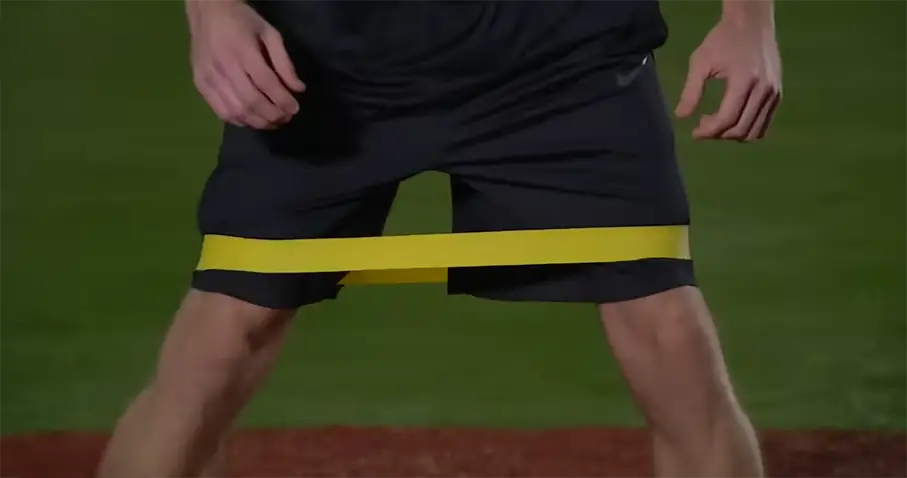
Place a resistance band above your knees or around your ankles.
Stand with your feet approximately shoulder-width apart and bend the knees slightly. Take a controlled step to the side, followed by a smaller step with the other foot.
Maintain tension in the band and avoid allowing the knees to collapse inwards.
Continue for several steps before changing direction.
Suggested volume
Perform two or three rounds of eight to 12 steps in each direction.
Placing the band around the ankles makes the exercise more demanding. Above the knees is usually the better starting position.
Common mistake
The exercise should not become a sideways shuffle. Move slowly enough that you remain in control of the band and your knee position.
7. Controlled step-downs
Tennis requires us to load one leg repeatedly. We land, brake and change direction from positions that are rarely perfectly symmetrical. The controlled step-down is a simple way to train single-leg strength and knee control without needing a heavy barbell.
How to do it
Stand on a low step with one foot close to the edge.
Slowly bend the supporting leg and lower the heel of the free leg towards the floor. Lightly touch the floor and return to the starting position.
Keep the knee of the supporting leg roughly in line with the foot. It should not collapse sharply towards the inside.
Use a wall, fence or chair for balance if necessary.
Suggested volume
Perform two or three sets of six to 12 repetitions on each side.
Start with a very low step. Increase the height only when you can control the entire movement.
Easier alternative
If the step-down is too demanding, begin with a supported split squat using a shallow range of motion. Hold on to something stable, lower yourself slightly and push back up through both legs.
How to put the exercises together
You do not have to perform all seven exercises before every tennis session.
In fact, this would probably make the routine too long and reduce the chance that you perform it consistently.
A simple approach is to complete the programme twice per week:
Session A
- Band external rotations
- Band face pulls
- Slow wrist extensions
- Lateral band walks
- Controlled step-downs
Session B
- Band external rotations
- Scaption raises
- Forearm pronation and supination
- Lateral band walks
- Controlled step-downs
Two sets of each exercise are enough when you are getting started. The entire session should take approximately 15 to 20 minutes. These exercises can be performed after a general warm-up, at the end of a gym session or as a separate short workout at home.
Should you do them before playing tennis?
Some of the band exercises can also be used as part of a pre-match activation routine, but the goal is different. Before tennis, use very light resistance and keep the number of repetitions low. You want to wake the muscles up, not fatigue them before serving.
The slower forearm and lower-body strength exercises are generally better placed in a separate training session or after tennis. Heavy or unfamiliar strength work immediately before a match is unlikely to improve your performance.
Prehab is only one part of injury prevention
It is tempting to think that five minutes with a resistance band can compensate for everything else we do. Unfortunately, it cannot.
Training load, recovery, playing technique, general strength, sleep and equipment can all affect how the body responds to tennis. A player who suddenly goes from one casual session per week to five competitive matches will not solve that increase in load with external rotations alone. The same applies to racquets and strings. An exercise programme should not be used to ignore equipment that is clearly uncomfortable or technique that repeatedly creates pain.
Prehab is most useful as one small part of a sensible overall training programme.
What if you already have pain?
Occasional stiffness and muscular fatigue are not unusual after playing tennis. Persistent pain, worsening pain or a noticeable loss of strength or movement should be treated differently. Exercises that are useful for a healthy player may not be appropriate for every injury.
This is particularly important with shoulder and elbow pain, where different conditions can produce similar symptoms. Knee pain can also have many possible causes that require different approaches.
Do not assume that every pain on the outside of the elbow is automatically “tennis elbow”, or that every painful shoulder simply needs a stronger resistance band. When symptoms remain, affect your normal movement or become worse during tennis, seek an assessment from a qualified healthcare professional.
Btw, check also our tips for racquets for players with tennis elbow.
Final thoughts
None of these exercises are particularly exciting.
They will not produce the same immediate satisfaction as hitting a clean winner, and they are unlikely to become the highlight of your training week. That is also why they are easy to neglect.
However, a short and repeatable accessory routine can help prepare the shoulders, forearms, hips and knees for the repeated demands of tennis. You do not need seven different machines or a complicated spreadsheet. A resistance band, a light weight and 15 focused minutes are enough to get started.
The best prehab programme is probably not the most advanced one. It is the one you can perform consistently without turning it into another full training session.