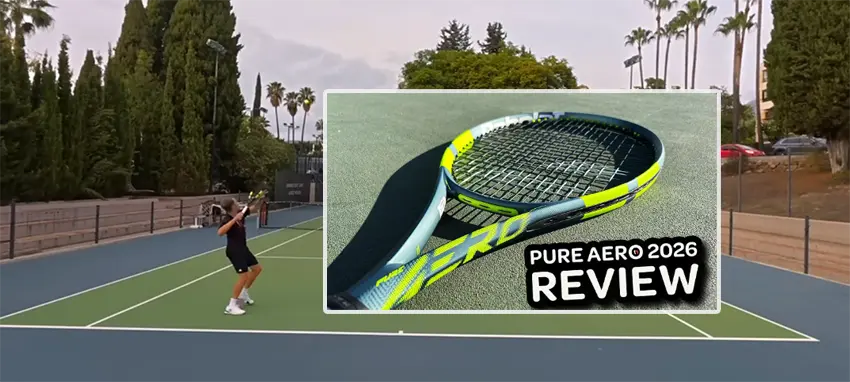
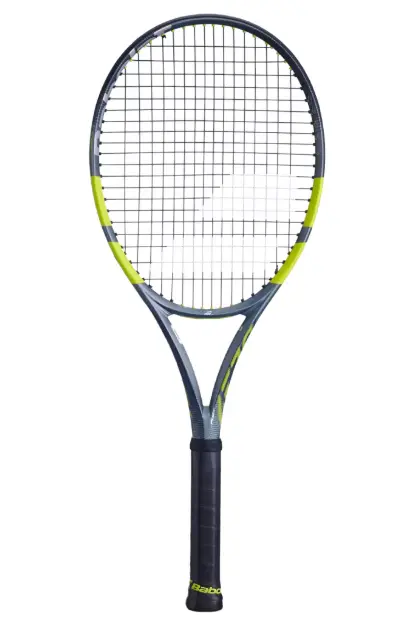
Here is my full Babolat Pure Aero 2026 review, covering both the 100 and the 98. I tested the prototype cosmetic, which is the same racquet as the retail version, just with a different paint job. I have been hitting with these for quite some time this year and I’m impressed. Here is why, plus the pros and cons.
Why the Aero matters
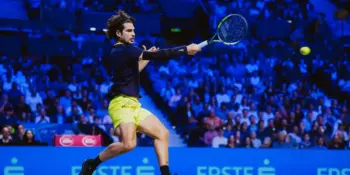
Babolat has a hit on its hands here. The Pure Aero is a best-seller alongside the Wilson Blade, and I counted 14 players using it in the ATP top 100. That says pretty much everything. The 98 has also had a serious wave of players switching to it in recent years, so it was interesting to see Babolat change it at all.
What is new
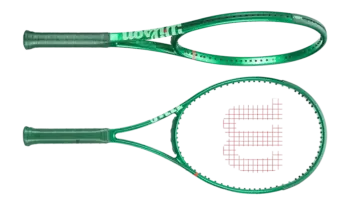
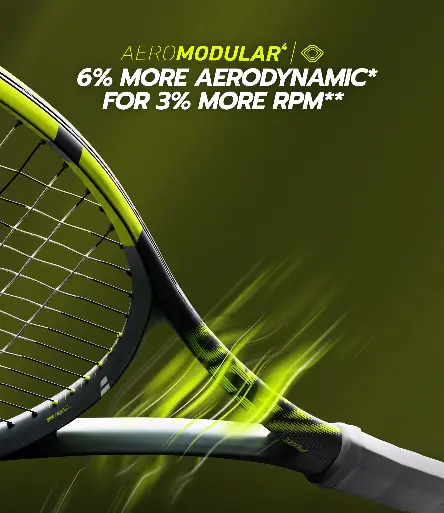
The throat and the mold. The first thing that stuck out was the new mold, and you see it right away in the throat. The Aero has long been known for its unusual shape, and this is a real redesign. The previous model had a V shape in the throat. The new one looks squarer, flat on the outside and triangular on the inside (the old one was the other way around).
Babolat says it is 6 percent more aerodynamic and should generate around 3 percent more RPM. I will not claim I swung 6 percent faster on the day, but I liked what I felt. The new throat also feels better in the hand on the one-handed backhand. I am not convinced it makes the frame whippier on its axis, but the Tennis Warehouse data tests suggest the new Aero generates a bit more spin than the 2023 version.
I know we can be skeptical about manufacturer data, but this is exactly what brands should use when developing new products, and the claim makes sense to me.
Flex Tech 2.0. This is Babolat’s updated vibration filtering system. It sits in the handle on the 100 and at 3 and 9 o’clock on the 98. It does its job: cleaner feel, fewer vibrations, better comfort. If you love the 98 but have had arm issues or found it too stiff, this addresses that. I did not feel anything harsh on either frame.
Specs. Largely unchanged on both racquets. Stiffness and swingweight are very similar, and as I keep saying, that rating is just a number. RA is measured in several locations and the lowest or most flattering one often gets quoted, so it does not tell you the whole story. The 2026 simply feels noticeably more comfortable than the numbers suggest. If it isn’t broken, don’t fix it. Babolat improved what needed improving (comfort), added a bit of power, and gave us more directional control.
That last point is important. Many players struggle to flatten out shots with the Aero 98 and 100, feeling they always need extra rotation to make the ball dip in. With the new frames, flat shots seem to get that last-second dip as well. Flatten the ball out, go for a more aggressive approach, and it lands on or just inside the line. That is great for you and very frustrating for your opponent.
Pure Aero 100
More power, a cleaner feel and better comfort. Overall it is simply a better racquet than its predecessor. The old one had a softer, more muted feel, which some of you may prefer, so this is not a clear-cut change for everyone, but there is a lot to like.
The string bed is quite dense for a spin racquet, and the frame is moving toward E-Zone territory. If you want a more open pattern like the 2016 or 2019 Aeros, look at the lighter models or the Team versions and add some weight. The new 100 is controlled on flat shots, you can play directional tennis with it, and the sweet spot is pretty forgiving. It is somewhat string sensitive, so you need to dial in the string and racquet together. RPM Blast worked great for me, and even the power was great.
I actually prefer the feel of the previous generation slightly, since this one can feel a little metallic, and it feels, on impact, like it has a high frequency. But I struggle to find a downside to the new one besides that. It is a touch less launchy, so the ball travels flatter, which feels more natural for flat hitters. It also works well on the slice, and the one-hander feels better with the new throat. This was my favorite of the playtest, even as a 2023 Aero 98 user. It could be a contender for racquet of the year, and it is the easier racquet I could and probably will switch to.
Adam’s take: The 100 felt really good on his forehand, almost too good, but on the backhand he had to shorten his swing because of lack of control. It is a little lively despite the dense pattern, and you notice the beam thickness. Power is easy, but it is not a low-powered racquet by any means.
One oddity: the 100 is 16×19 and the 98 is 16×20, yet the 100 plays like the tighter, denser pattern. Strange, but it does not mean it plays better or worse. The 100 also launched the ball lower than the 98 for me. I expected more height and spin from the bigger head, but I had to work the wrist more to get the shape I wanted.
Pure Aero 98
This is a great frame and everyone who tried it seem to love it. I was the only one on the fence, because I like the 2023 so much. The feel is cleaner, comfort is improved, power is a bit higher, and you can hit flat shots with more confidence. What I miss is a bit of launch, explosiveness and crispness. The 2026 is a little more muted on contact. That may just be personal, after playing the 2023 so much.
The 2023 98 was a unique racquet and will be a modern classic, a very sought-after frame in years to come. It was a bold move by Babolat to change the geometry and I doubt that everyone will like it. The 2023 edition was pretty wild: you had to be on your A game to generate enough racquet head speed to control the ball. The 2026 is more powerful but has a slightly lower trajectory. You do not get quite the same spin, but you can play more controlled tennis. I do prefer the feel of the 2023, though.
Adam’s comparison: the new one has a little more power off the frame (a slightly higher speed on the ball from the same stroke), but it also does what he asks of it with more precision. His target radius is narrower. He also pointed out that many players struggle with arm issues on the 2023 despite all the dampening, trying strings at low tensions to fix it. He felt comfort right away on this one. Slicing was deep and heavy too, on completely uncustomized frames with RPM Blast and Restring Vivo, two of my favorite strings.
Who prefers what?
Here is the interesting split. The players with ATP points or tour-event experience preferred the 98 for its control. Every one of them. Henrik and I, playing at advanced club level, leaned toward the 100. Those are the kinds of notes that should help you decide, though in the end it is a matter of taste.
I also know of pros ranked around 300 to 400 who have switched from other brands to the 98 and do not even add weight, even on the Challenger tour.
Pros and cons
Pros: cleaner feel, better comfort, a bit more power, more directional control, better on flat shots, improved throat design.
Cons: the feel is slightly more muted than the 2023 (especially on the 98), the 100 is somewhat string sensitive and can feel lively on the backhand, and you get less raw spin and launch from the 98 than the wild 2023.
Verdict
I was ready to be skeptical. On the first hit I was not in love with either frame. But after dialing in the strings and playing them side by side, they are clearly better racquets in some ways than the 2023. But maybe some of the magic of those racquets is gone here? I might stick with my 2023 98 for personal reasons, but if you are buying a new racquet, this is one you should try. Want more sweet spot, forgiveness, and power? Go for the 100. Want more control and whippiness? Go for the 98. I think they beat the VCores, and I will make head-to-head videos to follow up.
The competition is tough: Yonex Vcore, Dunlop SX, the Wilson Defyer and Tecnifibre’s Fire. But in spin racquets, Babolat is still on top, whether you like it or not. I predict these two will be the best-selling racquets of 2026, and that is not a particularly bold prediction. Well done, Babolat.