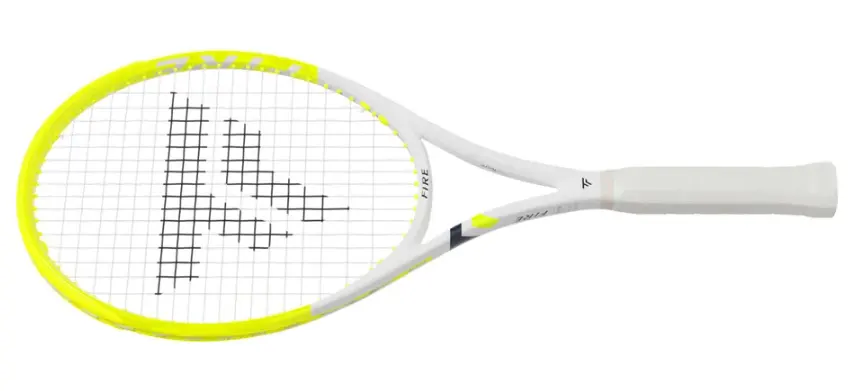
The arrival of the Tecnifibre Fire racquets range marks a strategic shift in the brand’s “Power” silo. Replacing the TF-X1 series, the Fire line aims to refine the power-and-comfort formula by focusing on maneuverability and a slightly more disciplined frame geometry.
Before we get into the technical stuff, I was lucky enough to test this racquet in a Tecnifibre event in Paris and Rotterdam. Overall, it felt like a big improvement over the TFX1, but I want to do more in-depth testing before we finish our Tecnifibre FIRE review. Make sure to subscribe to YouTube and Instagram for more info.
Here is the technical breakdown of the new range.
Frame Evolution: Geometry and Power Tuning
The Fire series moves away from the raw, high-powered profile of its predecessor. The Fire features a reduced cross-section compared to the TF-X1 V2. Hitting with it feels faster and more controlled, which improves your confidence when going for your shots. It definitely feels closer to the praised Tfight 2025 racquets, which is a good thing.
- Beam Width: The beam has been slimmed down, roughly 5% on the lighter models and up to 12% on the 300g+ versions.
- Target: This change aims to lower the “uncontrollable” power levels often associated with wide-body frames, shifting the range slightly closer to the T-Fight’s versatility while maintaining the easy launch of a power frame.

Core Technologies
The technologies have not changed much from TFX1, but the mold and layup updates make the racquet feel and play drastically different.
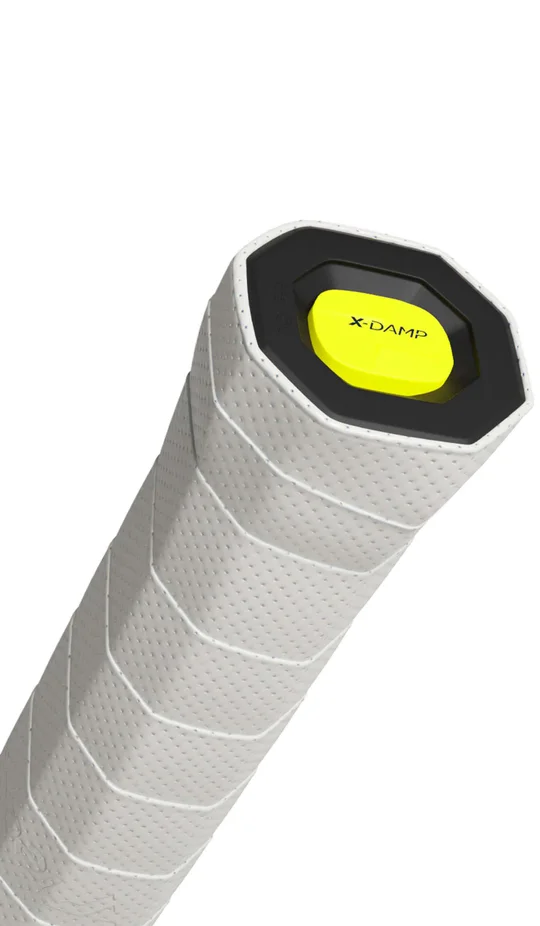
- X-DAMP System: Retained as the centerpiece for comfort, this elastomer insert in the handle is designed to filter high-frequency vibrations. It claims a 36% reduction in harmful vibrations, positioning the Fire as a top-tier choice for players with tendonitis or arm sensitivity.
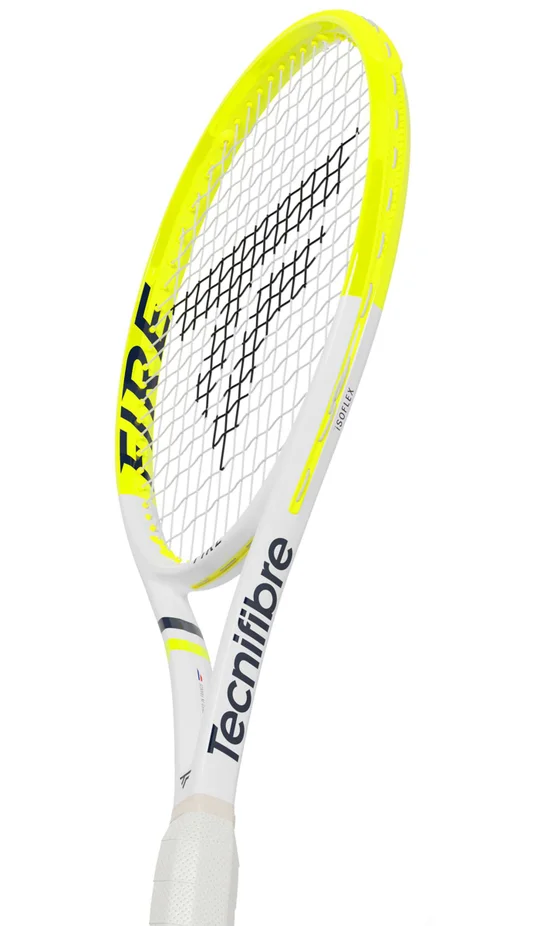
- Isoflex Technology: This technology varies the frame’s stiffness profile around the hoop – stiffer where the strings are shorter and more flexible where they are longer. The result is a more consistent string-bed deformation, which widens the effective sweet spot.
- Round Section: The frame retains a rounded geometry (as opposed to the “Square” or “RS” sections found on the TF40 or T-Fight), which is optimized for torsional stability and energy return.
Strategic Specs & Maneuverability
The most notable shift for 2026 is the redistributed weight. Tecnifibre has lowered the swingweight across several models to cater to the modern game’s demand for racquet head speed. This makes the Fire more “whippy” than the TF-X1, which some testers found slightly cumbersome.
| Model | Weight (Unstrung) | Head Size | String Pattern | Balance |
| Fire 305 | 305g | 98 sq. in. | 16×19 | 315mm (HL) |
| Fire 300 | 300g | 100 sq. in. | 16×19 | 320mm (HL) |
| Fire 285 | 285g | 100 sq. in. | 16×19 | 330mm (Even) |
| Fire 275 | 275g | 105 sq. in. | 16×19 | 330mm (Even) |
The Fire 305 is particularly interesting for competitive players; by using a 98 sq. in. head and an headlight balance, it bridges the gap between a modern “tweener” and a player’s frame.
On-Court Positioning
In the broader market, the Fire range is designed to compete directly with the Babolat Pure Drive, Head Extreme and Yonex EZONE.
While the cosmetic (Fluo-yellow/White) is loud, the technical intent is more conservative. It is a “refined” power racquet, easier to swing than the previous generation, slightly more controlled in its power delivery, and heavily focused on dampening the “jarring” feel often found in stiff, 70+ RA frames.
Bottom Line: If you enjoyed the TF-X1 but wanted a faster feel through the air and a slightly more “connected” sensation on impact, the Fire is the logical upgrade.
We will do more testing for the review and get back to you with our thoughts on the comfort and playability of the new Tecnifibre FIRE racquets.
The rackets are for now only available at Tennis Warehouse Europe here (use code TNERD10 for a 10% discount)