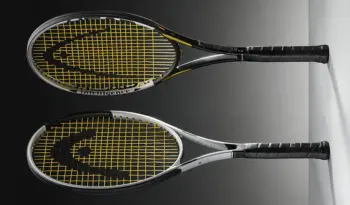
We got many messages asking for the best racquets for intermediate players after our video about the best racquets for advanced players. So let’s get into it.
So what is an intermediate player? We explain many of the different tennis rating systems here. In NTRP, an intermediate player would be around 3.0-3.5 on average. This is a table that might help out, but you have take all this with a pinch of salt. Some intermediate players prefer heavier and more demanding racquets, while most would do best with a racquet with some extra forgiveness.
The NTRP scale describes a 3.5 level player as follows: the strokes are more dependable, court coverage and net play improve, and the player can direct the ball more intentionally, though depth, variety, and higher-level tactics are still developing. USTA programs commonly group both 3.0 and 3.5 as “intermediate.”
A rough cross-system translation would be:
| General level | NTRP | UTR* | ITF WTN* |
|---|---|---|---|
| Beginner | 1.5–2.5 | ~1–2 | ~35–40 |
| Intermediate | 3.0–3.5 | ~2–5 | ~25–35 |
| Advanced recreational | 4.0–4.5 | ~5–8 | ~15–25 |
| Strong competitive / college+ | 5.0+ | ~8+ | ~1–15 |
All of this also depends on your main purpose for playing tennis. If you like hitting the ball and having fun with it and don’t really care a lot about results or competing, you should use whatever feels best. You do not really need to worry about the effect on the ball or your consistency in match situations. However, if you like competing and you want better results, then the racquet is a factor. It is not the biggest factor, obviously, footwork, technique, fitness and mental strength all trumps gear, but it is a factor and you will enjoy tennis more with a good racquet by your side.
Our tennis nerd contributor, Chris Nash, has written a few overview pieces where he recommends certain racquets based on his experience. Let’s see if we think similar or quite different. It is all a matter of personal taste at the end of the day.
General advice
Overall, being able to swing the racquet in a relaxed way and have enough power to trouble your opponent, but at the same time enough control not to make mistakes, is what you want to look for. Then the three racquet categories on offer, control, power and spin, depends a bit on what level of spin, power and control you are looking for.
The power category deals with stiffer frames that give you a short dwell time in the string bed. The ball shoots out rapidly and the trajectory is low. The feel tends to be a little more “boardy” when you use stiffer racquets, but the direct and raw power can be addictive for the right player. If you like to attack with flat shots from the baseline, the power racquets tend to give you a little bit extra depth and speed.
Spin racquets also provide good depth, but they come with a longer dwell time in the string bed and a higher launch angle. The ball stays on the strings and then catapults into a higher loop. So if you do not shape the ball and hit with top spin, there is a risk of the ball sailing long. And to win matches, consistency is key. But if you naturally hit with a lot of spin, then these racquets have aerodynamic properties to help your swing speed be even faster and the attack on the ball be even stronger, so then these are definitely for you.
Control racquets speak for themselves. You prefer being in max control of how much depth and spin and pace you give the ball. They tend to be more demanding in terms of achieving powerful or heavy shots, but for most players, the mistakes is what cost them, so then a control racquet is the way to go.
In terms of specifications, I would stay around 300 grams unstrung or lower. The smallest head size I would go to is 98 and I would probably prefer to be at 100 sq inches in all categories. I would be careful with swing weights. If the strung swing weight is above 325, the racquet will be sluggish and slow for most players. This can lead to you hitting the ball late, off-center, which in turn can lead to injuries.
The Best Control Racquets for Intermediate Players
Let’s start with the category that I think most of you are interested in – the consistency category. This is where you find racquets that hopefully bring you confidence to hit out and go for your shots in the right moment.
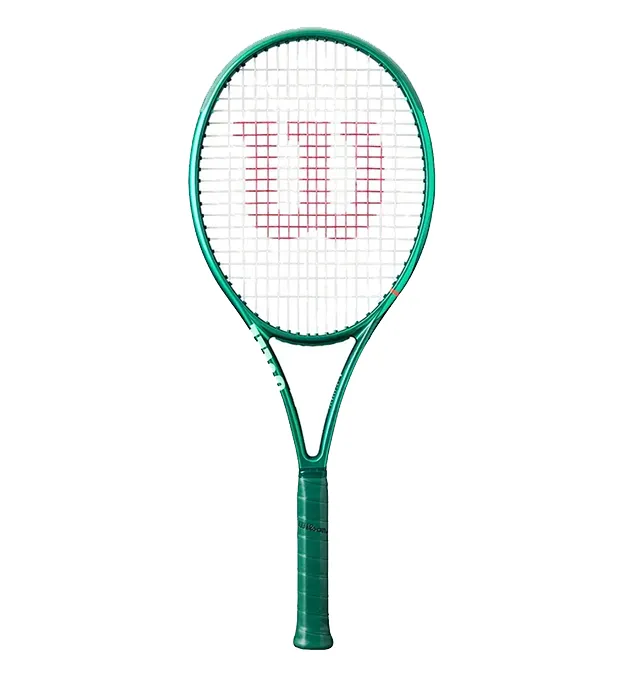
The Wilson Blade 100 V10
If you are an advanced player, you will probably do well with a Blade 98 or even a Blade 98 Pro. But I think the Blade 100 (image above) is a bit of a sleeper racquet. Easy depth, relatively easy spin, but a pretty versatile racquet. If you have very flat stroke mechanics, then you might want to consider a regular Blade 98, but I think most people will find lots to like in the Blade 100. The feedback on Tennis Warehouse is pretty unison, this is an excellent all-rounder.
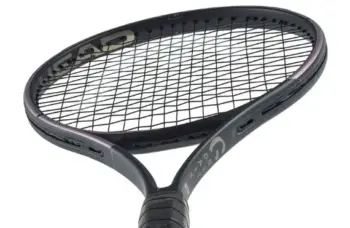
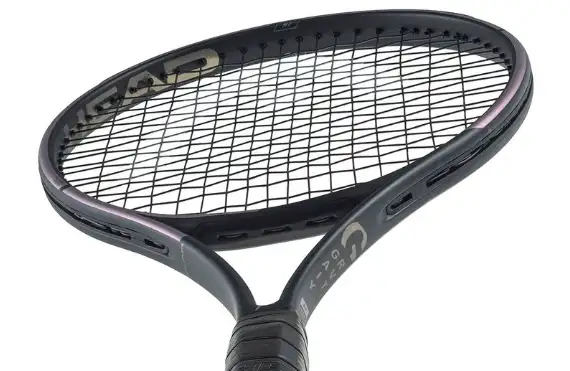
HEAD Gravity MP
This is another user-friendly, comfortable, controlled, but also versatile racquet. It shares many similarities with the Blade 100. No need to customize, just pick up and play with a good mix of spin, power and control.
Dunlop CX 400 Tour
Yes, I know this racquet says “Tour” but it is actually similar ease-of-use to the racquet above. The Dunlop CX 400 Tour is just a very versatile frame. I would say it has a tad more power than the Blade and Gravity, but the string pattern is not to open, the ball flight not too wild and the response is nice and comfortable. Just a heads-up here, there will be a new Dunlop CX 400 Tour coming in late 2026 or early 2027. I am currently testing it (blacked-out) and this one is possibly even better.
Prince Phantom 100X 305
If you like a thin beam and a flexible feel, this plays like a dream with good spin and depth for a control racquet. The sweet spot is slightly smaller than on the racquets above, but sweeter when you hit it. One of those racquets that bring a smile to your face.
The Best Spin Racquets for Intermediate Players
If you want a stiffer response and a bit more power and spin potential than what the versatile control racquets above will bring you, then you should get a spin racquet.
Babolat Pure Aero 100
The obvious choice. Re-engineered with a new mold for better aerodynamics. However, I feel like the biggest update compared to the ultra-popular 2023 version is that the racquet deals better with flatter shots, so it is a little more versatile than the predecessor, which tended to launch the ball a bit too much. This feels like a refined and improved update and deserves to be hailed as one of the best spin racquets out there.
HEAD Extreme MP
The new Extreme MP is leaps and bounds better than the predecessor. The Hy-Bor in the layup brings a more direct feel, the racquet seems to have a lower swing weight on average, but still offers better stability. One of those racquets I keep coming back to in 2026. Possibly HEADs best spin racquet ever.
Wilson Defyer 100
The most hyped-up racquet of the year. Wilson sure got their marketing budget back on this one! A racquet with a beautiful feel, slightly dampened but not overly so. Less power than the racquets above, but I feel like it is a little more prone to an unpredictable launch. Still, an excellent one.
There are a few other racquets that I could mention here. The Prince Ripstick would be the closest at coming in fourth or shared 3rd. That is fun frame, but the aggressive o-port system might not be for everyone. I was not a fan of the new VCORE 2026, but if you can find a VCORE 100 2023, that is a good option. The Tecnifibre FIRE 100 was not bad, but also not quite matching the top 3 here.
The Best Power Racquets for Intermediate Players
If you want maximum depth and a lower launch angle than the spin racquets provide, the power category might be right for you.
Mizuno Acrospeed
Okay, this is not easy to find in Europe, but if you are in the US (or Asia), this should be on your list. You can demo it at Tennis Warehouse. Good comfort, excellent power, but nothing excessive. The Acrospeed racquet took me by surprise when I tested it in Los Angeles in March. There is also a 285g version if you want something a little easier to swing.
Babolat Pure Drive
The icon in the power segment. And the 2025 edition is perhaps the best one yet with improved dampening, a bit more spin potential, but still that addictive depth and stability. If you think this racquet might be too much in terms of power, I would still urge you to try, as it is not as wild as you might think.
Yonex Ezone 100
I know Yonex are increasing their presence on the pro tour, but I tend to feel like the previous generation of their racquets was a tad better. Still, the Ezone 100 is still a gem and has the most power of the racquets mentioned here. A very forgiving sweet spot and easy to swing, it should be on your demo list for max power.
There are a few other racquets I could mention here, like the HEAD Boom MP, but I do find that one too flexible, launchy and wild for this category. The Dunlop FX 500 is the one that really should be placed in number 4 in terms of playability, but it was on the stiffer side and I don’t think the comfort was quite on par with the racquets above. If comfort is not a concern for you, then it should be tested. The Solinco Blackout 300 is a good option for this category and thanks to the foam filling, it is gentler on the arm. However, I found it a bit overdampened and that is why it does not quite reach the top 3.
The Best Comfort Racquets for Intermediate Players
Since comfort is key for many of you out there, I really put attention on that when I made my selections. However, there are two racquets that focus on comfort and ease of use and should be mention as options for intermediate players.
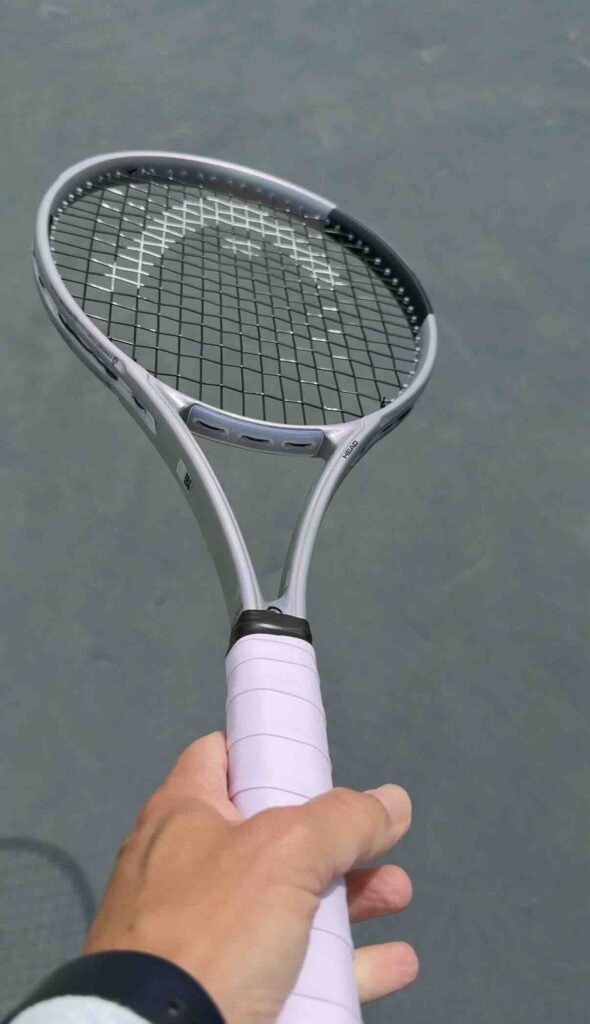
HEAD Squared
The HEAD Squared racquet has a wacky balance, being the most head-light and maneuverable racquets in the industry for its weight class. This makes it easy to swing and addictive to use. The 16/18 string pattern brings loads of spin to the equation as well, so you can really swing fast and shape the ball. One of the most fun racquets I have used in 2026. It can be a little wild for some, but it is a going to be blast to play with.
Yonex Muse 100
Ultra-flexible, easy to swing, a nice trampoline effect when striking the ball, but still a decent level of control thanks to the flex. If you like a long dwell-time in the string bed, the Muse is the racquet for you. It is Yonex’ reply to the Wilson Clash.
Summary
There you have it. These are my personal favorites in each category. The best way to approach a new racquet is always to try to demo it with your string of choice. If there are bad strings in the racquet, it might be difficult to judge how the racquet plays.
I think for most players, if you are unsure of what to get or what suits your style the best, I would go for the control category here. Those racquets are versatile enough to work for different styles and players.
I hope you find something good for your game. If you need more help, we do offer racquet consultations. Remember to choose your string wisely as well. Check out our Recommended Strings page. Chris has also written specifically about strings for intermediate players.