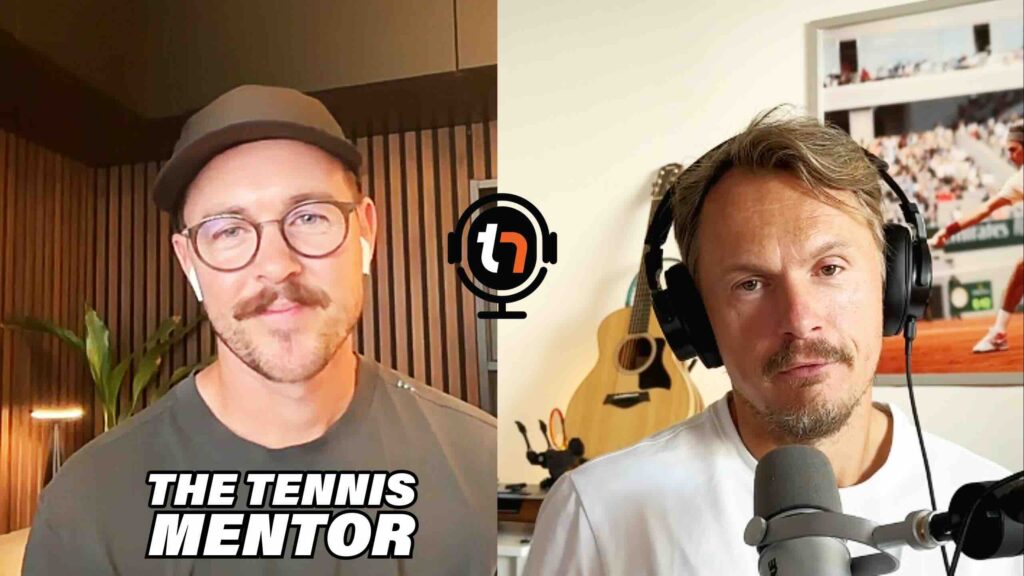
When you think of a modern tennis coach, you might imagine a whistle-blowing instructor feeding endless baskets of balls. But Ashley Neaves—better known as The Tennis Mentor—has built a career and a community around a different vision. He’s as passionate about empowering players as he is about sharing insights with millions online.
Ashley recently hit two huge milestones:
- 100,000 YouTube subscribers (and the silver play button to prove it)
- Launching his Tennis Training Deck, a portable, practical tool for players of all levels
We caught up with Ashley to talk about how the deck came to life, why players struggle to improve, and what’s next in his journey as both a coach and content creator.
“I Wanted Something Functional, Not Gimmicky”
The Training Deck wasn’t born from a boardroom brainstorm or a marketing strategy. It came from the reality Ashley sees every day at the club.
“I coach full-time, and one thing I notice—especially at the club level—is that people don’t structure their training,” he says. “You’ve got players who only play matches and others who only hit with a ball machine. Neither approach, on its own, creates real progress.”
The deck is Ashley’s solution: 50 cards with drills he uses in lessons and personal practice, divided into four categories:
- Focus Cues (blue) – Themes for the session, like “Beat the Bounce,” which emphasizes early preparation.
- Activator Drills (green) – Warm-ups for body and brain to sharpen decision-making.
- Cooperative Drills (yellow) – Rally-based exercises to hone consistency and tactical patterns.
- Competitive Drills (red) – Games that mimic match pressure and bring out your fighting spirit.
“I wanted to avoid screens,” Ashley adds. “There are apps out there, but they get forgotten. The last thing you want on court is to scroll through your phone.”
The deck’s success has been instant. “It’s already in 55 countries, which is crazy to me,” he says, smiling. “It took nearly a year to create, mostly because translating my sketches into clear diagrams was hard for a non-tennis designer. But it was worth it. It’s practical, portable, and the feedback has been incredible.”
How to Use the Deck Like a Pro
Ashley recommends making each session structured but fun:
- Pick a Focus Cue to set the tone (e.g., preparing before the bounce).
- Warm up your mind and body with an Activator drill.
- Add two or three Cooperative drills for skill building.
- Finish with Competitive drills to test those skills under pressure.
“All drills are games-based,” Ashley says. “I want players to train like they play—reacting to variety, making decisions, and moving well. That’s what wins matches.”
From Obsessing Over Technique to Simplifying the Game
If you scroll through tennis YouTube, most videos promise quick technical fixes: “3 Secrets to a Perfect Forehand” or “The Serve Hack You Need.” While Ashley makes technical content, he’s the first to admit it’s not the holy grail.
“I used to be very technical as a coach,” he says. “I loved biomechanics and could talk grips all day. But over time, I realized most errors don’t come from poor technique—they come from poor positioning and bad shot selection.”
That insight shaped his coaching philosophy: less talking, more doing. “I simplify things now. Players overthink technique, and when they play matches, that kills them. Instead, I focus on what the ball is doing. If you miss, don’t obsess about your wrist angle—try aiming higher over the net or hitting bigger targets. That tactical cue often fixes the technique naturally.”
Match Play vs. Drills: Finding the Right Balance
Ashley is clear: match play matters. But so does focused training. “If you only play matches and your results aren’t improving, it’s time to add drills,” he says. “And if you only hit drills, you need to play matches.”
His ideal? Conditioned points—situations that replicate match play but target specific skills. “Andy Murray told me he grew up doing games-based drills, group sessions, and tons of match play. He became one of the smartest players on tour because of it.”
Dealing with Nerves and Momentum Swings
Even seasoned players choke. Ashley’s advice for handling nerves?
- Perspective: “Unless you’re in a Grand Slam final, what’s on the line? Remind yourself why you play.”
- Break it down: “Think one point at a time. Tennis is beautiful because every game is a reset.”
- Control momentum: “Slow things down when it’s slipping away. Speed up when you’re on a roll.”
He also recommends simple breathing techniques and process goals: “Instead of obsessing about winning, focus on things you can control—like first-serve percentage or hitting deeper.”
The Physical Game: Train Smarter, Not Harder
Modern tennis is brutal on the body, and injuries are everywhere—even at the club level. Ashley believes the answer isn’t just more practice, but smarter training.
“Tennis is all about accelerating and decelerating,” he explains. “Most players train to sprint fast but ignore stopping. Stopping quickly is what keeps you balanced and ready for the next shot.”
His other tip? Play more matches: “It’s the most tennis-specific movement training you can do.”
Gear Talk: Rackets, Strings, and Staying Realistic
As Tennisnerd readers know, gear matters—but maybe not as much as you think. Ashley’s current setup?
- Head Speed Pro with Head Lynx Tour at 52 lbs
- Grip size 3
“I flirted with the Yonex Percept 100D,” he admits. “Loved it in practice, but in real matches, I stick to what I know. Familiarity matters.”
His take on the gear obsession sweeping social media? “It’s exploded because of access to information. But at the end of the day, the player matters more than the frame. Unless your equipment is hurting you—like a stiff string at high tension—your time is better spent on movement and tactics.”
From Coaching to Content—and Why He Hates the Word ‘Influencer’
Ashley’s videos have taken him from local courts to global opportunities, including hitting with Jannik Sinner, returning Ben Shelton’s serve, and interviewing Andy Murray. Yet, he cringes at the word influencer.
“I’m a coach who makes videos,” he says firmly. “I love creating content, but the ‘influencer world’ isn’t me. What drives me is helping players improve.”
What’s Next for Ashley?
This summer, Ashley returns to competitive tennis—three over-35 events in three weeks, including matches on the practice courts at Wimbledon. “I haven’t played in four years, so my body might hate me,” he laughs. “But I miss the thrill of competing.”
He’s also exploring remote coaching, analyzing match footage for aspiring pros. “It’s affordable for players and super effective. Sometimes, watching a match back gives more insight than being on site.”
And of course, more YouTube videos, more creative projects, and maybe… more products? Ashley grins: “I never plan too far ahead. I just try to do everything well, and the next opportunity usually finds me.”
Final Thoughts: Keep It Fun, Keep It Intentional
Ashley’s story is proof that improvement isn’t about gimmicks or shortcuts. It’s about structure, purpose, and adaptability—whether through a deck of drills, a change in mindset, or simply playing smarter tennis.
So next time you hit the court, take a page from Ashley’s playbook:
- Set a goal for your session
- Add variety
- Compete with intent
- And above all—remember why you play
Because as Ashley reminds us, “If you’re not having fun, what’s the point?”
Learn more: The Tennis Mentor on YouTube
Get the Training Deck: Order here