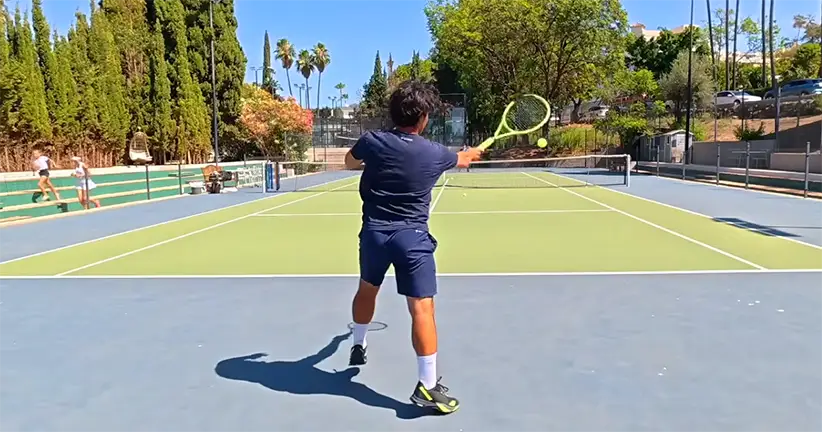
Picking a new racquet as an advanced player is harder than it should be. Tennis players are not afforded the type of “custom fitting” sessions that you have in golf. Still, there is plenty of content online to guide you and some retailers like Tennis Warehouse (Tennis Warehouse Europe and Tennis Only) offer demo programs. But the demo process might still be somewhat challenging and confusing, so we give you some key advice below.
On a positive note, there are more good racquets on the market right now than I can remember, so it is difficult to actually buy a bad racquet if you go for one of the mainstream brands and products. The issue is that you need to find a racquet that works for your style and level. On the pro tour, we have seen a massive jump from control racquets to more modern spin and power-oriented frames. But some players tend to go back to the control frames after a while. Choosing a racquet is a lot about muscle memory and feeling at home. I would argue that is more important in the long run than what you get out of
Three Buckets: Understanding Modern Racquets
For advanced players and aspiring pros, modern racquets generally fall into three broad categories:
Spin racquets for players who hit heavy and love shape. Control racquets for players who want precision and confidence swinging out. Power racquets for aggressive baseliners who prefer a flatter ball.
There’s plenty of overlap here. Tennis today is mostly played from the baseline, and almost everyone at a high level needs to defend, counter, attack, and transition forward when the chance comes. But knowing where your natural game actually sits is a far better starting point than asking which racquet is trending this month.
Before You Demo Anything: Get the Specs Right
When you demo a racquet, try to test it close to your normal specs. If you’re used to a 340-gram frame strung with a particular poly at a tension you trust, and you pick up a 305-gram demo strung completely differently, you are most likely not going to like it. Muscle memory is everything at this level.
The racquet that’s actually right for you should feel more or less natural pretty quickly. If you’re fighting the frame after 15 minutes, that’s usually telling you something. You don’t need to force it. That doesn’t mean it won’t click after another hour of hitting; it often does. But with this many excellent racquets available, there’s no reason to spend weeks trying to talk yourself into a frame or contorting your game around a new frame.
The feeling you’re looking for is closer to: “Yeah, this makes sense.” Not: “Maybe I’ll grow to like this eventually.”
This matters even more when working with competitive players. Grip shape, static weight, balance, swingweight, string, tension – all of it decides how naturally a racquet slots into a stroke that’s already built.
Category One: Spin Racquets
Spin racquets suit aggressive baseliners who want racquet-head speed, love creating shape over the net, and want to push opponents back with a heavy ball. These players enjoy getting underneath the ball and generating serious rotation rather than just driving through it flat.
The thing to know about this category: these racquets usually work best a touch lighter than a traditional control frame. Spin frames want acceleration and speed. If you’re moving from something like a Blade into a Pure Aero, don’t just match the old weight – that’s a common mistake.
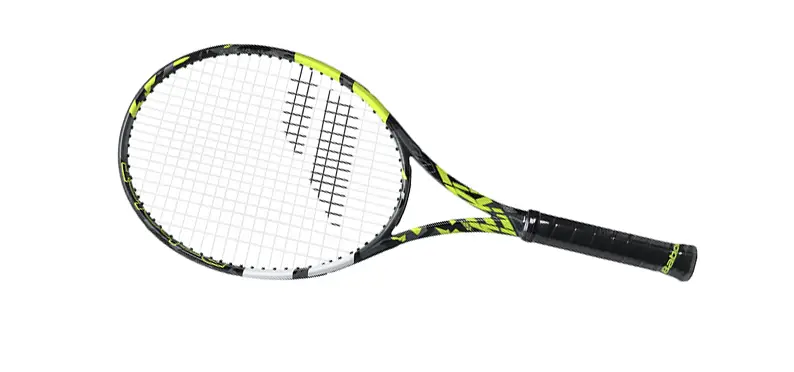
Babolat Pure Aero 98 remains the benchmark in this category. It’s been all over the pro tour for years, closely tied to players chasing that combination of aggressive spin, shape, and modern baseline power. The previous-gen Aero 98 remains a favorite, and there’s something about its trajectory that just makes you want to shape the ball. The newer generation of the Pure Aero 98 leans a bit flatter and more versatile. Some players will love that shift, others will miss the more explosive spin personality of the older version.
Sound and vibration play a bigger role in perception than people realize. A racquet doesn’t have to actually be harsher for players to read it that way, a different acoustic can change how the whole response feels. If you’re considering the Aero, don’t automatically load it up with weight. The Aero generally wants to stay fast through the air. Don’t turn it into something it’s not.
Yonex VCORE 98 and VCORE 100 have are everywhere on tour these days. The VCORE 98 has become one of the better options for advanced players who want spin without going all the way into an overpowered frame. Here’s something worth knowing: pro racquets are very often older molds hiding under a current paint job. That doesn’t mean the retail version is bad – it just means you shouldn’t assume what’s in a pro’s hand is identical to what’s hanging on your local shop’s wall.
HEAD Speed MP sits nicely between categories (I call this a versatile racquet, but it is also rather spin-friendly and used by aggressive baseliners). You get a lively 16×19 response and a decently high launch, while it still stays more controlled than something like the Pure Drive or HEAD Extreme. That versatility is exactly why so many different types of players get along with it.
HEAD Extreme MP is genuinely one I’d point an advanced player toward if they want modern spin with easier power. The current version is very user-friendly. Advanced players might still want a little added weight, but don’t go overboard – the whole point is that you get spin and assistance without needing to build it into a 340-gram tank.
Wilson Defyer 98 Pro has generated a lot of buzz among high-level players. It’s relatively low-powered compared to more explosive Babolat-style spin frames, with a more muted feel. The tricky part is nailing the spec. A common tweak is adding mass at 3 and 9 to boost twistweight, but be careful, customization can become a trap. Every gram you add fixes one thing while potentially breaking another. For strings, a predictable round poly works really well here. Luxilon 4G is an obvious call, though it’s a stiff string, so watch your tension. Check our recent review of the Wilson Defyer.
Extended-length frames like the HEAD Extreme MP XL, Babolat Pure Aero Plus, and Yonex VCORE Plus models can give you useful free power and leverage while staying reasonably accessible. Just make sure the extra length doesn’t slow down your prep.
Who Should Use a Spin Racquet?
Spin racquets make the most sense if you accelerate the racquet aggressively, create a lot of shape, prefer bigger margins over the net, use heavy topspin to push opponents back, and want extra help generating depth. They’re not objectively better for modern tennis – they’re just better for certain strokes. If your natural ball is flatter and more direct, forcing yourself into a high-launch spin frame is going to feel like a fight you didn’t need to pick.
Category Two: Control Racquets
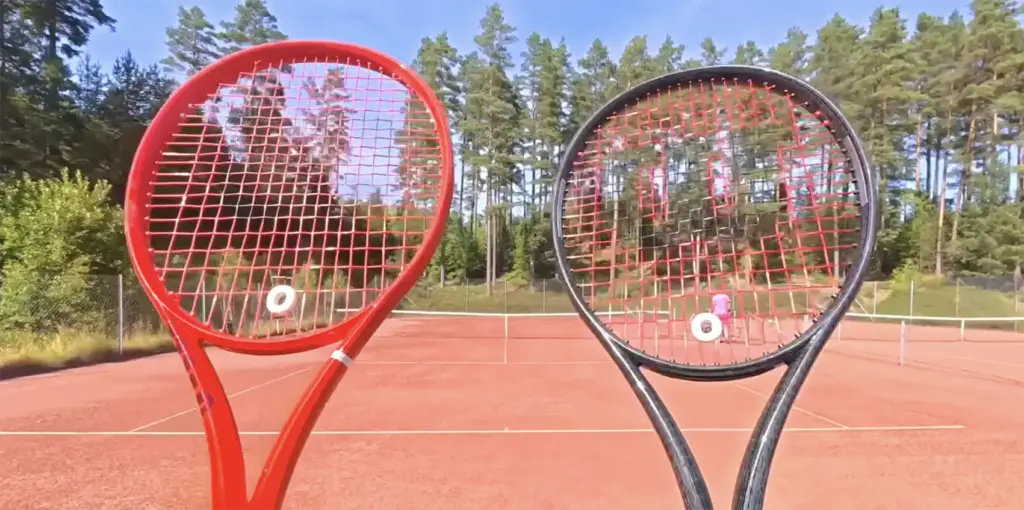
Control frames are still hugely important despite all the industry noise around power and spin. These suit players who want total confidence attacking small targets – versatile all-courters, aggressive baseliners who love redirecting pace, and anyone who transitions forward a lot. With this type of racquet, you generally get out exactly what you put in.
Wilson Blade 98 remains one of the obvious reference points. You’ve got a choice between the 16×19 and 18×20 patterns. The 18×20 gives you maximum predictability and directional control. The 16×19 gives you a bit more shape and easier access to spin.
Wilson Blade Pro with its H22-style platform gives you a more flexible, substantial feel than the standard Blade, with a slightly thicker beam. Hit it in the centre and it feels incredible, but it asks more of you. Swingweights tend to run higher, which can make it feel sluggish through the air. Two-handed backhand players tend to enjoy that heavier response more than one-handers.
Different Blade generations have really different personalities. The V8 and V9 sit pretty close together. The V10 shifts toward a more muted, somewhat more powerful feel. The V7 is noticeably softer and more flexible. None is objectively better; it comes down to preference.
HEAD Radical MP and Radical Pro go head-to-head with the Blade in many ways. The Radical Pro is more demanding, with a thinner beam giving excellent precision and a fast feel, but demanding more from you as a player. The MP is the easier option, offering extra power and forgiveness while keeping plenty of control. Pros are often quietly playing older molds under new paint. Taylor Fritz, for example, has stuck with an older Radical platform that’s considerably more demanding than what you’ll find on shelves today.
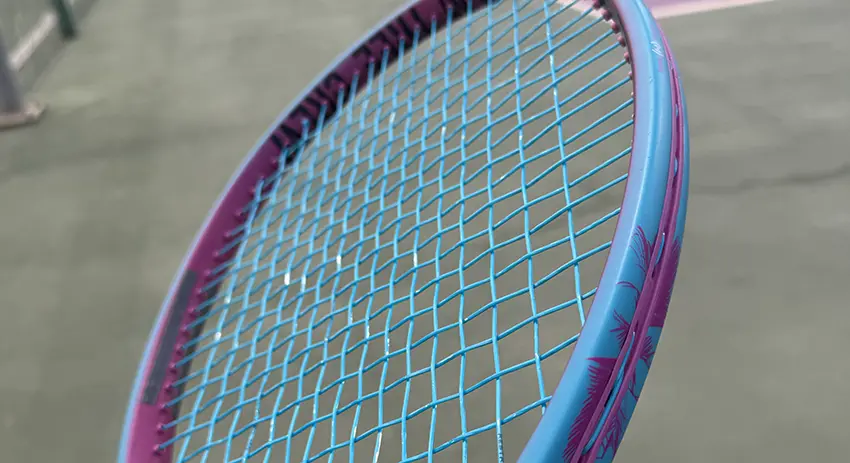
HEAD Gravity is still a major tour racquet. That broad, teardrop-shaped head gives it a very distinct feel. Traditional 18×20 Gravity setups deliver excellent stability and precision despite genuinely thin beams. The trade-off is manoeuvrability, that wider head shape can feel a bit slower through the zone. The Gravity 98 changes the picture quite a bit with a different launch angle and overall response. Don’t assume different Gravity sizes will feel like siblings.
Tecnifibre TFight 305 deserves credit for how far it’s come. These racquets feel relatively head-heavy compared to competitors, giving excellent stability and plow-through. The newer version is easier to swing than earlier editions. The 18×19 pattern sits nicely between the familiar 16×19 and 18×20 setups. For a more dampened feel, you can try the TF40, which is lower-powered.
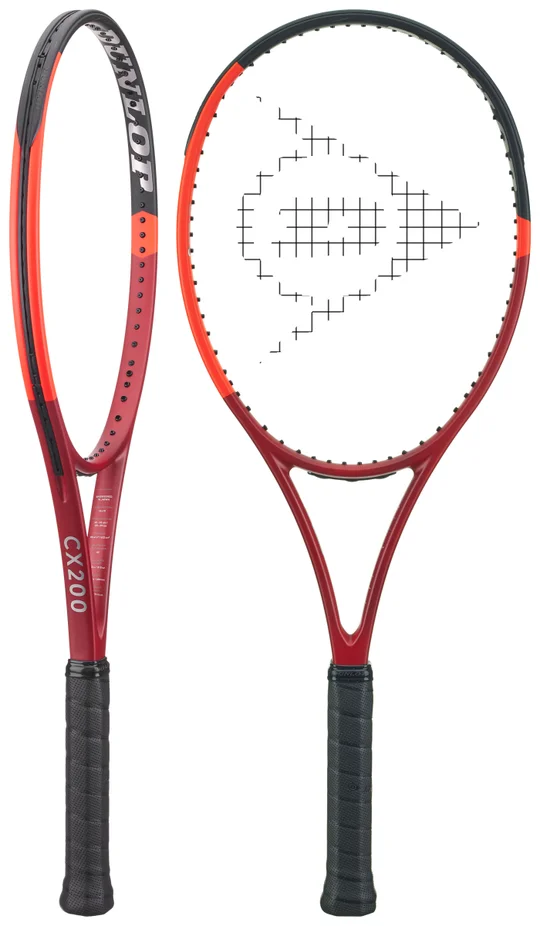
Dunlop CX 200 is easy to overlook, which is a mistake. It belongs in the same conversation as the Blade and Radical. The recent generation did arrive with some surprising lightness in swingweight, but the next generation looks like it addresses that.
Yonex Percept 97 is another strong option. The 97 is the more familiar advanced-player frame, and the 97D with its 18×20 pattern pushes even further toward precision. At 320 grams unstrung, the 97D already carries real substance – great news if you’d rather not customize much.
Who Should Use a Control Racquet?
Control frames suit players who like taking full cuts at the ball, prioritize directional accuracy, attack small targets, play a versatile all-court game, redirect pace well, and want the racquet to stay out of the way. The big advantage is confidence – when you’re swinging aggressively, you need to trust the ball is going where you’re aiming it. The downside is the racquet does less work for you. All the effort’s on you.
Category Three: Power Racquets for Flatter Hitters
The third major bucket is the modern power racquet, especially interesting if you’re an aggressive baseliner hitting through the court with a flatter trajectory. The feel is different from a control frame. A classic control racquet tends to hold the ball just a touch longer. A spin frame encourages more shape. A power racquet gives you a more immediate response – you hit through it, and the ball’s gone.
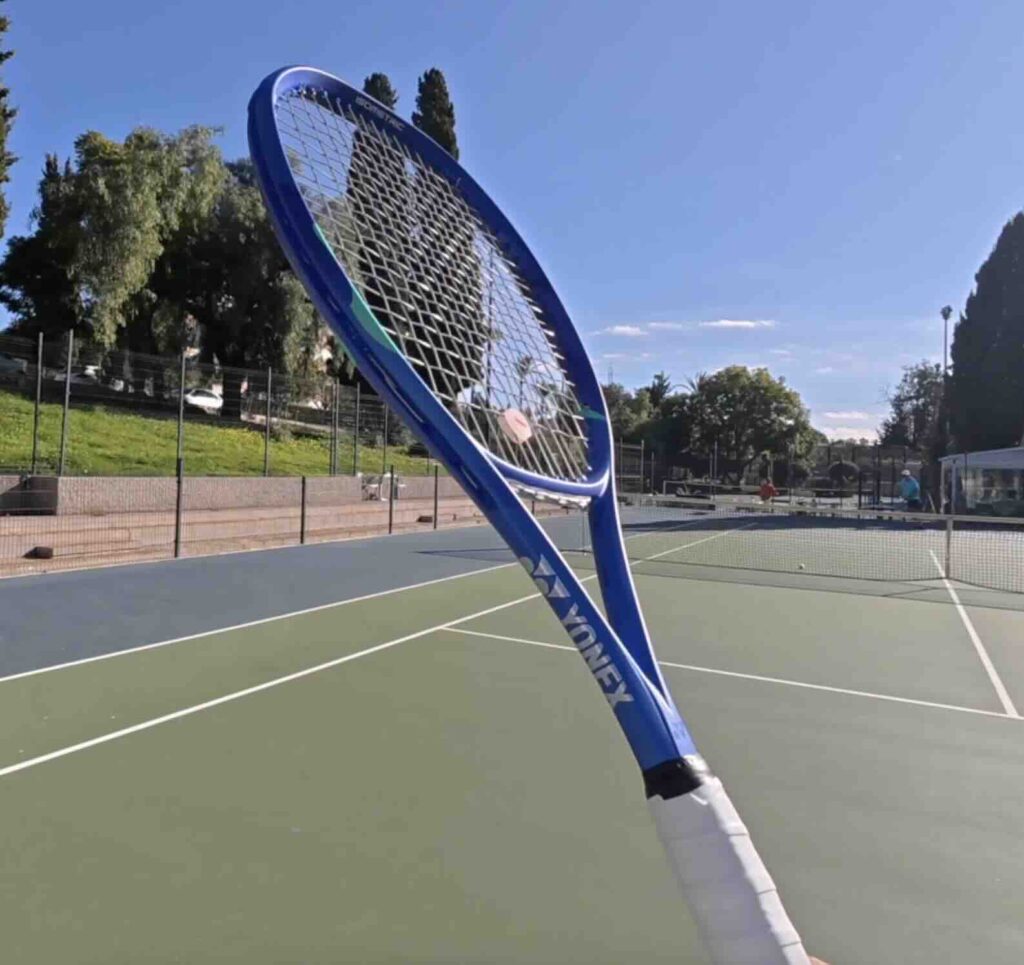
Yonex EZONE 98 is one of the strongest examples in this category. Huge on the WTA Tour, but you’ll see it plenty on ATP and among top juniors. It works because it’s easy to understand. You get real, usable power without going all the way into an oversized power frame. The 98-square-inch head gives you enough precision for advanced tennis, and the string bed still hands you easy depth. The downside of the Ezone is a somewhat artificial and disconnected feel.
Babolat Pure Drive 98 should go toe-to-toe with the EZONE 98 on paper. In practice, it’s more demanding. Higher swingweights make it tougher to handle than people expect when hearing “Pure Drive” and assuming “easy power.” The Pure Drive 100 is a much bigger success story precisely because it’s so straightforward. I think the Pure Drive 98 needs some work to be a true Ezone 98 competitor. Now it is a little too demanding,
Dunlop FX 500 Tour deserves more attention than it gets. It’s got a modern, power-oriented response but still keeps enough control for serious players. Like several other frames, it benefits from a bit of extra hoop weight. It swings very fast in stock form, but the downside is a slight lack of stability.
HEAD Boom Pro is slightly unusual in this category. It’s more flexible than most traditional power racquets, giving it a completely different personality compared to the EZONE or Pure Drive. This is not going to be your traditional power racquet, even though it offers more pop than a Radical.
Wilson Ultra 99 Pro traces its roots back to the old Steam 99. It’s been used by high-level ATP players and offers an interesting blend of power and control. I’d love to see Wilson expand this line with a true Ultra 98, a smaller-headed version with that plush Ultra character could be great for advanced players wanting more precision.
Who Should Use a Power Racquet?
Power frames suit players who strike a relatively flat ball, take the ball early, want to really penetrate through the court, prefer a lower trajectory, and like a quicker response off the string bed. Moving from a control racquet into a power racquet is sometimes easier than moving into a spin frame, because the trajectory stays fairly direct.
Do Advanced Players Need a 98-Square-Inch Racquet?
Not necessarily, but 98 square inches is still a very logical place to start. It gives you solid balance of precision, manoeuvrability, stability, spin potential, and forgiveness. A 100-square-inch frame can absolutely work, especially if you want extra power or spin. But at the advanced-player level, 98 remains something of a sweet spot.
Honestly, head size isn’t even the real issue most of the time, it’s specification. A racquet with the “right” head size but the wrong swing-weight can suit you far worse than a different-sized frame that’s actually tuned correctly.
All racquets mentioned here are available at our partners:
- Tennis Warehouse (US, Canada)
- Tennis Warehouse Europe (10% off with code TNERD10)
- Tennis Only (AU)
- HEAD official website (USA)
- Wilson official website
Customization: Helpful, But Easy to Take Too Far
Ideally, advanced players should have their racquets matched, making sure multiple frames share similar static weight, balance, swingweight, and overall feel. Competitive players notice the differences. Muscle memory notices them too, whether you’re consciously aware of it or not.
Adding weight at 3 and 9 improves twistweight and stability. Adding mass toward 12 o’clock increases swingweight, power, and plow-through. Adding weight under the grip shifts balance without blowing up your swingweight. But every change has a cost. The most common mistake I see is adding weight simply because pro racquets are heavy. A bigger number isn’t automatically better. The best racquet is the one you can actually swing effectively for three full sets.
Strings Matter Almost as Much as the Frame
Testing racquets without thinking about strings can seriously mislead you. A control racquet strung with a lively string at low tension can suddenly feel surprisingly powerful. A powerful racquet with a thick, stiff poly at high tension can feel dead.
Pros tend to favor predictable strings. Round polyesters remain a great choice despite all the marketing noise around aggressively shaped strings. Shaped polys can add bite, but they can also make the string bed livelier or less predictable depending on your setup. Gauge matters too – a 1.30mm poly will generally feel firmer and more controlled than its thinner counterpart.
Remember that a stiff string like Luxilon 4G shouldn’t automatically be strung tight. What the pros do with tension isn’t a set of instructions for the rest of us.
Should You Copy a Pro’s Racquet Setup?
Probably not. Pros are frequently playing older molds hidden under current cosmetics. They might also be running unusual layups, extra length, custom grip shapes, and very specific weight distributions. That setup evolved around their game over many years. Your game hasn’t gone through the same process.
The retail versions of today’s advanced-player racquets are already more than capable of world-class tennis. The next generation of pros is going to grow up playing a lot of these exact frames. There’s no reason to think you need an obscure decade-old pro stock to compete at your level. The obsession with pro specs can absolutely become a rabbit hole.
Final Thoughts: Choose Confidence Over Curiosity
There’s an enormous number of great racquets out there right now. For heavy spin and shape, look at the Pure Aero, VCORE, Extreme, and Defyer. For control, the Blade, Radical, Gravity, TFight, CX 200, and Percept all deserve a real look. For flatter power tennis, the EZONE, Pure Drive, FX, and Ultra families give you plenty to work with.
But here’s the lesson that actually matters most: you should feel confident with your racquet. You shouldn’t be thinking about your equipment mid-match. If your current stick already gives you that confidence, switching just because something else is trendy might genuinely make you worse.
Pros go back to old setups all the time. Club and advanced players do exactly the same thing. Muscle memory is powerful, sometimes the end of a long racquet-testing journey is realizing the racquet you already had was the right one all along.
Demo carefully and test close to your actual spec. Don’t change five variables at once. And when a racquet feels natural from the first few minutes, pay attention. That feeling is usually telling you something.