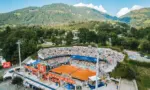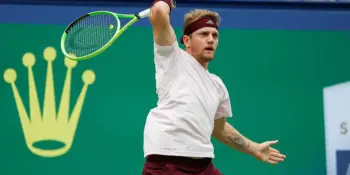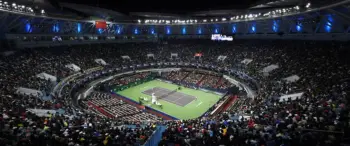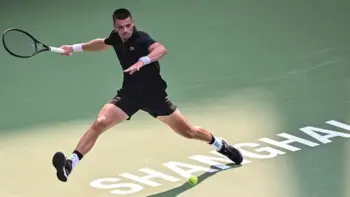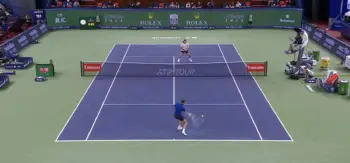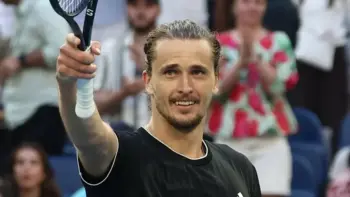
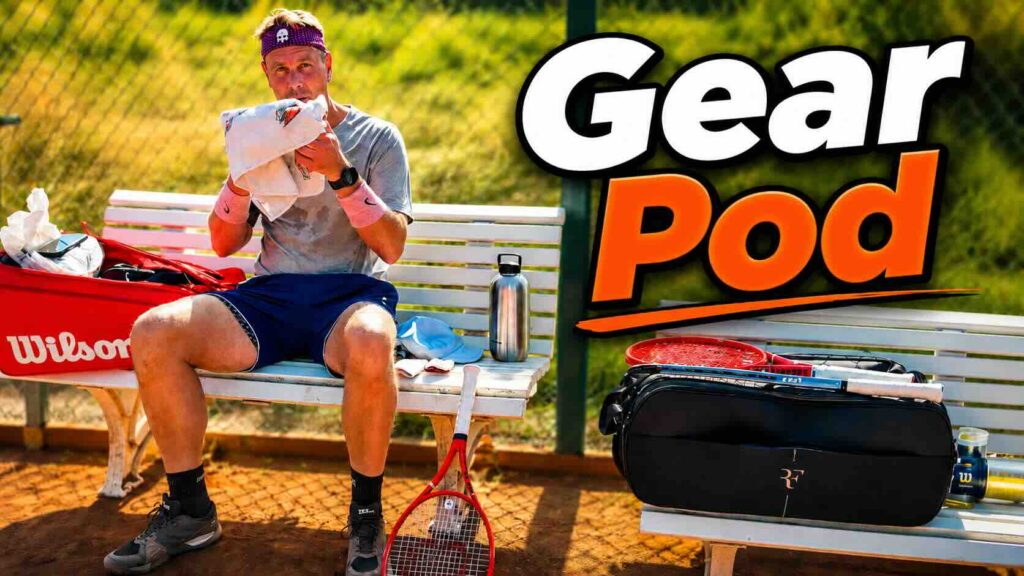
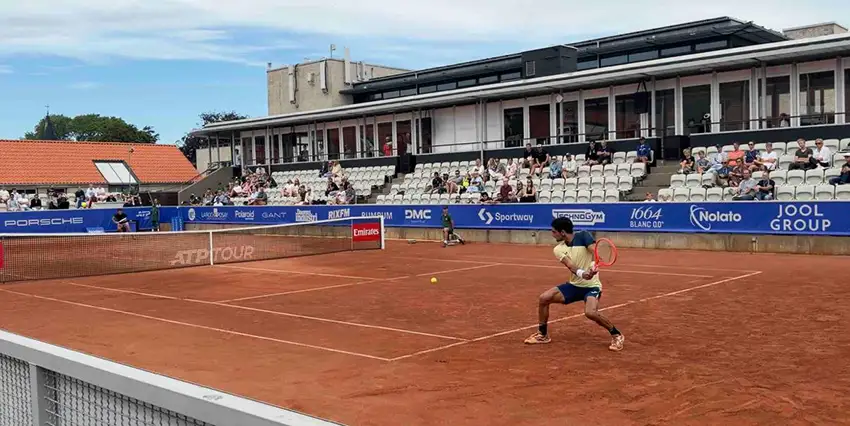
Henrik and I just spent four days in Båstad, Sweden for the Nordea Open. The weather was perfect, the courts were beautiful, and we enjoyed daily two-hour hits followed by evening beers and good food. But honestly? The tournament itself was a little flat this year.
The field disappointed us. Andrey Rublev was still playing when we left. Grigor Dimitrov lost in the second round. And Swedish representation? Almost nonexistent – just one wildcard Swedish player in the main draw (college player Max Dahlin). That’s a problem for a Swedish tournament.
The Best Match Nobody Watched
The highlight for us wasn’t the main draw. It was the qualifying final on Monday between Thomas Faurel and Miguel Damas – a three-hour clay-court grind with heavy shots and rallies extending 25+ shots. That’s where the tennis fire actually was. Beyond that, the tournament lacked the intensity we remember from previous years, especially when Rafa was here. The atmosphere felt electric then. This year felt sold out on paper but half-empty in the stands.
The party vibe of Båstad, while fun, definitely affects the tournament. Close to center court is a famous outdoor bar with booming music that distracted players and fans alike. The VIP area was so loud the chair umpire had to ask them to be quiet during Rublev’s match. It’s a beautiful place, but tennis wasn’t always the priority for visitors.
Doubles Needs Saving – Here’s How
One serious topic came up: the ATP is considering cutting doubles prize money from 20% of the total purse down to 10%. That’s devastating for doubles specialists. But the bigger issue is the game itself has become unwatchable – too many one, two, or three-shot points ending in net-rusher kills.
Henrik had an interesting idea: what if everyone started from the baseline when the serve goes in? You can rush to the net if you want, but the first volley becomes genuinely difficult. No more automatic serves where the net player just touches winners. Longer rallies, more strategy, better entertainment.
A Swedish reporter suggested another option: eliminate the first serve. Only one serve to make the point more competitive.
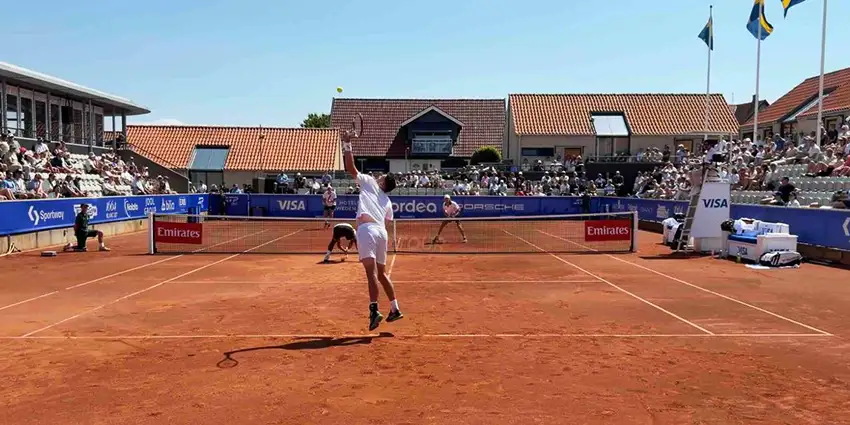
These might sound radical, but doubles is dying. The current game (big serve, net player kills it) produces short points that aren’t fun to watch. We need to try something different. Maybe the ATP could experiment at NextGen or challenger level before making broader changes.
The other idea we discussed: could you force top players to play doubles? The problem is they’d probably tank matches to protect ranking points and singles focus. The real solution might be significantly increasing doubles prize money so it’s actually worth playing.
Racquet Observations – The Blade Vanishes
Here’s something wild: there was almost no Blade in the stringing room this year. Normally you’d see 40% Blades. This year? One racquet painted as a Blade (Andrea Pellegrino’s H22).
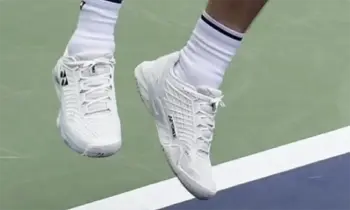
Instead, everywhere: Yonex VCORE, Yonex EZONE, and notably, plenty of black Python/Defyer prototypes. The game has shifted.
Allegedly, Babolat has been cutting sponsorships for players outside the top 150. They’re not giving out pro stocks like they used to. Result? Way fewer Babolat racquets on tour. Players who want the Aero 98 2023 are buying them used or retail because Babolat isn’t supplying them anymore.
Yonex have done brilliantly with sponsorship. Wilson with the Defier has successfully converted Blade players. HEAD is still present but with Extremes more than Prestiges.
The pattern is clear: players want lighter static weight and swing weight, but still want stability and plow-through. The Extreme, the Defier, the new Yonex models deliver that. The old-school heavy racquets, Wilson Six One, PT57A, are almost gone. The game evolved, and so did equipment needs.
String Observations
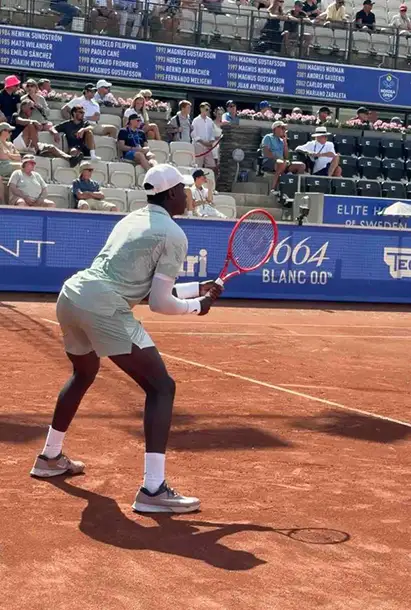
Moise Kouame was using Alu Power at 24 kg (about 53 lbs) in his Defyer 98 Pro. Stefano Travaglia, an impressive lower-ranked player, used String Project Sirius – a softer, rounder poly similar to Alu Power. Clean ball striking from him.
Rublev used HEAD Lynx Tour 1.30 at 26/25 kg. He used 4G for a while earlier in the year, but is now back to the HEAD string.
Navone has a rare setup: 4G mains and Alu Power crosses on an extended Boom Pro 18×20. But overall, there were pretty standard tensions throughout – nothing crazy like Mannarino-style 9 kg or ultra-high tensions like 35 kg.
The Real Crisis: Swedish Tennis
Here’s what bothered me most: Swedish tennis is in crisis, and the tournament reflects it. In the 80s and 90s, Sweden had incredible players. Björn Borg, Stefan Edberg, Mats Wilander, Magnus Gustafsson, Magnus Larsson, Nicklas Kulti, the list goes on. In the 2000s, Robin Söderling was a top ten player and after came Mikael Ymer who stayed in the top 50. Now? Sweden has maybe six or seven professional male singles players in the world top 2000. France has 150. Argentina has 150. Italy has 150.
One Swedish player in the main draw of a Swedish tournament is not a good sign.
The good news? An investor named Christer Gardell offered 100 million Swedish crowns (about €9.5 million) to revamp Swedish tennis this spring. He also demanded changes to the federation board: new people, new direction. This just happened a month or two ago. There’s now totally new leadership.
What needs to happen:
- Give Swedish player wildcards at Swedish tournaments, not just international players
- Develop young Swedish talent through academies
- Create more opportunities for Swedish juniors
The current approach of giving wildcards to players from other countries over young Swedes doesn’t help. At a Swedish tournament, you need Swedish players. It’s what creates atmosphere, excitement and fan investment.
Henrik is involved with the Swedish Davis Cup team and travels with them (heading to Chinese Taipei in September for competition). He’s optimistic something will change with the new investment.
The Beauty of Watching Tennis Live
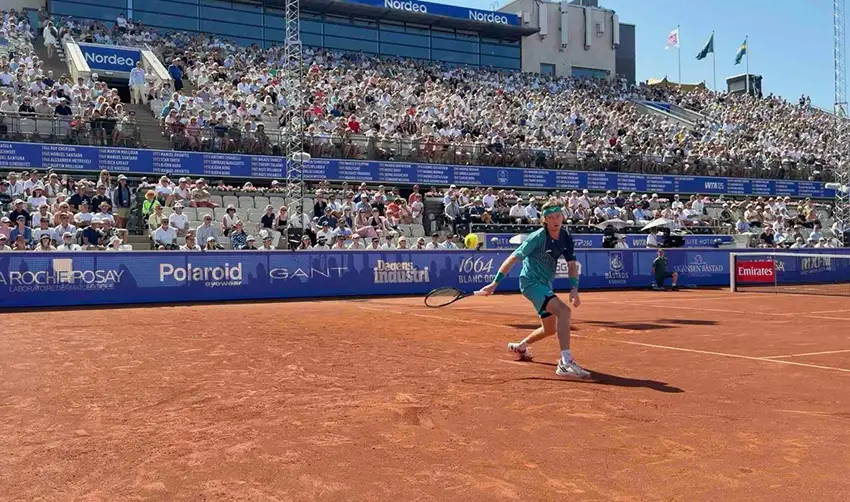
If you get a chance to watch ATP, Challenger, or even Futures tennis live, do it. Sit court-side if you can.
We watched Stefano Travaglia, ranked 150th in the world, play Mariano Navone. On TV he’s just a number. In person? He looked like a top-20 player. Perfect movement, hitting every shot 1.5 meters over the net with dips landing 30 centimeters before the baseline. Heavy shots, clean strokes, pure joy to watch.
That’s the perspective you don’t get on television. Even players ranked 500th in the world move with professional grace, strike with precision, and carry themselves with poise. It’s inspirational and motivating.
If there’s a professional tournament near you, go. The experience changes how you see tennis forever if you have not done so before.
Final Thoughts
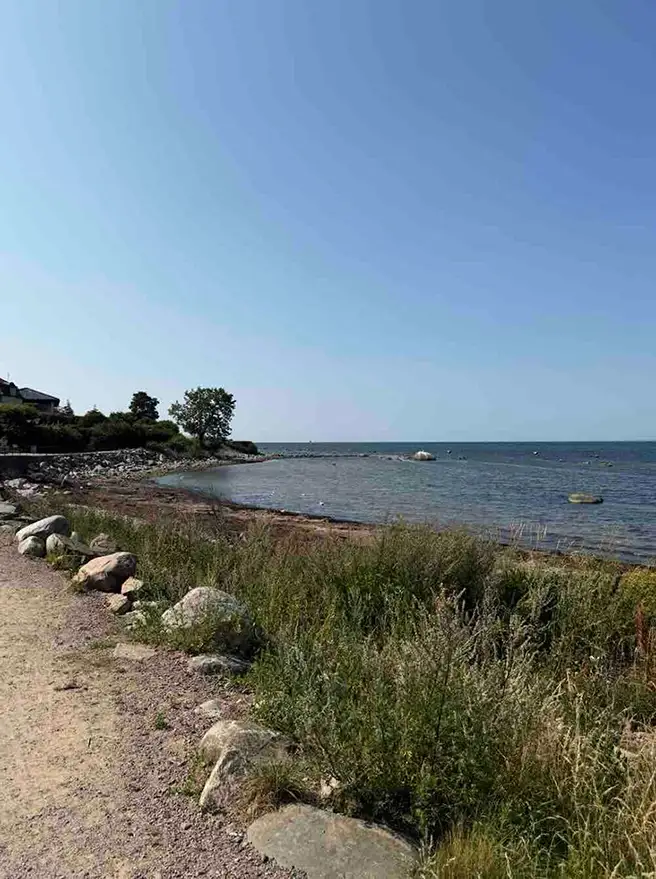
Båstad is a beautiful place in summer. The weather was perfect. The courts were excellent. The overall experience was great. But tennis-wise, the tournament felt hollow compared to previous years. That’s a warning sign for professional tennis: the atmosphere matters, the field matters, and local representation matters.
Sweden needs to rebuild. They have the investment now. Whether they convert that into top players remains to be seen. But the foundation is there.
If you have other ideas on how we can save doubles or any interesting recent gear observations, let us know in the comments!