

We’ve talked about the Wilson Defyer extensively since it launched, but we wanted to dig deeper into a question that came up constantly: is the retail version the same as the Pro Stock? We tested both the P98 and P100 in both retail and Pro Stock versions to give you a clear answer.
The short version: they’re close, but there are meaningful differences worth understanding before you buy.
The P98 Pro – the winner, if you ask Henrik
Neither Henrik nor I believe that pro stocks are where it’s at for recreational players. Many pro stocks have a richer feel, but are more demanding with smaller sweet spots. We felt both retail racquets performed better for us than the Python pro stocks. The 100 is where we might go with the pro stock in the end, but for the 98 Pro, it was easier to use the retail edition.
When you add weight to the retail P98 to get around 325 swing weight, it becomes something special. We strung it with the new Luxilon prototype red string at 44 pounds (20 kg), and it reminded Henrik of the RF01 – that same control-focused confidence combined with surprising spin generation. The racquet is genuinely fast through the air, but it doesn’t feel like it’s working against you. It’s got control, it’s got depth, and it’s easy to use without being forgiving to the point of unpredictability.
The retail version’s sweet spot is forgiving enough that it’s accessible, but not so forgiving that you lose connection to where you’re actually hitting the ball. That’s the sweet spot (pun intended) for most players.
Henrik and I played our best tennis with the retail P98 during our test session, but subsequent sessions made me crave the power of the retail 100.
The P98 Pro Stock – The Demanding Version
The Pro Stock P98 is noticeably crisper. The sweet spot is smaller. Outside hits get punished more. The feel is rawer and less plush than the retail version. It needs more weight than the retail version to feel stable.
This is a pro-level racquet. For club players like us, the retail version is the choice. If you’re obsessed with the black Pro Stock cosmetic though, understand what you’re signing up for: a more demanding racquet that requires better technique and rewards precision. You might be 1% more precise with it. But honestly, for most people, the retail will feel better and perform better.
The Pro Stock grip shape also felt slightly different – a bit more squared, similar to older Dunlop or HEAD grip shapes. The retail grip felt more rectangular and more comfortable to us, especially in L2 size. The grip shape is important and we were both in love with the new Wilson Defyer grip.
The P100 Retail – Beautiful But Confusing
The retail P100 is plush. Very plush. Very muted. Very damp. It has that DNA from Wilson’s Clash and Ultra 100 – extremely flexible with a generous sweet spot.
Here’s the problem: that generosity makes it hard to know exactly where you’re hitting the ball. The SI3D layup creates a massive sweet spot, which is great for forgiveness, but outside hits don’t feel obviously different from center-court hits. This led to moments where we genuinely didn’t know where the ball was going or how it got there. However, the extra forgiveness and power that this racquet provided still made it a real winner compared to many racquets on the market. I am seriously contemplating a switch to this model from the HEAD Speed MP I have been using. I still need more time to test. It definitely plays better with a more dead string. I tried it with Tecnifibre Razor Spin at 22 kg and that was a little too lively for my taste. Also, if you get a high-spec copy of the Defyer 100, it might become a little tough to swing. The 98 Pro seems to have a lower stock swing weight, which is a little odd, it would make more sense to have it the opposite.
I am personally a big fan of the 100 and Henrik thinks I play my best tennis with that one, but I need more testing and string experimentation to confirm whether it can be the one for me.
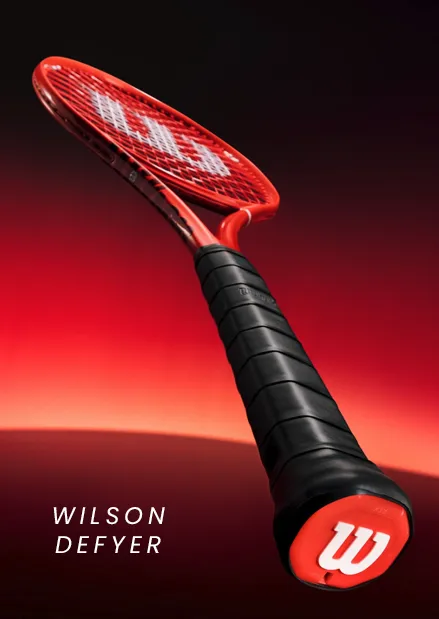
The P100 Pro Stock – The Better Version for 100 Users
The Pro Stock P100 fixed what bothered us about the retail. It’s crisper. It feels more direct – cleaner feedback, better connection to the ball. You know exactly where you hit it. Even though the sweet spot is naturally smaller on a Pro Stock frame, a 100 sq in head still gives you plenty of margin for error. Outside hits are punished a bit more, but you’ll understand why.
For the P100, Henrik preferred the Pro Stock over the retail. I am not quite sure what to think yet, right now I am leaning towards the retail edition.
String Pairing – Luxilon Red
We tested both racquets with the new Luxilon red string. This is a key part of the story because Wilson clearly designed both the racquet and string to work together.
Luxilon is six-sided, very smooth, and feels like it sits between 4G poly and Alu Power. It has more snapback than 4G but the dead feel that lets you string it low. At 44 pounds (20 kg), it plays like it’s strung higher. This allows better pocketing and spin without harsh feedback.
The retail Defyer Pro 98 especially benefits from this pairing. That combination – retail P98 with Luxilon at low tension – is genuinely excellent.
Hopefully Luxilon will be available soon. It was supposed to launch with the racquets but got delayed. If you’re getting the retail P98, this string is worth waiting for.
Size and Weight Considerations
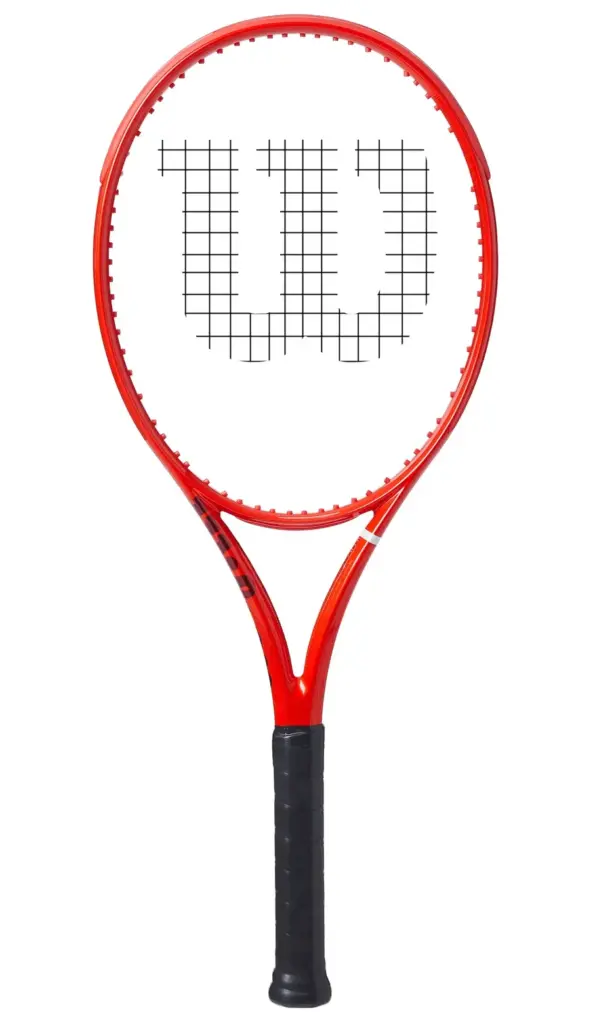
Willy used a foam-filled Pro Stock P98 around 320 grams unstrung. His racquet has plenty of lead tape on the racquet head. He loves the plush feel and plow-through of the foam-filled versions, but they’re tough to find. Holy Tennis might have them, but they are not going to be cheap. Use tennisnerd5 to get 5% off your purchase.
Both of us prefer L2 grip size on these racquets, which surprised me since I usually prefer L3. The L2 feels more stable and gives better plow-through. Henrik mentioned even Rafael Nadal played L2 for that reason – it lets you use your wrist more freely.
Arm Comfort – Both Versions Excellent
Here’s important: we’ve been hitting hard with these racquets for four days in a row, two hours straight with pressurized balls. Zero arm issues. Zero elbow or wrist problems.
If arm comfort matters to you, both versions deliver. The retail is softer; the Pro Stock is crisper but not harsh. Still, you need to string sensibly. A stiff string at a mid-high to high tension can still create arm issues.
Comparisons to Other Racquets
vs Aero 98 2023:
More controlled, slightly more spin, doesn’t fly as much. The Aero 98 tends to launch more if you don’t have elite racquet head speed. The Defyer is easier to hit through with confidence.
vs Blade 98:
Similar feel and control, but the Defyer generates noticeably more spin. The Blade 98 is a touch more controlled, but the Defyer gives you more on the ball.
vs Blade 100:
The Defyer is more muted, easier to use, bigger sweet spot. The Blade 100 (we tested V8 and V9) had more control initially but was too muted for feedback. The Blade 100 Pro also got trampoline-like tension loss quickly. The Defyer holds tension better and doesn’t punish the strings as much.
The Defyer arguably beats both Blade 100 versions in almost every category except pure control.
Arm-friendliness:
Defyer retail is more plush and easier on the arm than Aero 98 (which is raw and direct). No comparison to the raw Aero feel – this is noticeably more dampened.
Color and Design Take
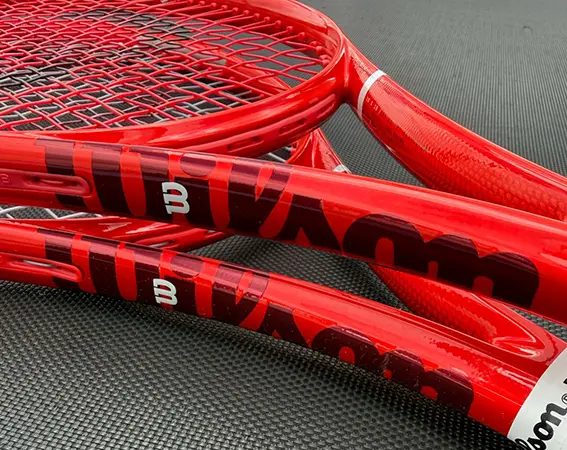
Look, we know people didn’t love the red. But honestly, we think it looks good. It’s glossy, the details are nice, and it reminds us of racquets like the Prestige 360 Plus and V-Core – which didn’t get criticized nearly as much. I might still go for the pro stock racquets on a pure visual decision, but Wilson already have RF and Pro Staffs that are black, so I understand the decision to go with their signature red color.
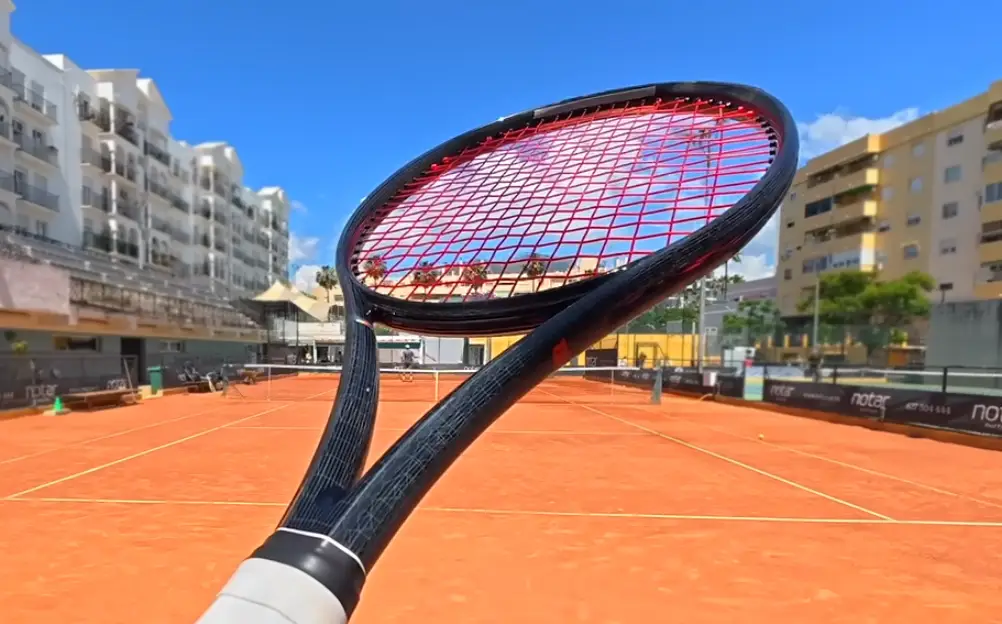
The real issue was that people fell in love with the black prototype and got disappointed when retail wasn’t black. If you like black racquets, Pro Stocks are available through retailers like Holy Tennis, though they’re more expensive.
If Wilson releases a black or night edition of this, it would look phenomenal. But the red deserves more credit than it’s getting.
Our Final Verdict
P98 Retail: If you are an advanced player looking for control and spin, get this. Add weight to around 325 swing weight. It is not string sensitive, so you can go with your standard string and it will perform.
P98 Pro Stock: Only if you’re an advanced player who likes demanding racquets and wants the black cosmetic. Be prepared to add weight and expect a smaller sweet spot.
P100 Retail: If you want plush and forgiving, it delivers. Just know it’s not the most connected feeling. It does play with good power and spin, though. For this one, I can recommend a more dead string like Luxilon 4G and similar options.
P100 Pro Stock: If you want a P100 with better feedback and control, this is the better choice. The P100 head size forgives the Pro Stock’s crispier feel. Still, it is not as forgiving as the retail.
The P98 retail > P98 Pro Stock, but P100 Pro Stock > P100 retail. That’s the counterintuitive key finding.
Both versions are excellent racquets. I am playing them side by side at the moment to determine which one works best for me in a match situation.
The Wilson Defyer P98 and P100 are available now from the Wilson website here or at retailers such as Tennis Warehouse Europe (use TNERD10 for 10% off) or Tennis Warehouse (US, Canada).












Nice overview! Could I string the Defyer 98 (retail) with Völkl Cyclone 1.25 or Luxilon Element soft 1.27 – @ 18kg?
I would go Cyclone, otherwise it might be too soft/mushy.
Been playing with the retail 100 for two weeks. It’s a good all round racquet that doesn’t excel at anything in particular. I normally use Confidential on muted frames and it gives me more feel, but I’m actually still struggling in that department. I’ll try Tour Bite and Tour Sniper, which I’ve also liked in the past, as this is a problem I personally need to solve
What string and tension would you recommend for the Defyer 98?
Toroline Vamos at 49 lbs is what I have been using. I have heard good thing about Restring Sync in that racquet as well. Depends a bit on level and preferences.
Henrick, what actual construction differences between retail and pro stock P98/D98 explain the feel differences you raise? They did end up building a completely different racket that is only “shaped” (molded) the same as the one they had developed?