Miami has one of the best tennis scenes in the United States. The weather is warm year-round, the courts are plentiful, the surfaces vary more than you might expect, and once a year the city hosts one of the biggest combined ATP and WTA events on the calendar, the Miami Open. If you’re visiting during tournament season – or planning a trip around it – there’s a lot to do with a racquet in your hand before and after the matches.
Here’s what you need to know.
The Tournament: Miami Open
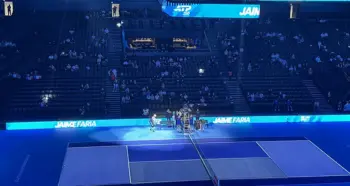
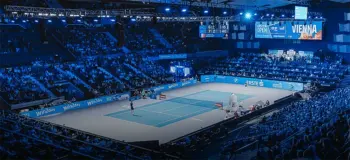
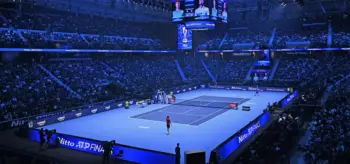
The Miami Open runs in March at Hard Rock Stadium in Miami Gardens. It’s a combined ATP Masters 1000 and WTA 1000 event, which puts it just below Grand Slam level in terms of prestige and player draw.
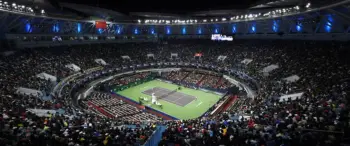
The venue moved from its original home at Crandon Park in Key Biscayne to Hard Rock Stadium in 2019. The new campus has 29 permanent courts, a 14,000-seat Stadium Court built inside the NFL stadium bowl, and a Grandstand court as the second main stage. The setup is more festival-like than the old Key Biscayne grounds – more food, more entertainment, louder atmosphere. Whether that’s better depends on your taste, but it is undeniably a spectacle.
Attending the Tournament: What to Know
Tickets: The ticketing structure has three main tiers. A Stadium Court ticket gives you a reserved seat for a specific session plus roaming access to all outer courts and the Grandstand. A Grandstand ticket gives you a reserved seat on the second court plus outer court access, but no Stadium Court. A Grounds Pass gets you onto the campus and outer courts with general admission seating at the Grandstand, no stadium access, but a genuinely flexible and often underrated option for the early rounds. Tickets available at miamiopen.com or Ticketmaster.
The Grounds Pass secret: In the first week especially, a Grounds Pass is excellent value. There are 17 practice courts on campus that anyone with a ticket can access on a first-come, first-served basis, and top players regularly appear on outer courts during early-round matches. You can get closer to the action on a Grounds Pass than you’d ever manage inside the stadium. Many experienced tournament-goers prefer this in the first four or five days, then upgrade to Stadium seats for the second week.
Getting there: Brightline high-speed rail runs direct to Aventura Station from Downtown Miami, Fort Lauderdale, Boca Raton, West Palm Beach, and Orlando, with a complimentary shuttle service to the stadium from there. If you’re staying in Miami Beach or Downtown Miami, the train is significantly less stressful than driving. Parking is available at the stadium for those who drive.
Practical notes: Sealed water under 1 litre is permitted inside. Professional cameras and tripods are not. Stadium Clear Bag Policy applies. The food situation is genuinely good – the 2026 lineup includes Zuma (the only sit-down restaurant, on the Club Level), Café la Trova, Miami Slice, Cuban diner food from Chug’s, and a long list of local Miami names. It’s one of the better-fed tournaments on the tour.
More reading: tips for betting on the Miami Open.
So, Where to Play? Tennis Courts and Clubs in Miami
Crandon Park Tennis Center
7300 Crandon Blvd, Key Biscayne
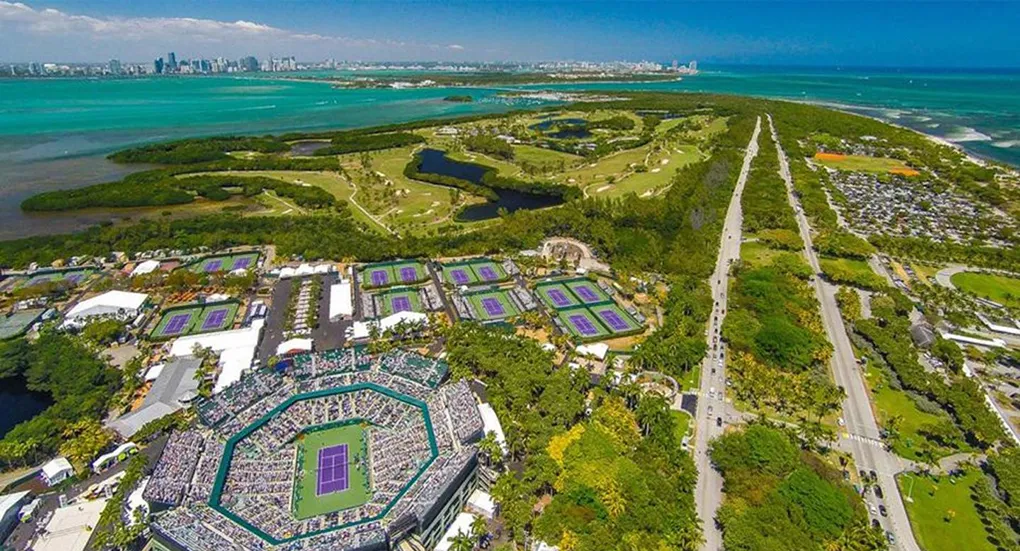
This is the most historically significant tennis facility in the Miami area. Crandon Park hosted the Miami Open from 1987 until 2018 and the original stadium court is still there. The facility now has 27 courts across hard court and American green clay surfaces, is operated by USTA Florida (who took over management in January 2026), and is fully open to the public at very affordable rates. Hard court fees are a few dollars per person per hour; clay courts are slightly more.
The setting is fantastic, Key Biscayne is a barrier island just south of Miami Beach, surrounded by water, with Crandon Park Beach (consistently one of the best beaches in the US) right next door. Playing here and then heading to the beach is one of the better things you can do during a Miami tennis trip. The former ATP/WTA stadium is on-site and can be rented by the hour for a genuine pro-court experience.
Key Biscayne Tennis Association (KBTA)
Crandon Golf, Key Biscayne
Less well-known than the main Crandon facility but worth knowing about. The KBTA is a non-profit public club with 10 courts, one hard and nine clay, set among trees at the Crandon Golf Course. It’s open to visitors, has a community atmosphere, and the clay courts are well-maintained with a sea breeze running through. Many reviewers describe it as a hidden gem.
Flamingo Park Tennis Center
1200 Meridian Ave, Miami Beach (Jefferson Ave & 11th St)
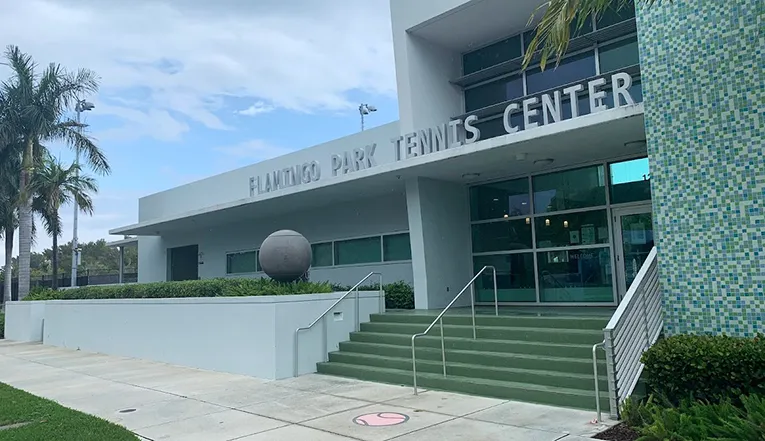
The most central option for anyone staying in South Beach. Flamingo Park has 17 lighted hard courts, a full pro shop, ball machine and racquet rentals, locker rooms, and a practice wall. It’s a public city facility run by the City of Miami Beach, open to the public daily from 7:30am, and genuinely well-run. Court fees are modest, under $10/hour.
The location is hard to beat: Flamingo Park is in the middle of South Beach’s Art Deco district, close to Lincoln Road, with good food and nightlife within walking distance. Parking in the area can be tight, but if you’re staying nearby it’s easy. A solid, no-frills choice with everything you need on-site.
North Shore Tennis Center
501 72nd St, Miami Beach
Further north along Miami Beach, away from the South Beach crowds, North Shore has 10 clay courts and two hard courts, all lighted. It’s a City of Miami Beach facility like Flamingo Park, similarly affordable and open to visitors. The clay surface is uncommon in a city where hard courts dominate.
Biltmore Tennis Center
1150 Anastasia Ave, Coral Gables
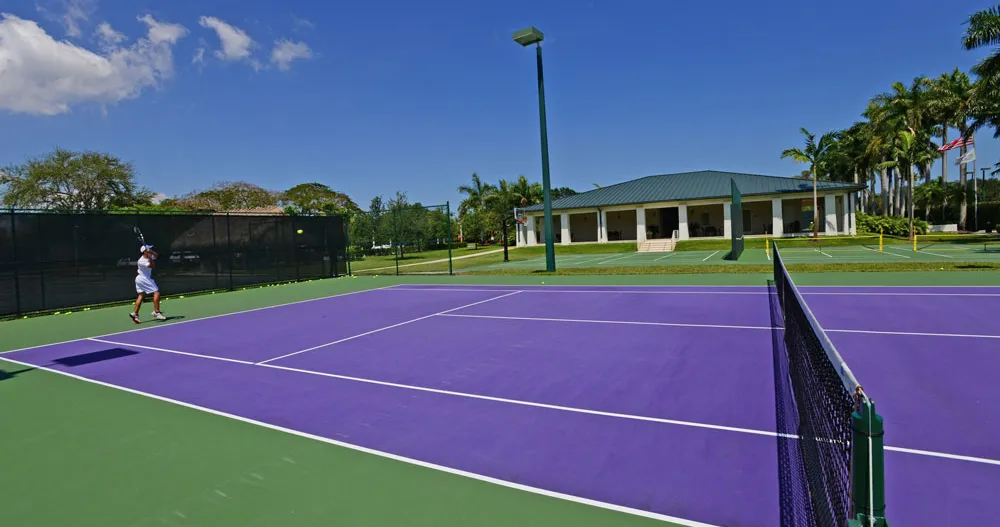
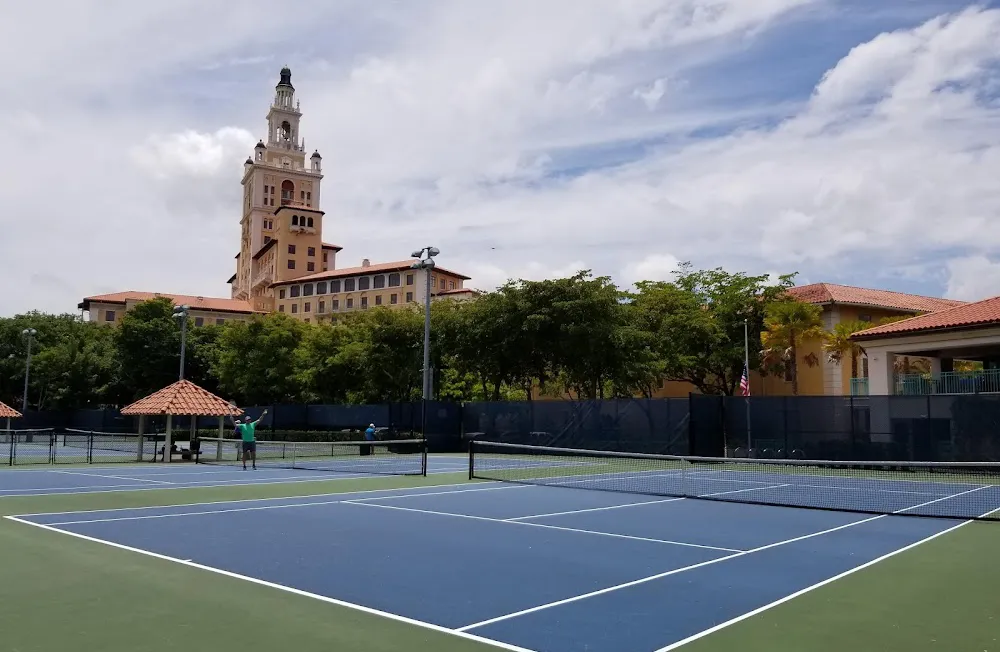
This is one of the most pleasant places to play tennis in the Miami area, full stop. Ten lighted hard courts set in the grounds of Coral Gables, next to the iconic Biltmore Hotel and surrounded by banyan trees and landscaped gardens. It’s a public City of Coral Gables facility, so fees are reasonable , around $6/hour during the day, $10 in prime time. The setting is far more beautiful than most public facilities, the courts are well-maintained, free parking is available, and there are coaches for lessons.
If you want one place to take a visitor who isn’t particularly tennis-obsessed but would enjoy a nice hit somewhere pretty, this is the one.
Brickell Tennis Club (Cliff Drysdale Tennis)
601 S Miami Ave, Miami
Right in the heart of Brickell, Miami’s downtown financial district. Seven Har-Tru clay courts in a well-run club with a specialty in tennis clinics. Convenient for anyone staying in Downtown Miami or Brickell. Cliff Drysdale Tennis also manages the Crandon Park program, so the coaching quality is consistent.
The IMG Academy Day Trip (Worth Considering)
IMG Academy in Bradenton, about an hour north on the I-75, is the spiritual home of American tennis – built on Nick Bollettieri’s original academy, it has produced Andre Agassi, Monica Seles, Maria Sharapova, Jim Courier and many more. The campus now has dozens of courts across hard, clay, and indoor surfaces.
For adults visiting the Miami area during tournament time, IMG offers short-stay and adult camp programs year-round. If you want a full day of coaching in a world-class environment, it’s a decent option.
More Options Worth Knowing
Miami has a dense network of public and semi-public courts. A few more worth noting if the above are full or inconvenient for your location:
- Tropical Park Tennis Center (SW Miami) – 12 lighted courts, year-round programs, very affordable rates. tropicalparktennis.com
- Morningside Park Tennis Center – 12 recently resurfaced courts in the Upper East Side area, all lighted, modest visitor fees
- Bayfront Park and neighbourhood courts – free public courts scattered across the city; first-come, first-served
- Backhand City (Miami) – well-reviewed coaching facility, popular with locals looking for structured hitting sessions
For finding a hitting partner before or during your trip, the UTR (Universal Tennis Rating) platform and Tennis-Miami.com are both useful resources for local match-ups.
The Surface Mix: What to Expect
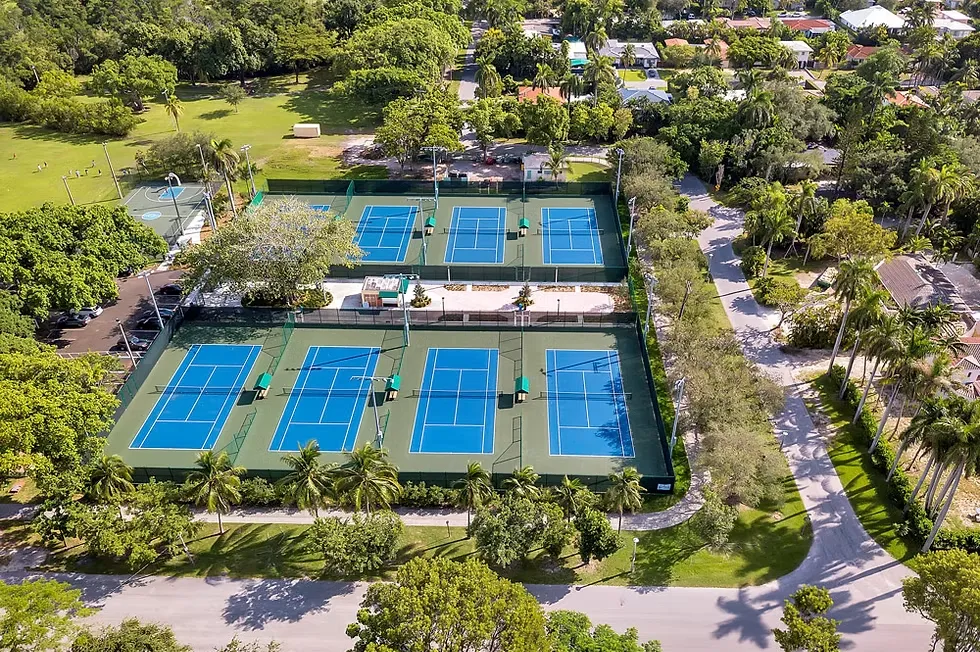
Unlike Dubai (all hard courts) or Barcelona (all clay), Miami has a genuine surface variety. Most private and hotel courts are hard. The city’s public facilities lean hard court too, but North Shore on Miami Beach and KBTA on Key Biscayne both offer clay, and Brickell has Har-Tru. The Miami Open itself is played on hard court – the Laykold hard court surface also used at the US Open. If you’re tuning up for the European clay season, a session or two at North Shore is worth fitting in.
March is ideal for outdoor tennis in Miami. The humidity hasn’t yet hit summer levels, temperatures are warm rather than extreme, and the days are long. From June through September it gets genuinely punishing outside during the day, the serious players shift to early mornings or evenings.
A Few Practical Notes
Gear: Miami is well-served for tennis equipment. Most large sports retailers stock good racquets, and specialist shops exist in the Coral Gables and Brickell areas. Hard court shoes are the standard, though Har-Tru clay courts benefit from a clay-specific shoe if you have them.
Sun: Miami in March is sunny and warm. Sunscreen, a hat, and water are non-negotiable for any outdoor session. The humidity adds to the physical demand even in cooler months.
Booking courts: Most public facilities accept online bookings a few days in advance. During tournament week, courts near the main venues get busy – book ahead or plan to play earlier in the morning.
More reading: Top hotels with tennis courts in Florida