Not every poly is a great find. Some promise to spin and control. Some promise comfort and strength. Some say they will give you “tour-level performance.” Then you hang them up and feel bad about it right away.
In my tests, these five strings just didn’t work. This could be because the tension wasn’t stable, the response wasn’t consistent, I didn’t have enough control, or they just didn’t perform as well as newer options.
Strings ranked:
- Polyfibre TCS Yellow
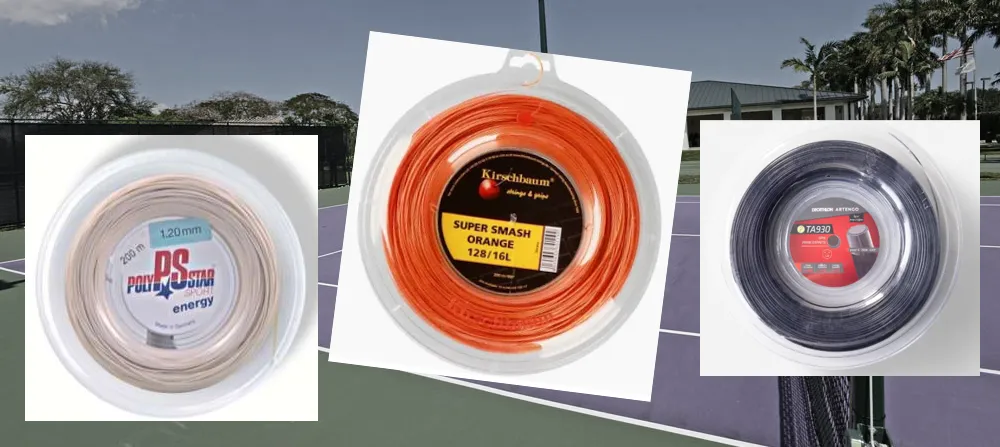
- Decathlon Artengo TA 930 Spin Black
- Still in Black Protect Grey
- Kirschbaum Super Smash Orange
- Polystar Energy Natural
1. Polyfibre TCS Yellow
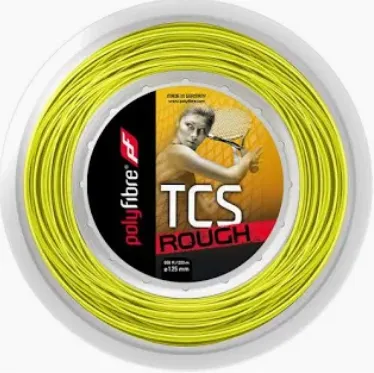
Polyfibre has made a name for itself with “soft control polys,” but TCS Yellow seems like a compromise in every way: it’s soft but not responsive, controlled but not precise, and comfortable but not connected.
Spin
The spin production of a modern co-poly is shockingly average. It relies almost entirely on string movement instead of aggressive snapback or edge bite. This means that heavy topspin players won’t see the ball dip or jump with authority like they do with sharper, more structured polys.
Power
At first, the power feels low and a little dull, but as the tension drops—faster than expected—the response becomes inconsistent. Depth control suddenly needs to be adjusted in the middle of the session, which shouldn’t be necessary.
Feel
This is where it really loses me: the stringbed feels fuzzy and muted, like there’s a layer between you and the ball, which makes you less confident when you swing aggressively.
Control
Early-session control is fine, but as the tension goes down, the launch goes up and the directional accuracy gets worse, making you swing more carefully than you should with a supposed control poly.
Why it ranks so bad
It doesn’t do a good job of spin, tension holding or feel which makes it useless in a category where competitors do at least two of those things really well.
2. Decathlon Artengo TA 930 Spin Black
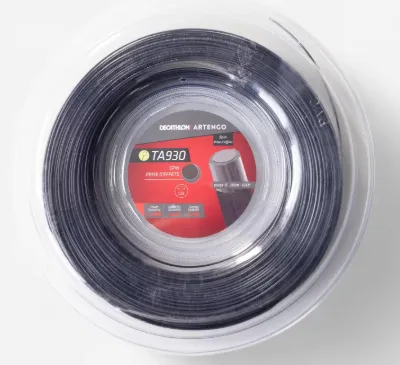
You see “Spin” in the name and expect a strong bite, a modern snapback, and high RPMs. What you actually get feels like a safe, entry-level poly dressed up in performance branding.
Spin
Even though the name suggests otherwise, the bite is minimal and the snapback feels slow. This means you can generate spin, but it comes from effort rather than string technology, which is not very impressive.
Power
The power output is flat and boring, with no penetrating drive or elastic pop, so balls land short unless you really go for it with every swing.
Feel
Feedback is dull with a slight harsh edge, which makes for a strange mix of muted feeling and stiffness that doesn’t protect the arm or reward clean ball striking.
Control
When you accelerate your swing, the response feels unstable and slightly unpredictable, which makes aggressive baseline not much fun.
Why it ranks so bad
It seems like a cheap string trying to look like a performance poly, but when you put it next to other shaped strings of the same gauge, it just doesn’t hold up.

GREAT OFFERS ON TENNIS PRODUCTS
Don’t miss our new deals and discounts for some of our favorite tennis products!
Good discounts on new racquets, strings, bags, apparel or other tools and services such as coaching or training equipment.
3. Still in Black Protect Grey
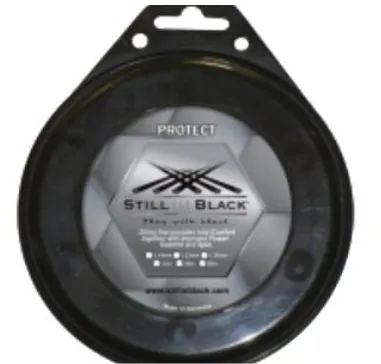
A thin 1.20 gauge should deliver sharp spin, crisp feedback, and explosive snapback but Still In Black Protect never fully capitalizes on that in reality.
Spin
Spin starts reasonably well but degrades quickly as the thin profile smooths out, and once the edges are gone, the bite disappears almost completely (some 6-8 hours in seemingly).
Power
Power is underwhelming for a thin poly, failing to deliver the lively pop you’d expect from a 1.20 gauge.
Feel
Initially crisp, but that crispness fades into dullness as tension drops, leaving a flat, lifeless stringbed.
Control
Short-term control is fine, but durability and stability drop off too quickly to justify restring costs.
Why it ranks so bad
It sacrifices durability without delivering elite spin or elite feel, which means you’re effectively paying more for performance that isn’t even top tier.
4. Kirschbaum Super Smash Orange
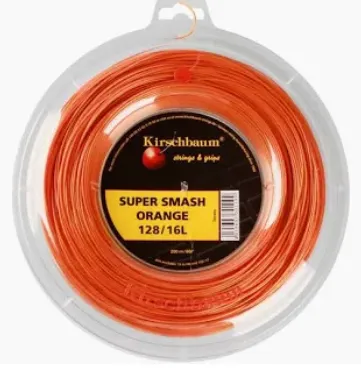
I know there are a lot of fans of this string so won’t any friends dissing it but for me it is a poor imitation of Alu Power and incredibly even worse tension holding.
Spin
Low by modern standards, as the firm round profile lacks the shaped geometry and snapback efficiency that today’s game demands.
Power
Low-powered and flat, requiring full commitment on every shot just to generate baseline depth.
Feel
Firm to the point of being boardy, with minimal pocketing and very little forgiveness on off-center hits.
Control
Stable early on, but unforgiving – it rewards perfection and punishes slight timing errors harshly.
Why it ranks so bad
In a market where players expect spin access, controlled launch, and reasonable comfort, Super Smash feels outdated and overly rigid, offering stability but little else.
5. Polystar Energy Natural
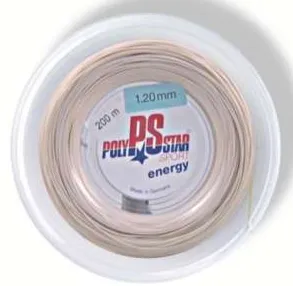
Polystar Energy is described as “lively” and “comfortable,” but in testing, that liveliness feels more like uncontrolled elasticity than usable power and below average.
Spin
As a round, highly elastic poly, spin production relies heavily on racquet speed rather than defined bite, meaning heavy topspin hitters won’t see the sharp dip or kick they expect from a contemporary poly.
Power
Yes, it’s lively but that liveliness quickly becomes excessive as tension drops, causing balls to sail long unless you actively dial back swing intensity.
Feel
Initially comfortable and elastic, but almost too bouncy, lacking the structured pocketing that gives confidence when redirecting pace.
Control
This is where it falls apart, tension loss is significant and power increases mid-session, forcing constant recalibration of depth and trajectory.
Why it ranks so bad
Elasticity without stability is a liability, not a feature, and in high-level play, unpredictability is unacceptable.
In summary – Worst strings I tested
Across all five strings, there is a familiar pattern:
- Average-to-poor spin
- Noticeable tension loss
- Inconsistent launch behavior
- Lack of modern “bite + control + comfort” balance
Today’s best polys tend to give you heavy RPMs, predictable depth and stable performance across several hitting sessions. Check some of our recommended strings.
The issue with all these strings and that’s why they rank at the bottom of my test list.
Worst Tested Tennis Strings — Summary Table
| String | Spin | Power | Feel | Control | Why It Ranks So Bad |
|---|---|---|---|---|---|
| Polyfibre TCS Yellow | Average bite; relies on string movement rather than snapback | Starts controlled, becomes inconsistent as tension drops | Muted, vague, lacks clean feedback | Launch rises over time; precision fades | Doesn’t excel in any category and declines quickly |
| Artengo TA 930 Spin Black | Underwhelming for a “spin” string | Flat, lacks penetrating depth | Dull with slight harshness | Inconsistent under aggressive swings | Feels entry-level compared to modern shaped polys |
| Polystar Energy Natural | Limited bite; relies on player racquet speed | Overly lively after tension loss | Soft but unstable and bouncy | Depth becomes unpredictable mid-session | Elasticity without stability hurts consistency |
| Still in Black Protect Grey | Spin fades quickly as edges smooth out | Underpowered for its profile | Crisp early, dull later | Short performance window | Sacrifices durability without elite upside |
| Kirschbaum Super Smash Orange | Low spin by modern standards | Low powered; requires full effort | Boardy and unforgiving | Stable but harsh and demanding | Outdated feel with minimal modern spin benefits |