

The pro tours are currently visiting the Arabic peninsula, with tournaments in Doha and Dubai. One thing, that has repeatedly been mentioned, is that the tournaments often do not attract the crowds that we see in Australia, Europe or the Americas, where tennis has a longer history. Especially in Doha last week, there were many empty seats, even when Alcaraz and Fils played in their final. Fans around the world aren’t happy with this development, which doesn’t come as the only topic in a growing sport and calendar. But let’s look deeper at this issue and whether it matters to the sport as such.
The growing sport
Tennis is currently a hot sport – and we should be happy that it is – even if this means that some of the attraction is also monetary. For years it looked like tennis would lose to other sports that simply understood better to market their product, but it is officially back. Of course, the wording “product” already upsets traditionalists, but it simply is the reality of sports as an industry today. From football to the Olympics, all sports compete for attention and money on a global scale, trying to out each other with the show they are offering. And tennis is no stranger to that, with some of the recent developments like the Six King’s Slam, the Davis Cup format or the entry of the Saudi Arabian PIF into tennis sponsorship.
Especially in the Arabic countries, money often comes easily and so do big events, which sometimes clearly outgrow the crowds there. Both the WTA finals and the Next Gen finals were played in Saudi Arabia, with very limited spectators for either event. Of course, this is no comparison to an emphatic crowd in Brazil or the French supporting their heroes at Roland Garros. But the pro tour can heavily increase sponsorship income, the tournaments spend heavily on prize money and tv licensing, making it an attractive product to produce.
The tournaments in Doha, Dubai and other places around the Middle East and Asia are no exception to this, too. Many players go there for the prize money, conditions and simply because they can gain points and rankings there, but fans in tennis-crazed places are slightly angry. Because in turn, tournaments in Europe and South America, where many tennis fans are located, lose standing and player attractivity, making it harder to watch your heroes live.
Is there an ethical problem with this?
But sport will naturally go where the money is, so it will be hard to simply change the system based on personal preferences. The other question at hand is – is there more than the fan problem with this development? And quite honestly, the involvement of some countries raises questions to be asked. “Sportswashing” has become an increasingly worrying trend, where countries use the power of sports events to present themselves as open-minded and attractive, when their understanding of democracy and human rights doesn’t quite live up to that hype. The FIFA World Cup in Qatar came with many of there concerns, in turn tainting the event and its history.
But while some fans might not like the idea of their favorite sport and athletes supporting some of these countries, the executives behind the sport are more focused on financials and impact. And all these numbers simply are in favor of playing tournaments in the Middle East. So we should point out the issues coming with these tournaments, even if it might not change decisions going forward. But would there be any alternatives?
Alternatives that fans would love to see
Let’s play the wishing-game for a moment here. Even if it is much more likely for the tours to increase their engagement with emerging markets, there could be alternatives, like an extended South American swing instead. Imagine a South American series of tournaments, that sees potentially a Rio Masters, as proposed by many local fans. It would be much more attractive to players if it could have multiple 500 and 1000 events, where ranking points could make a difference.
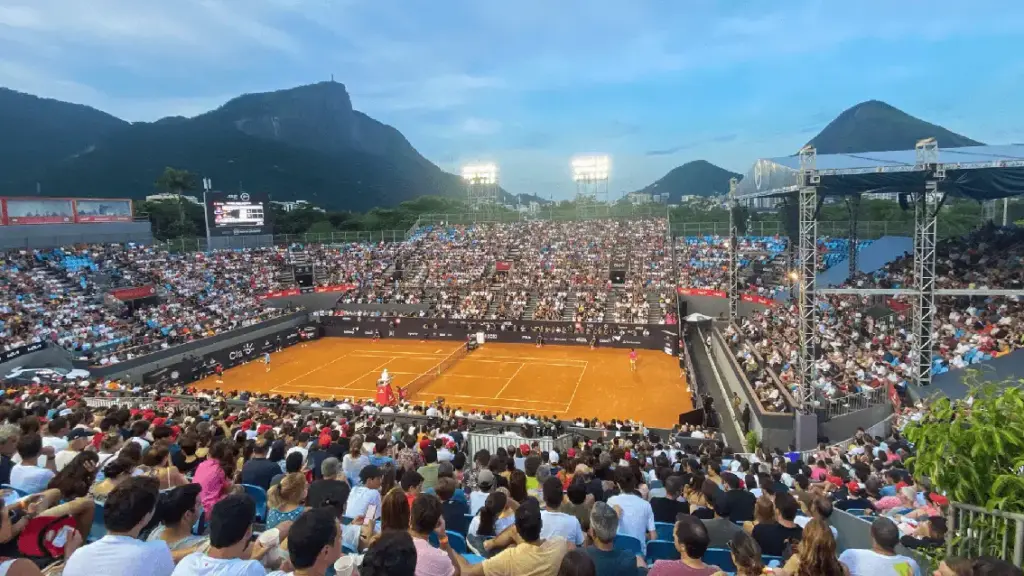
The issue with that? Players would have to change surfaces once more, as most tournaments in South America are on clay court. The reality is that between the Australian Open and the Sunshine Double, players will try to keep their hardcourt rhythm and choose to play there. Even tournaments like Delray Beach and Acapulco easily outperform the South American venues in terms of player attendance, which shows the problem is not only about the schedule. And finally, while I don’t want to sugarcoat some countries, we have recently seen with Mexico and the U.S. that some situations can also arise in presumably more democratic locations.
So, all in all, I would not expect big changes to the choice of venues by the WTA and ATP anytime soon. The diversification of the schedule has brought a lot of money and interest into the sport, even if the local crowds have not turned out to be the numbers that one would expect from other regions. And, with the players mainly staying in Doha and Dubai, it still seems like the most attractive option for most top players, especially if you aren’t from the United States and can play at home. But I am interested what would be your preferred option for the schedule going forward – let us know in the comments!
More reading: