
There are few shots in tennis more instantly recognisable, or more debated, than the one-handed backhand. The full rotation, the outstretched arm, the whip of the wrist through contact, it’s a stroke that carries a certain romance that the two-handed version simply doesn’t have. And yet, for all its elegance, the one-handed backhand is becoming genuinely rare on tour. So who is still playing it, why are fewer players choosing it, and does it have a future?
The Numbers Tell a Worrying Story
The decline has been gradual but unmistakable. When the ATP rankings were created in 1973, virtually every player in the top 10 hit a one-hander. As recently as the early 2000s, it was the dominant technique. Today, there are just eight players in the ATP top 100 who use it – and for a six-week stretch between February and March 2024, not a single top-10 player had one. That was the first time in the 50-year history of the ATP rankings that had happened.
On the WTA, the picture is even starker. The one-handed backhand was never as popular among women, but it has quietly almost vanished entirely. Only two players in the current WTA top 100 use it.
Who’s Still Playing It on the ATP Tour?
The current one-handers in the ATP top 100 are a fascinating mix of rising stars, established names, and veterans hanging on, with one player making the strongest argument for the shot’s viability that we’ve seen in years.
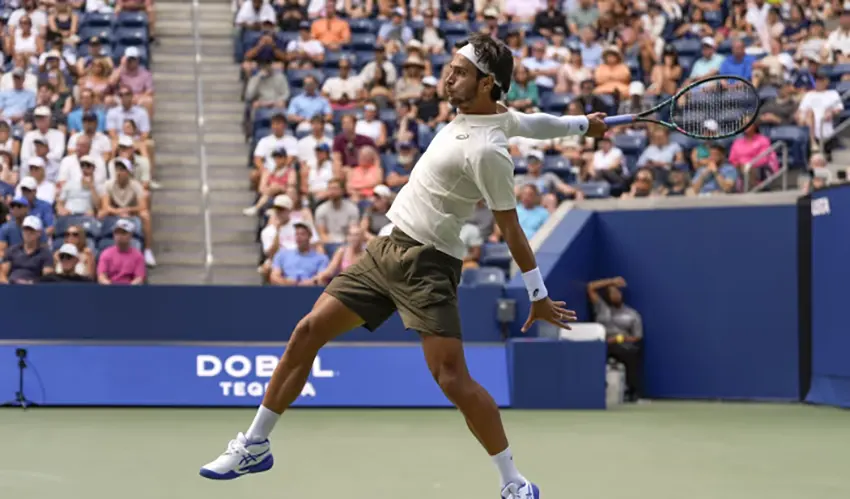
Lorenzo Musetti is the headline story. The Italian is currently World No. 5 – the highest-ranked one-handed backhand player on tour by a significant margin – and at just 23 years old, he is entering what should be the prime years of his career. He reached the top 5 for the first time in January 2026, reached the French Open semi-finals and Wimbledon semi-finals in recent years, won Olympic bronze in Paris, and is part of back-to-back Davis Cup winning Italian teams. His backhand is the centrepiece of what he calls his “vintage” game: heavy topspin, creative slice and touch at the net. More on his complicated feelings about the shot’s future below. Read more about Musetti’s racquet and gear.
Grigor Dimitrov has been one of the great ambassadors for the one-hander over the last decade. The Bulgarian, now 34, reached as high as No. 3 in the world and spent much of 2024 and early 2025 in the top 10. His backhand remains one of the most technically beautiful versions of the shot on tour ( the Federer comparisons were always slightly overdone, but they weren’t made up) and his continued presence at a high level shows the shot can still compete. Whether his age allows him to climb back up the rankings remains the question.
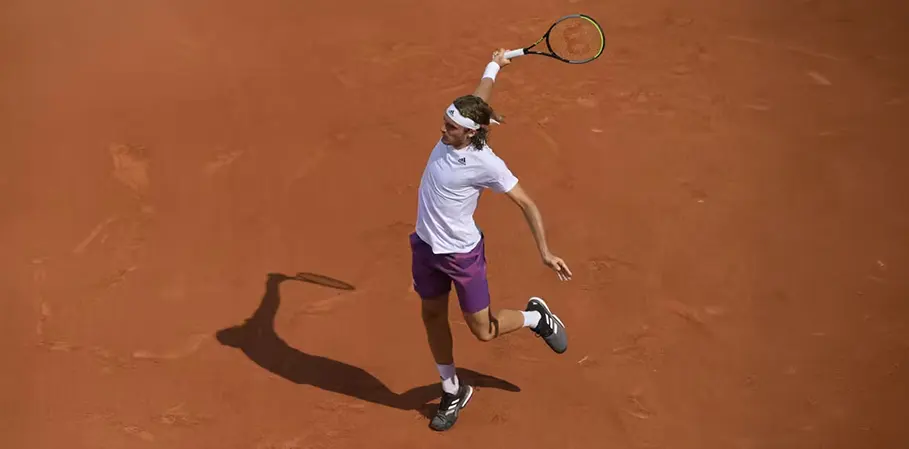
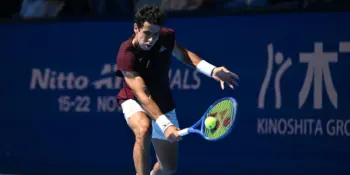
Stefanos Tsitsipas has fallen significantly from his peak. The Greek, now 27, reached as high as No. 3 in the world and spent years as the most prominent young one-hander on tour. He’s currently ranked just over the 30 mark, and his results have been inconsistent over the past 18 months, following ongoing back issues. When he’s on, the one-hander still looks like a strong weapon (image on top) not at least on clay-courts. He remains vocal about the one-hander’s legacy: “I feel like I am part of the players that carry on the legacy of the single-handed backhand,” he said at Indian Wells. “If it was not for me, if it was not for Grigor, if it was not for Lorenzo [Musetti], if it was not for Richard [Gasquet], this shot would barely be seen on the Tour.”
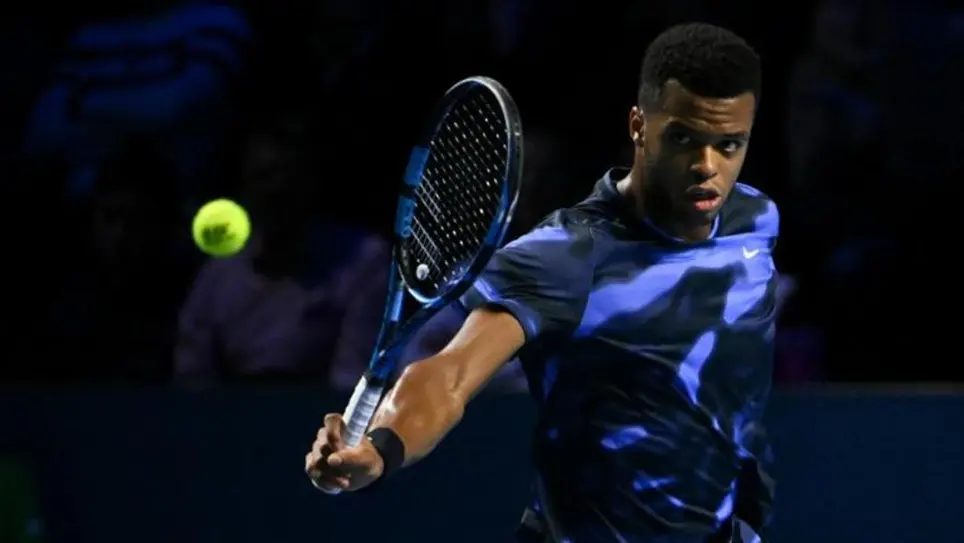
Giovanni Mpetshi Perricard represents a different type. The big-serving Frenchman doesn’t rely on the one-hander as an offensive weapon in the way Musetti or Dimitrov do – his backhand is more of a flat, functional defensive shot used to stay in rallies while his serve does the heavy lifting. Some argue this actually does more harm than good to the shot’s reputation, as it doesn’t showcase the one-hander’s potential. Still, at his ranking level, it proves the shot can coexist with a game built around power.
The remaining players in the top 100 using the one-handed backhand – Denis Shapovalov, Christopher O’Connell, Dusan Lajovic, and Daniel Altmaier – are all ranked outside the top 50, a reminder that the shot is increasingly a secondary-tier characteristic.
We have also the former World no 7 (now deep in the ranks) Richard Gasquet, the Frenchman whose backhand has been called one of the technically purest ever seen on the ATP Tour. Now well into his 30s, Gasquet is winding down a long career, but watching that shot still brings a distinct kind of satisfaction.
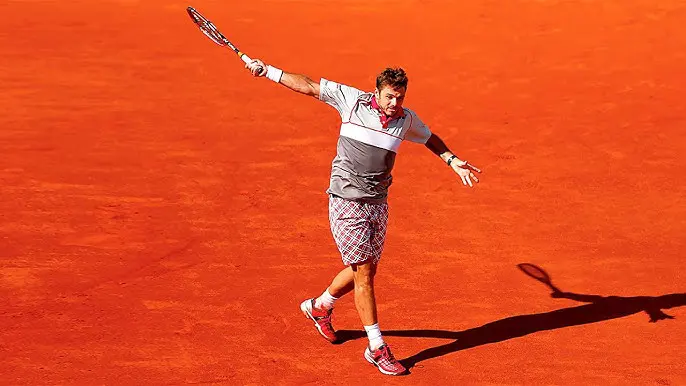
And then there is Stan Wawrinka – 40 years old and on a confirmed farewell tour in 2026, but refusing to go quietly. After a difficult 2025 spent mainly on the Challenger circuit, Wawrinka has started 2026 with a genuine momentum that has gotten him back into the top 100 for the first time since July 2024. Wawrinka’s one-handed backhand (arguably the most powerful single-handed backhand in the history of the game) is still capable of producing shots that few players on tour can match.
The WTA: A Near-Extinct Species
It was never truly common in women’s tennis, but there was a time when the WTA had its own iconic one-handers – Justine Henin (one of the greatest ever, regardless of technique), Amélie Mauresmo, Francesca Schiavone and more recently Carla Suárez Navarro. All have retired.
Today, the tour is effectively down to two active players in the top 100.
Tatjana Maria, 38 years old and still competing, is perhaps the most remarkable story in this context. She reinvented her backhand during her first maternity break from the tour, returning in 2014 with a one-handed drive alongside her trademark slice. She has since twice reached a Wimbledon semi-final as a veteran and won her first WTA title in Mallorca. Few people have done more to prove the shot can work in modern women’s tennis.
Viktorija Golubic of Switzerland rounds out the top-100 picture. The 33-year-old, a former top-30 player, has been one of the most consistent one-handers on the women’s tour for the last decade. She is also one of the more passionate voices in favour of the shot: “I’m really excited to see young players coming up playing the one-handed,” she said. Something which is quite rare of course.
Diane Parry of France (who switched to the one-hander at age 12 because of her love for Federer’s game) has fluctuated between the top 60 and just outside the top 100 in recent years. She is one of the players most likely to carry the shot forward in the women’s game over the next several years.
Why Are Fewer Players Choosing It?
The reasons are well understood within the game. The main disadvantage of the one-handed backhand is how it handles high, heavy topspin to that wing. As the modern game has shifted toward higher-bouncing balls on slower courts (to produce longer rallies) the one-hander has been systematically exposed. A two-hander can absorb pace, close the swing, and redirect. A one-hander hit high and late tends to break down under that kind of pressure.
There is also the preparation time issue. The one-hander requires a longer, earlier preparation than a two-hander. In today’s game, where players return bigger serves and rally faster, that preparation window is tighter than ever. Musetti himself has spoken about the difficulty of adjusting the body position and swing path quickly enough on heavy serves out wide.
Coaches at junior level have naturally responded to these realities. If your job is to give a young player the best tools to compete, the two-hander is safer, more consistent under pressure, and easier to teach.
Btw, if you want to learn the technique for this shot, don’t miss Coach Adri’s lesson on the one-handed backhand.
What Musetti Actually Said
The quote you’ve probably heard circulating is from Musetti in an episode of ‘The Sit-Down’ during the Australian Open. Asked about carrying the shot into the future, he said: “I think it’s something that really is kind of going, I mean, it seems like it is going to disappear. There are literally a few in the top hundred, unfortunately. I really like it, but in modern days, modern tennis, I think it’s really, really hard to compete with the one-handed backhand.”
It’s the most honest assessment of the situation from an active elite player, and all the more striking because it comes from someone who is simultaneously the highest-ranked one-hander on tour and one of the shot’s most gifted ambassadors. Musetti isn’t saying he regrets it but he’s under no illusions about the structural pressures pushing players away from it. “I know that probably in the aesthetic part it’s probably a little more beautiful,” he added, “but at the end of the day a lot of players, they don’t care about the aesthetic part and they like what they need to win.”
The Next Generation
Despite the statistical trends, there are reasons to be cautiously optimistic if you love the shot.
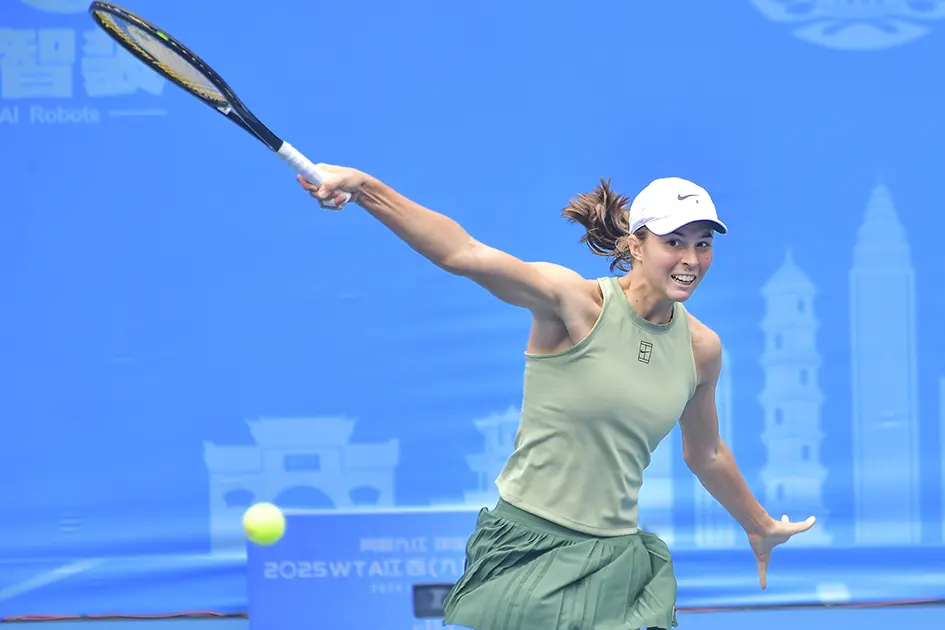
Lilli Tagger is probably the most talked-about story in this space right now. The Austrian teenager is coached by former Roland Garros champion Francesca Schiavone and won the 2025 French Open junior title without dropping a set. Her start to professional life has been remarkable: three ITF titles in 2025, a career record of 33-8 by October, and a surge to a career high of World No. 120 in early 2026.
Her backhand has been described as smooth, secure, and genuinely beautiful — not a compromise version of the shot, but a full, confident one-hander that she adopted deliberately at age 11 or 12 after winning a U12 tournament near Vienna. Crucially, her coach Schiavone is herself a former one-hander and Roland Garros champion, giving Tagger one of the rare coaching set-ups specifically designed to develop the shot in a young woman.
The one-handed backhand isn’t going to disappear overnight. Musetti is a top-5 player, Dimitrov and Tsitsipas are still on tour, Wawrinka is giving it one final push, and Tagger’s rise is a genuine counter-narrative on the women’s side. But Musetti’s own words deserve to be taken seriously. The structural pressures: slower courts, higher-bouncing balls, shorter preparation windows, pragmatic coaching choices, aren’t changing. The numbers will probably keep declining.
Which current one-handed backhand player is your favourite? Let us know in the comments.





Thanks for article.