

Racquet customization is one of the deepest rabbit holes in tennis gear, and I say that as someone who has fallen into it more times than I’d like to admit.
It usually starts innocently enough. You try a different overgrip. Then maybe you swap the replacement grip. A little lead tape shows up at 3 and 9 o’clock, just to see what happens. Before you know it, you’re measuring swing weight, comparing butt caps, and wondering whether two grams at 12 o’clock could transform your forehand.
Welcome to true tennis nerding. I’ve been there more times than I can count, and honestly, I’ll probably be there again by the time you finish reading this.
The good news is you don’t need to become a professional racquet customizer to benefit from understanding the basics. Small changes to grip, weight, balance and swing weight can make a real, noticeable difference to how a racquet feels and performs.
The key is knowing what you’re changing, and why. Let’s get into it.
Start With the Grip
The grip is one of the most overlooked parts of a tennis racquet, and it drives me a little crazy.
Players will happily spend hundreds of euros on a new frame while completely ignoring the one part of the racquet they’re actually holding.
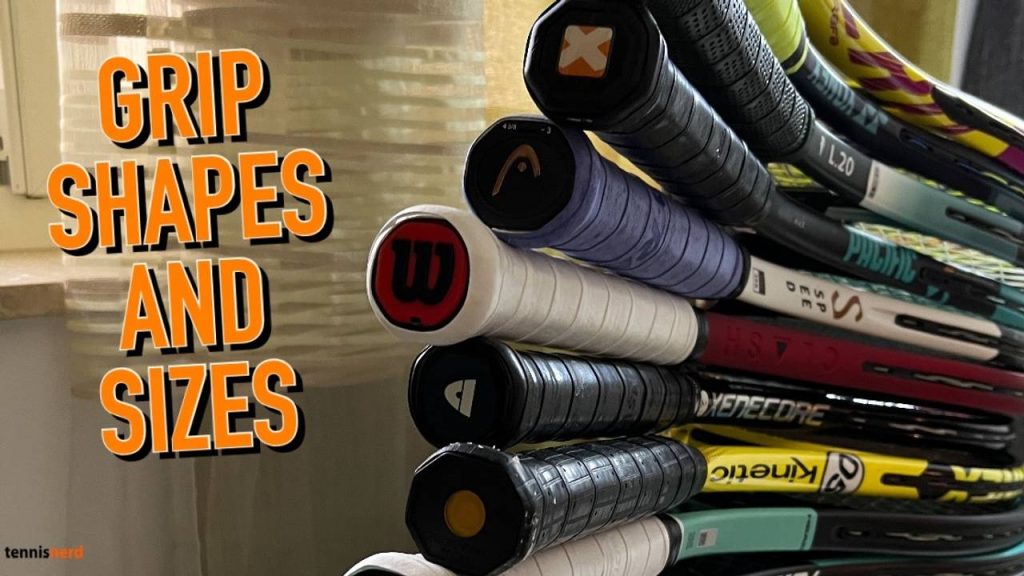
Grip size is obviously important, but it’s more complicated than just picking L2, L3 or L4. An L3 from one manufacturer doesn’t necessarily feel like an L3 from another. Grip shape, replacement grip thickness, butt-cap flare, even the number of overgrips you use, can all change the perceived size quite a bit.
Adam, for instance, currently prefers roughly an L3 with two overgrips, which gets him to something closer in overall feel to an L4 with a single overgrip. But that exact setup can feel completely different depending on the brand.
This is why I always tell people to think about grip size in the context of the whole handle setup, not as an isolated number on the box.
A smaller grip can make it easier to use your wrist and manipulate the racquet. A larger grip can feel more secure and stable. Neither one is automatically better. It comes down to preference, and honestly, a bit of trial and error.
Replacement Grips Can Change More Than Comfort
Here’s something people underestimate: changing the base grip can have a surprisingly large effect on the racquet itself.
A thick, cushioned synthetic grip adds padding and effectively increases grip size. A thinner replacement grip puts you in much more direct contact with the bevels, so you feel the shape of the handle more clearly.
Leather grips take this even further. I’m a bit of a sucker for leather grips, if I’m honest. They give you incredibly clear bevel definition, which some players absolutely love. But they also feel harsher, and they add noticeably more weight than most synthetic replacement grips.
A leather grip weighing around 25 grams after trimming can meaningfully shift the racquet’s balance and overall feel. That can be great if you’re chasing a more head-light setup, but understand what’s actually happening: you’re not just changing the sensation in your hand, you’re changing the specifications of the racquet.
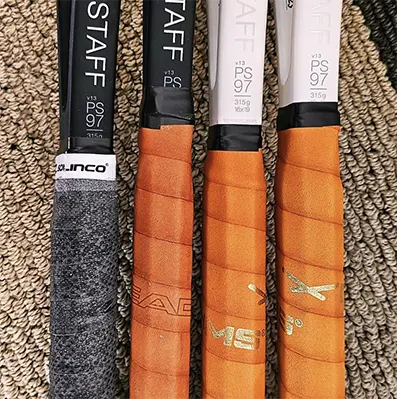
There’s always a trade-off. More cushioning improves comfort but reduces bevel definition. A thinner or leather grip increases feedback but can feel firmer in the hand.
Find the setup that lets you hold the racquet naturally, without thinking about it. That’s really the whole goal here.
Overgrips: Dry, Tacky, Thick or Thin?
Overgrips are cheap compared to almost everything else in tennis, and yet they can make a genuinely big difference.
Some players chase maximum tackiness. Others prefer something dry, especially in hot, humid conditions where things get slippery fast.
Even different colours of the same overgrip can behave differently. During one of our hitting sessions, a red Yonex Super Grap felt noticeably more slippery than the familiar white version. Small detail, real difference.
Wilson Pro Overgrip has long been a standard on tour and among recreational players, and for good reason. Yonex Super Grap is another obvious benchmark. Solinco, Head, MSV, Tourna and others all bring their own mix of thickness, tackiness, absorption and durability to the table.
There’s no universally best overgrip. It genuinely depends on you.
If you sweat a lot, absorption probably matters more to you than tackiness. If you want extra cushioning, try a thicker grip, or even double up with two overgrips. This is one of the cheapest and easiest areas to experiment in, so there’s really no excuse not to try a few.
Read more about some of our recommended overgrips.
Grip Shape Matters More Than You Think
Grip shape is another variable players notice without always being able to explain why.
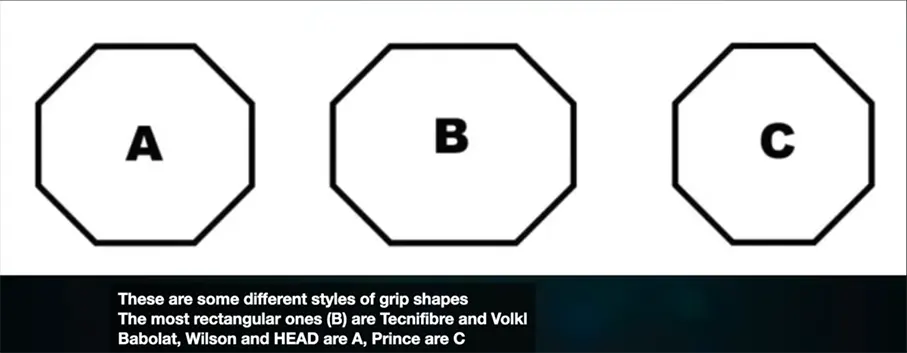
Some handles are more rectangular. Others are much more square or rounded.
Older Head pallets were famously more rectangular, while modern Head shapes have moved toward something more neutral. Wilson generally goes with a rounder shape and a noticeable butt-cap flare. Prince handles tend to feel quite square. Volkl has historically leaned rectangular, while Babolat has its own recognizable profile and a fairly pronounced butt cap. Yonex handles traditionally have less flare at the bottom than Wilson.
None of these approaches is right or wrong. They’re just different philosophies.
But if you’ve played one brand for years, switching to a dramatically different handle shape can feel surprisingly disorienting, even if the numbers on paper look the same.
The best grip shape, like most things in this article, is the one you stop noticing.
When Should You Add Weight to a Racquet?
Once you move past grips, the next stage of customization is usually weight, but do you need to add weight to your racquet?
Not every racquet needs it, and I want to be clear about that up front.
Modern power racquets often play perfectly well straight out of the box. But control-oriented frames, lighter players’ racquets, and anything with a low twistweight can improve significantly with a few grams of strategically placed mass.
One of the clearest examples from our testing was the Defier 98 Pro. In stock form it felt fast, but it lacked some stability and plow-through. After adding a small amount of weight to the hoop, it genuinely felt like a different racquet.
That doesn’t mean everyone should immediately grab the lead tape.
Start small. Two or three grams can already make a real difference, and it’s a lot easier to add more than to undo an overzealous first attempt.
Lead at 12 O’Clock
Adding weight at 12 o’clock is one of the most efficient ways to increase swing-weight, because that weight sits so far from your hand.
The potential benefits:
- More power
- More plow-through
- A heavier ball
- Greater stability through impact
The downside is reduced maneuverability, which you’ll feel almost immediately if you overdo it.
If your racquet feels too light through the ball, or just lacks penetration on your shots, a small amount of weight at 12 is worth testing. But be conservative here. A couple of grams goes a long way at the tip of the hoop.
Lead at 3 and 9 O’Clock
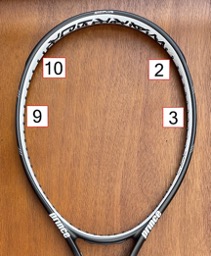
Adding weight to the sides of the hoop increases stability and twistweight, which is particularly useful if a racquet feels unstable on anything slightly outside the sweet spot.
Compared to adding the same amount at 12, weight at 3 and 9 increases swing weight less while doing more to resist twisting. It’s a subtler change with a specific purpose.
This is a setup Henrik has used a lot. On racquets with lower twistweight, a few grams at 3 and 9 can make the string bed feel noticeably more solid and boost confidence on off-centre contact, something we all deal with more than we’d like to admit.
Control racquets and traditional thin-beam frames tend to respond particularly well to this kind of treatment.
Weight in the Throat
Weight in the throat is an interesting, often overlooked option.
It increases static weight without raising swing weight nearly as much as the same amount added higher in the hoop. Some players just like the feel of extra mass here, it creates a more solid sensation without making the racquet meaningfully harder to swing.
You’ll also see throat weighting on a number of professional-player frames, particularly among players using two-handed backhands.
The effect is subtler than adding weight at the top of the hoop. That’s exactly the point, and for some players, exactly what they need.
Weight in the Handle
Weight in the handle increases static weight while keeping the racquet more head-light. This is a good option if you like a heavier overall racquet but still want it to feel maneuverable in your hand.
Leather grips, silicone inserts and other handle-weighting methods can all get you there.
But remember what I said earlier: changing the handle can shift the balance dramatically. If you install a heavier replacement grip, or stack a couple of overgrips, you might later find yourself adding weight to the hoop just to restore the balance you originally liked.
That’s the thing about customization. It’s a system. Every change interacts with something else, and it’s rarely as isolated as it seems.
Static Weight Is Only Part of the Story
Two racquets can weigh exactly the same on a scale and feel completely different in your hand. This is where swingweight comes in, and it’s genuinely one of the most misunderstood specs in the sport.
Swing weight measures how difficult a racquet is to rotate around a point. In practical terms, it tells you far more about how heavy a racquet feels while swinging than static weight ever will.
A racquet with low static weight but high swing weight can still feel demanding to swing all day. A heavier racquet with a very head-light balance can feel surprisingly nimble. Static weight alone just doesn’t tell the whole story.
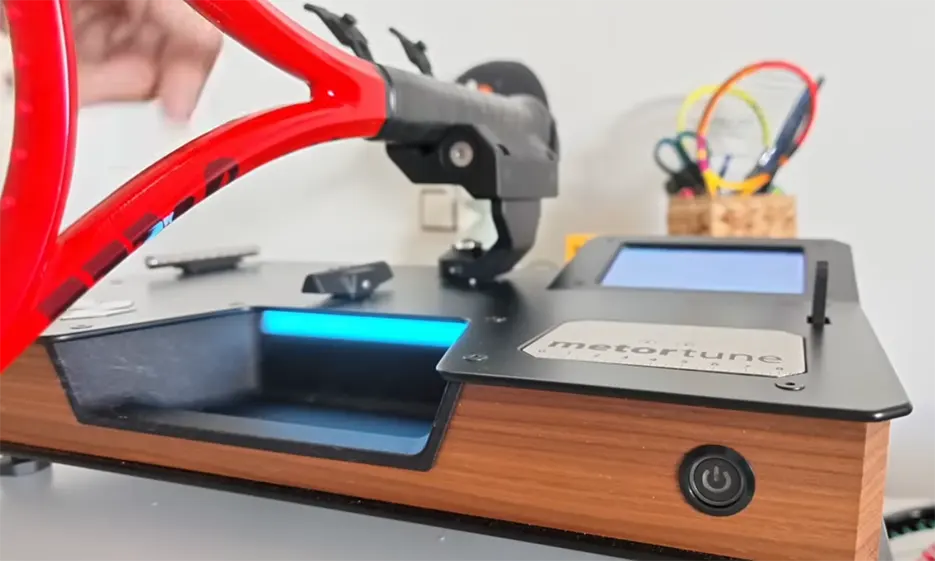
If you’re serious about matching racquets or experimenting more deeply, a swing weight machine is genuinely useful. Portable machines like the Briffidi offer a relatively accessible way in, while more advanced systems like the Metortune give you additional customization and measurement tools.
You don’t need one to start playing with lead tape. But once you find something you like, measurements help you reproduce it reliably instead of chasing a feeling you can’t quite recreate.
Balance Is Crucial
Balance is the other spec every player should understand, even at a basic level.
Professional players tend to be extremely sensitive to it. Two racquets can share the same static weight and the same swing weight, and still feel completely different because the balance point has shifted.
This also explains why adding a simple replacement grip can suddenly make a racquet feel wrong. You may have added only a few grams, but if those grams sit in the handle, the balance has changed. The racquet, in a real sense, is now a different racquet.
Matching Racquets
One of the most practical, unglamorous uses of customization is simply matching several racquets to each other.
Manufacturing tolerances mean two racquets of the same model rarely arrive with identical weight, balance and swing weight, even fresh out of the same box.
For recreational players, this usually doesn’t matter much. For competitive players switching racquets mid-match, it can be surprisingly noticeable, sometimes enough to throw off a whole game plan.
My advice: measure your racquets before modifying anything, then bring the lighter or lower-swingweight frames up toward your heaviest one. It’s always easier to add weight than to remove it, so work from your best-feeling racquet as the benchmark.
Once you’ve got three matched racquets you trust, the real goal kicks in: stop thinking about the equipment and just play tennis.
Do All Racquets Need Customization?
Definitely not. And this is where tennis nerding can genuinely become a bit dangerous.
A Pure Drive, Pure Aero or another modern power racquet may already give you plenty of power, stability and swing weight in stock form. Adding several grams at 12 simply because a pro does it could make the racquet far too powerful or demanding for your game.
A lower-powered 98 square inch control racquet might respond completely differently to that exact same modification.
The racquet matters. Your technique matters. Your preferred specs matter. Andy Murray can play an Ezone 100 loaded with lead tape because he’s Andy Murray. That doesn’t mean your Ezone 100 needs the same treatment, however tempting it is to copy the pros stick for stick.
Strings Are Part of the Equation
Customization doesn’t stop at weight. Strings can completely change your impression of a racquet, sometimes more than any amount of lead tape.
During our testing, one setup that looked great on paper just didn’t work with the racquet. At a relatively high tension, the string bed lacked pocketing and dwell time, and the whole thing felt flat. The exact same string felt excellent in a different frame.
This is why changing racquets often means diving straight back into the string jungle. A powerful racquet may want a firmer, more controlled string. A lower-powered frame might come alive with something softer and more elastic.
Racquet, string and tension all have to work together. Get one wrong and it can undo everything you did right elsewhere. Check out some of our recommended strings.
The Biggest Mistake: Changing Everything at Once
Customization is useful. Over-customization is not, and I say this from personal experience.
If you change the string, tension, grip, balance and lead placement all at once, you’ll have absolutely no idea which change actually helped, or hurt.
So instead:
- Establish how the racquet feels in stock form.
- Identify the specific problem you’re trying to solve.
- Change one variable.
- Test it properly.
- Make another small adjustment if you still need to.
Want more stability? Try a little mass at 3 and 9. Want more power and plow-through? Experiment at 12. Want more overall weight without a big jump in swing-weight? Look at the throat or the handle.
And if the racquet already plays well? Leave it alone. Seriously.
Video on Racquet Customization
Watch me and Adam talk about accessories and gear customization.
Find Your Spec, Then Forget About It
That’s ultimately the whole point of racquet customization. Not endless experimentation for its own sake, but understanding what specs actually work for you, building a setup you trust, and eventually forgetting all about it so you can just play.
There are countless combinations of grip size, grip shape, replacement grip, overgrip, static weight, balance, swing-weight, twist-weight, strings and tension. You could experiment forever.
And if you’re a Tennisnerd like me, you probably will.
But the most useful advice I can give you stays simple: start small, and know exactly what you’re trying to achieve. A different grip or a couple of grams of well-placed weight can sometimes make a bigger difference than buying an entirely new racquet.
Just don’t blame me when you end up with a table full of grips, lead tape, pallets and butt caps. I warned you.












Where can I get new grips etc