The Rolex Paris Masters is the last ATP Masters 1000 tournament of the season. That sounds like a procedural fact, but in practice it shapes everything about the atmosphere inside the arena. The rankings race is reaching its conclusion, the ATP Finals qualification picture is taking shape, and the players arriving in Paris know this is their last opportunity to collect valuable ranking points before the season ends.
This makes it one of the more interesting indoor tournaments to visit, on the ATP calendar, in our opinion.
It is also a relatively accessible and affordable tournament for most tennis fans. If you’ve never been, here’s some info to learn more about visiting Paris for the Rolex Paris Masters event.
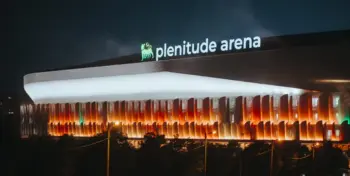
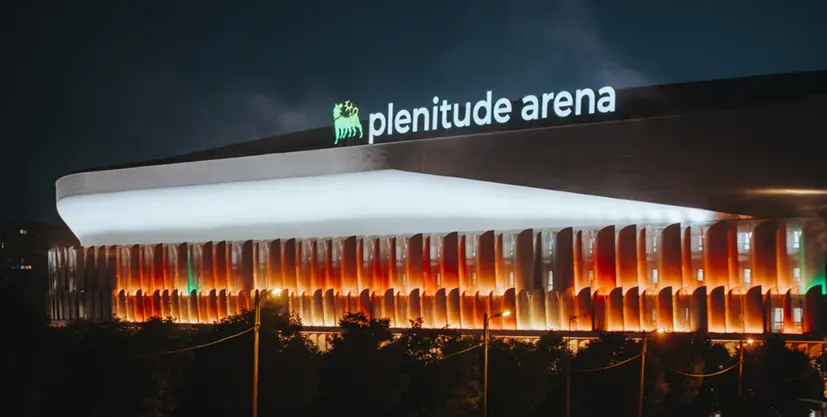
The New Venue: Plenitude Arena (Formerly Paris La Défense Arena)
First, an important note for anyone who attended the Paris Masters before 2025: the tournament no longer takes place at Bercy.
After 39 editions at the Palais Omnisports de Paris-Bercy, the tournament moved in 2025 to what was then known as Paris La Défense Arena in Nanterre, just west of central Paris. The venue was renamed Plenitude Arena in July 2026, so you may still see its former name on maps and travel websites.
The reasons for the move were straightforward. Tournament director Cédric Pioline explained that the old Bercy venue had become restrictive, with outdated facilities, low ceilings on the secondary courts and limited room for expansion. The tournament had also been struggling with the limitations of having only two competition courts.
The new venue addresses many of these issues.
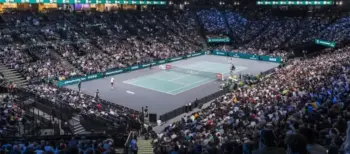
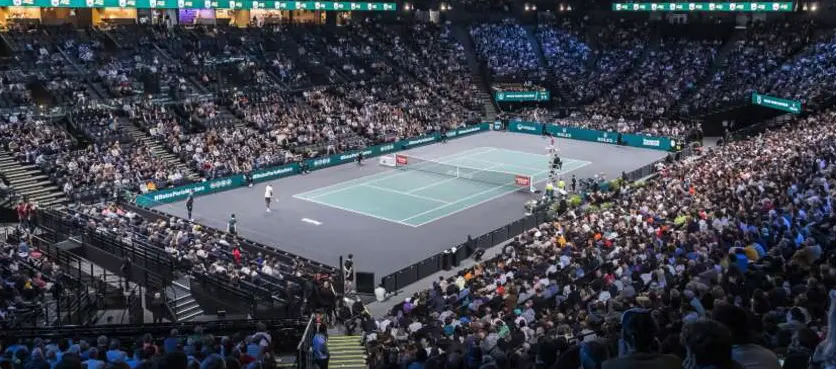
The Plenitude Arena is home to rugby club Racing 92 and is one of Europe’s largest indoor entertainment venues. Its Centre Court has a capacity of approximately 17,500 spectators, making it one of the largest tennis stadiums in the world. There are four competition courts and a separate practice court, offering considerably more opportunities to watch players than at the old venue.
For those who loved the old Bercy, the atmosphere is inevitably different. The former arena had a particular intimacy: the steep stands, relatively low ceiling and feeling of being deep inside a tennis event. The new venue feels more like a modern NBA arena, with a much larger capacity and impressive production.
Personally, I think the improvements are largely positive, particularly for fans who want to watch more than just the matches on Centre Court.
The full address is:
Plenitude Arena
99 Jardins de l’Arche
92000 Nanterre, France
Dates and schedule
The 2026 Rolex Paris Masters runs from 31 October to 8 November.
The tournament starts with two days of qualifying, followed by the main draw from Monday onwards. More details here on the schedule and prize money.
The general schedule is:
- Saturday 31 October – Sunday 1 November: Qualifying.
- Monday 2 November: First round.
- Tuesday 3 November – Wednesday 4 November: First and second rounds.
- Thursday 5 November: Round of 16.
- Friday 6 November: Quarter-finals.
- Saturday 7 November: Semi-finals.
- Sunday 8 November: Doubles and singles finals.
During the first part of the main draw, Centre Court has separate day and evening sessions. Day sessions generally begin at 11am, while evening sessions start from 7pm.
If you’re coming for one day and want the best value for tennis quantity, an early-round weekday is an excellent choice. You’ll have the opportunity to see a variety of players, including some of the biggest names in the sport, and spend time watching matches on the other courts.
If you want the biggest matches, Friday’s quarter-finals are a particularly good option. Four singles quarter-finals are played across the day and evening sessions, so there’s plenty of high-quality tennis.
Saturday is ideal if you want the excitement of the semi-finals, while Sunday is all about the final, with the doubles final also taking place before the singles championship match.
One recommendation: check the daily order of play before you buy your tickets if there’s a particular player you want to see. The schedule can make a significant difference to your experience.

Tickets
Tickets are sold through the official tournament website.
The Paris Masters remains one of the more affordable Masters 1000 tournaments to attend, particularly if you’re flexible about which day you visit.
For the 2026 edition, official ticket prices start at around €15 for selected day sessions, while evening sessions start at €19.86 as part of the tournament’s 40th-anniversary celebrations. Prices increase depending on the session, seating category and availability.
A few things worth knowing:
Day and evening sessions: These are generally sold separately for Centre Court during the early rounds. If you want to stay for the entire day, check whether a combined ticket is available for your chosen date rather than assuming a day ticket also covers the evening session.
Centre Court versus Court 1: This is an important distinction at the new venue. Centre Court tickets give you access to the main arena, while Court 1 offers a more intimate viewing experience. There is also a special Court 1 ticket option for 2026, with reserved seats close to the action and access to Courts 2 and 3. Check the individual ticket conditions before purchasing.
Which days should you choose?
- Monday to Wednesday: Best for value and seeing a wider selection of players.
- Thursday: A good compromise, with the Round of 16.
- Friday: Excellent tennis, with four quarter-finals.
- Saturday: The semi-finals and a big-match atmosphere.
- Sunday: The singles final, although there are fewer matches overall.
The weekend sessions tend to attract the most interest, so if you have your heart set on the semi-finals or final, book early.
Premium hospitality packages are also available, offering better seating, dedicated lounges and food and drink. These can be an interesting option for a special occasion, but the standard ticket experience is perfectly good for most tennis fans.
Official ticketing: tickets.rolexparismasters.com
Getting there
The Plenitude Arena is in Nanterre, in the La Défense business district, rather than central Paris. From the Louvre, it is approximately 12–13km away.
The good news is that La Défense is one of the best-connected transport hubs in the greater Paris area.
By public transport (the best option):
- Metro Line 1: Take the metro to La Défense–Grande Arche, followed by a short walk to the arena. Line 1 is particularly convenient for visitors staying around the Champs-Élysées, Châtelet or Bastille.
- RER A: Stops at La Défense and Nanterre-Préfecture. It’s a useful option if you’re travelling from further east or from other parts of the Paris region.
- RER E: Nanterre-La-Folie is another convenient option for reaching the venue.
- Tramway T2: Serves La Défense and connects the area with the south-western suburbs.
- Transilien Lines L and U: Also serve La Défense.
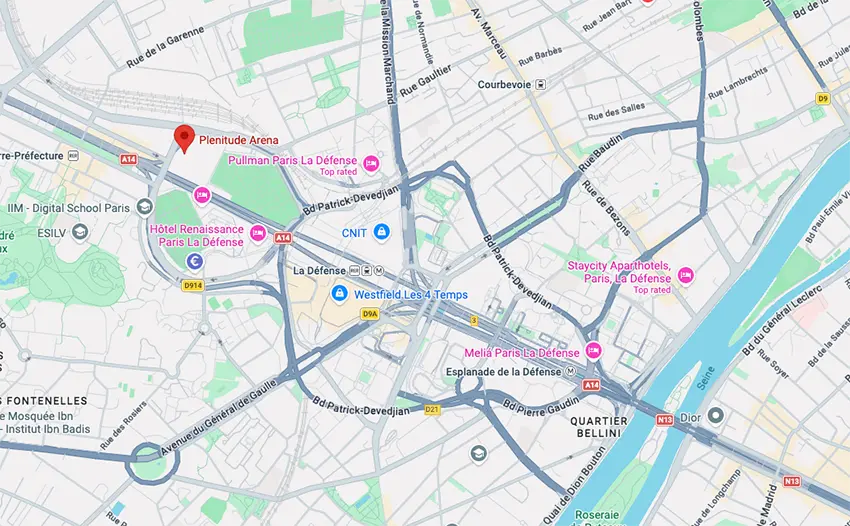
Allow approximately 30–40 minutes from many central Paris locations, depending on where you’re staying and the connections involved.
One important consideration is the return journey after evening matches. Don’t assume every train or metro line runs equally late. Check ratp.fr or the Île-de-France Mobilités app for the latest timetables, particularly if you’re attending an evening session.
By car: There are numerous public car parks around La Défense, but traffic can be significant during busy periods. The arena recommends booking parking in advance through Indigo Neo. Don’t assume there will be convenient parking immediately outside the venue.
Taxis and rideshare: Designated drop-off and pick-up areas are organised around the arena, including near the CitizenM hotel and Entrance 33. Expect increased demand and potentially higher fares when evening sessions finish.
For most visitors, public transport is by far the easiest option.
What to expect inside
The arena itself is a large, modern indoor venue. It feels more like an NBA arena than the intimate old Bercy, and the difference is immediately noticeable when you walk inside.
Centre Court is vast, with a capacity of approximately 17,500. The steep-sided design helps maintain good sightlines, although your exact viewing experience will depend on the section and seating angle.
You don’t necessarily need the most expensive seats to enjoy the tennis. For a first visit, I’d prioritise a good viewing angle over simply buying the highest-priced ticket category.
Opening thrills on Centre Court ?? #RolexParisMasters https://t.co/N9OVAmZB1L
— ROLEX PARIS MASTERS (@RolexPMasters) November 3, 2026
One of the signature features of the Paris Masters is the players’ entrance. Each player walks out to a dedicated lighting show, often accompanied by their chosen music. It’s a small detail, but it adds to the spectacle, particularly during the evening sessions when the arena lights create a more dramatic atmosphere.
The indoor setting also makes a difference to the tennis itself. The sound of the ball, the atmosphere during important points and the reactions from the crowd all feel amplified.
Inside temperature: The arena is heated, so you probably won’t need heavy clothing once you’re seated. A light layer should be sufficient, although you’ll want a coat for the walk from the station. Make sure to bring warm clothes for evenings in Paris though!
Food and drink: There are concession stands and food outlets inside the arena. You can also find restaurants and cafes around La Défense. Check the current venue rules before bringing anything inside; plastic and cardboard bottles up to one litre are permitted under the 2026 entry rules.
If you’re attending an evening session, I’d recommend eating before entering the arena rather than relying entirely on the concessions.
Make the most of the other court
One of the biggest improvements at the new venue is the increased number of competition courts.
For us fans, this is arguably just as important as the larger Centre Court.
Don’t spend your entire visit watching the main arena. Take some time to explore the other courts, where you can get closer to the players and enjoy a different perspective on professional tennis. Especially indoor tennis is so much better when watching close to the court.
Court 1 is particularly interesting, as it offers a more intimate setting than Centre Court. You can sometimes see top players in a much more relaxed environment, and watching a match from relatively close to the court can be a memorable experience.
It’s also worth checking the practice schedule if you’re interested in seeing players prepare for their matches. Practice access and availability depend on the daily arrangements and your ticket.
My advice would be to arrive early, explore the venue and avoid spending the entire day in one seat. One of the pleasures of attending a Masters 1000 event is discovering players and matches you might not otherwise have watched.
The surrounding area
La Défense is Paris’s main business district, with a cluster of glass towers surrounding the Grande Arche. The area is a modern architectural counterpart to the Arc de Triomphe, several kilometres to the east.
It isn’t the most charming part of Paris, and I wouldn’t necessarily recommend staying there if your main reason for visiting is to experience the city. However, it is practical and convenient for the tournament.
A few useful recommendations:
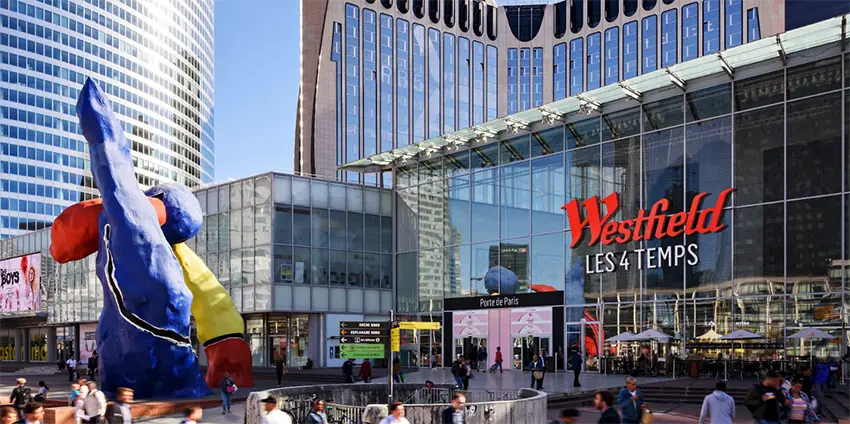
Westfield Les 4 Temps: One of Europe’s major shopping centres, located close to La Défense. It has plenty of restaurants, cafes and shops, making it a convenient place to eat before a session.
Puteaux: Immediately adjacent to La Défense, Puteaux offers a more local atmosphere and some good restaurant options. It’s worth exploring if you want something beyond the business-district experience.
The Champs-Élysées: Around 20 minutes away by Metro Line 1, depending on your starting point. It offers a much wider choice of restaurants, bars and shops and is a good base for visitors who want to combine tennis with sightseeing.
Where to stay: If your priority is walking distance to the venue, CitizenM La Défense and Renaissance Paris La Défense are convenient choices. For something more characterful, I’d consider staying in the 8th or 16th arrondissement, particularly around the Champs-Élysées, where you have easy access to Metro Line 1.
You don’t necessarily need to stay right next to the arena. The public transport connections make it relatively straightforward to travel from central Paris.
More tips for first-time visitors
A few additional things I’d keep in mind before travelling:
- Buy tickets early: Particularly for the semi-finals and final.
- Check the order of play: Don’t assume your favourite player will play in the session you have booked.
- Arrive early: Give yourself time to explore the arena and watch matches on the other courts.
- Consider Court 1: It can offer a more intimate tennis experience than Centre Court, highly recommended.
- Plan your return journey: Especially if you’re attending an evening session.
- Don’t overpay for accommodation next to the arena: Central Paris is often a more enjoyable base, with convenient metro connections.
- Travel light: Check the arena’s current bag restrictions and prohibited-items list before leaving your hotel.
The best approach is to treat the Paris Masters as both a tennis event and an opportunity to spend a few days in one of Europe’s most enjoyable cities, but I recommend looking up the best areas to visit.
Useful Links
- Official tournament website: rolexparismasters.com
- Official tickets: tickets.rolexparismasters.com
- Official tournament schedule: 2026 daily schedule
- Transport planning: ratp.fr
- Arena information: plenitudearena.com