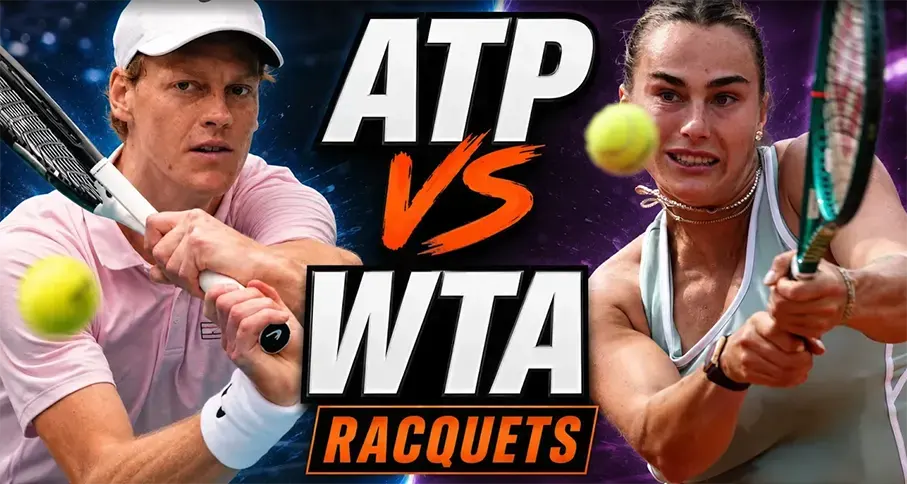
I’ve gone down this rabbit hole before, but I wanted to update it properly. I went through the current ATP and WTA Top 100, player by player, and tried to nail down the racquet brand, the model, and where I could, the actual mold hiding underneath the paint job.
Usual disclaimer here, because I always have to give it: take the individual racquet info with a pinch of salt. Pro stock frames, old molds wearing new cosmetics, heavy customization – it all makes this messier than just glancing at what’s painted on the racquet. I do my best, but if you spot something that looks off, let me know in the comments.
Put 200 players side by side, though, and some pretty clear patterns show up. And the biggest one, honestly, surprised me a bit: the ATP and WTA tours look quite different from each other right now.
On the women’s side, Wilson and Yonex are running the show, and 100 sq. in. power frames are everywhere. On the men’s side it’s a much more even split, 97–98 sq. in. control and spin sticks are still very much alive, and HEAD has a noticeably bigger footprint.
Let’s get into it more in details regarding the most used racquets among top ATP and WTA players.
WTA Top 100: Wilson and Yonex dominate
Here’s the brand breakdown:
| Brand | Players | Share |
|---|---|---|
| Wilson | 35 | 35% |
| Yonex | 33 | 33% |
| Babolat | 13 | 13% |
| HEAD | 11 | 11% |
| Tecnifibre | 2 | 2% |
| Dunlop | 2 | 2% |
| Diadem | 1 | 1% |
| Volkl | 1 | 1% |
| Artengo | 1 | 1% |
| Prince | 1 | 1% |
The thing that jumps out immediately: Wilson and Yonex together account for 68 of the WTA Top 100. That’s more than two-thirds of the entire list on just two brands.
Wilson edges it at 35, but Yonex is right on its heels with 33. Then there’s a proper gap down to Babolat at 13 and HEAD at 11.
If you mostly follow the men’s game, that HEAD number might surprise you, HEAD is a massive force on the ATP side. On tour with the women, though, Yonex has quietly become a powerhouse. And a big chunk of that comes down to one racquet family.
Video
The EZONE is everywhere on the WTA Tour
Looking at families rather than brands:
| Racquet family | WTA players |
|---|---|
| Wilson Blade | 24 |
| Yonex EZONE | 21 |
| Yonex VCORE | 11 |
| Babolat Pure Drive | 8 |
| HEAD Speed | 6 |
| Wilson Ultra | 6 |
| Babolat Pure Aero | 5 |
| Wilson Defyer | 4 |
| HEAD Gravity | 3 |
The Blade is still number one with 24. But 21 for the EZONE is a genuinely huge number, and it’s much more prominent here than it is on the men’s side.
I think there’s a logical explanation. Women’s tennis has traditionally leaned toward flatter swing paths and more direct ball-striking than the men’s game – plenty of exceptions, obviously, but broadly the WTA relies a touch less on extreme racquet-head speed and heavy topspin to do the damage.
That plays right into what the EZONE is good at. Easy depth, solid stability, plenty of pop on a flatter contact, and it rewards clean, aggressive hitting without demanding a ton of generated spin the way a VCORE or Pure Aero does.
The EZONE 98 shows up with Jessica Pegula, Naomi Osaka, Madison Keys, Linda Noskova, Antonia Ruzic, Magda Linette and Taylor Townsend, among others.
But the Yonex EZONE 100 is even more common. Belinda Bencic, Diana Shnaider, Sorana Cirstea, Elise Mertens, Marie Bouzkova, Cristina Bucsa, Maya Joint, Anna Bondar, Panna Udvardy, Lanlana Tararudee, Hanne Vandewinkel, Kamilla Rakhimova and Laura Siegemund are all in that camp.
That’s a serious endorsement for the 100 sq. in. power frame at the very top of the women’s game.
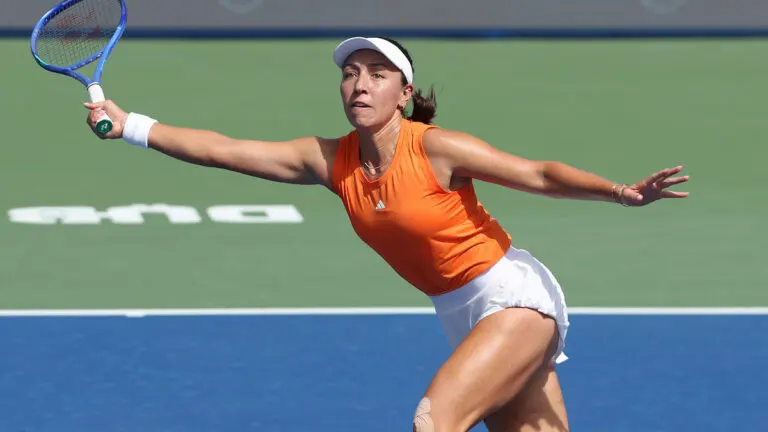
The WTA is turning into a 100 sq. in. tour
This, for me, was the big takeaway from the whole exercise.
There are still plenty of 98s around, Aryna Sabalenka plays a Blade 98 18/20, Pegula and Osaka are on EZONE 98s, and there are VCORE 98s and Blade 98s sprinkled throughout. But overall, 100 sq. in. is genuinely common at the top of the WTA.
Look at the most-used exact models:
| Model | Players |
|---|---|
| Yonex EZONE 100 | 13 |
| Yonex VCORE 100 | 9 |
| Wilson Blade Pro 100 | 9 |
| Yonex EZONE 98 | 8 |
| Babolat Pure Drive | 8 |
| HEAD Speed MP | 6 |
| Wilson Blade 100 | 5 |
| Wilson Blade 98 16/19 | 4 |
| Babolat Pure Aero | 4 |
This isn’t really what a lot of racquet nerds picture when they think “pro tennis.” There’s still this idea floating around that every tour player is swinging a tiny, heavy, brutally demanding control frame. That’s just not the reality anymore, even at the very top of the game.
The Wilson Blade is number one – but maybe not the Blade you’re picturing
Wilson has 35 players in the WTA Top 100, and the Blade family alone makes up 24 of them. But here’s the nuance: the most common Blade-adjacent racquet in this group isn’t the retail Blade 98 you’d buy off the shelf.
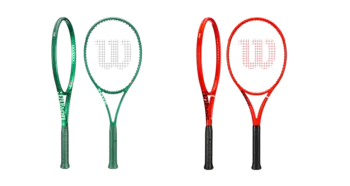
A big group of players are using what’s currently marketed around the Blade Pro 100 / Blade 100 Pro name, but the mold underneath actually traces back to the old Wilson Steam 100 BLX.

That group includes Mirra Andreeva, Amanda Anisimova, Victoria Mboko, Jelena Ostapenko, Emma Raducanu, Diane Parry, Caty McNally, Katie Boulter, Paula Badosa, Simona Waltert and Jessica Bouzas Maneiro.
Naming varies a bit depending on the paint job and how it’s catalogued, but the interesting bit is the mold itself – the Steam 100 BLX is a thicker-beamed, more powerful 100 sq. in. platform than the traditional Blade 98. So even inside the “Blade” bucket, we’re seeing the same theme play out again: more forgiveness, more power, bigger heads.
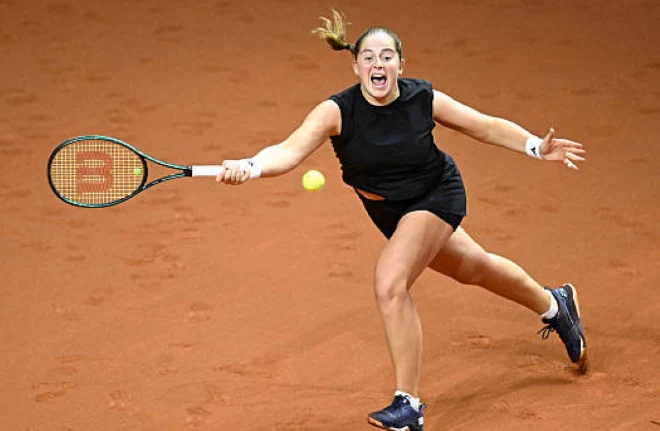
Sabalenka is one of the exceptions
Sabalenka is a good reminder not to generalize too hard. She’s one of the biggest ball-strikers in the game and runs a much more traditional, control-leaning setup than most of her peers – listed here as a Wilson Blade 98 18/20 V10.
Makes total sense, really. If you’re already generating huge racquet-head speed and ball speed on your own, you don’t need a Pure Drive or an EZONE 100 to hand you extra power. Control becomes the more valuable commodity. It’s the same logic that explains why control frames hang on a bit longer over on the ATP side.
Coco Gauff: Boom paint, Speed racquet
Classic pro-racquet situation here. Gauff is a HEAD Boom endorser, but the frame underneath is generally understood to come from the Speed family.
This happens constantly in pro tennis. The cosmetic is partly a marketing call, while the actual racquet in the player’s hands might be something they’ve trusted for years. If you’re one of the best in the world, you’re not switching away from a stick you love just because a shiny new retail model dropped. Which is exactly why I always try to separate three things when I write these lists: the racquet being advertised, the paint job, and the actual mold. Those can be three completely different animals.
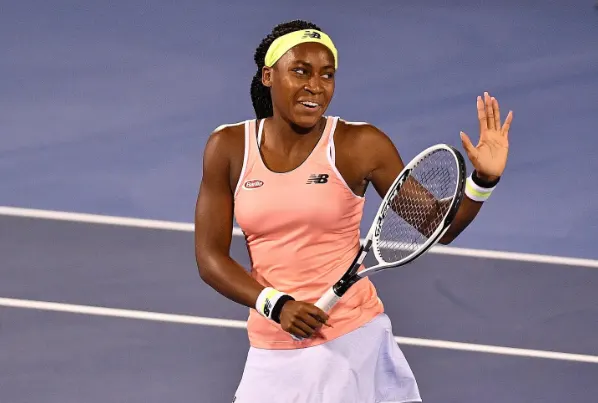
The Pure Aero isn’t as dominant on the WTA side
One that caught my eye: Babolat has 13 players in the WTA Top 100, but the Pure Aero isn’t the standout you’d expect. The Pure Drive actually has more representation on this list.
That tracks with how the two racquets are built. The Pure Aero is about spin and racquet-head acceleration, while the Pure Drive is a more direct, point-blank power frame, and again, that fits the wider trend running through the WTA data. Right now the tour seems to favor easy power and direct ball-striking a little more than maximum spin.
A few fun WTA outliers
I always enjoy this part of the exercise, hunting down the players who aren’t on Wilson, Yonex, HEAD or Babolat.
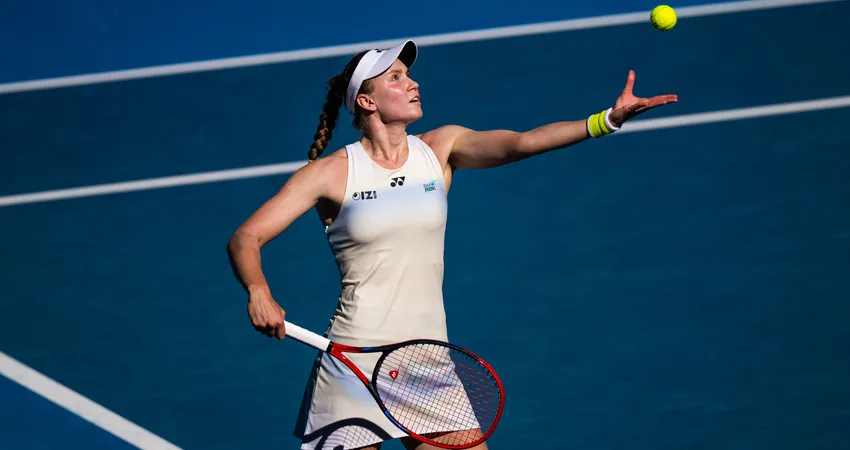
Elina Svitolina is on the Diadem Axis 98, which single-handedly gets Diadem into this Top 10. Oleksandra Oliynykova is listed with a Volkl Vostra. Daria Kasatkina is repping Artengo. And Anastasia Zakharova is on the Prince Ripstick 100.
Prince is a fun one – it used to be one of the biggest names in pro tennis, and these days it doesn’t seem to be chasing pro sponsorships as aggressively, so spotting one in the Top 100 has become genuinely rare. Love seeing it.
Most popular racquets on the WTA tour? Does it differ a lot from the ATP Tour? Full video on our YouTube channel. ?? pic.twitter.com/J7LrOaMdU6
— Tennisnerd (@Tennisnerdnet) August 18, 2026
Now, the ATP Tour…
Here’s where the comparison gets interesting. ATP Top 100 brand breakdown:
| Brand | Players | Share |
|---|---|---|
| Wilson | 25 | 25% |
| Yonex | 25 | 25% |
| HEAD | 21 | 21% |
| Babolat | 17 | 17% |
| Tecnifibre | 7 | 7% |
| Dunlop | 4 | 4% |
| Diadem | 1 | 1% |
Wilson and Yonex are dead even at 25 apiece, HEAD is close behind at 21, and Babolat sits at 17. Compare that to the WTA and it’s a much more balanced picture across the board.
Wilson + Yonex: 68% on the WTA vs. 50% on the ATP.
HEAD: 11% on the WTA vs. 21% on the ATP… almost double.
Tecnifibre does better with the men too: 7% vs. just 2% on the women’s side.
The most popular ATP racquet families
| Racquet family | ATP players |
|---|---|
| Wilson Blade | 13 |
| Babolat Pure Aero | 13 |
| Yonex VCORE | 12 |
| Yonex EZONE | 8 |
| Wilson Ultra | 6 |
| Wilson Defyer | 5 |
| HEAD Radical | 5 |
| Tecnifibre T-Fight | 5 |
| Yonex Percept | 5 |
| HEAD Prestige | 4 |
| HEAD Extreme | 4 |
No single power family running away with it here the way the EZONE does on the WTA side. Instead you get Blade at 13, Pure Aero at 13, VCORE at 12 – remarkably tight.
That tells you a lot about where the men’s game is right now. Blade = control. Pure Aero = spin. VCORE = spin. Racquet-head speed and spin generation still carry a lot of weight on the ATP Tour.
The Blade 98 is still the ATP benchmark
Breaking it down by exact model, the Wilson Blade 98 comes out on top:
| Model | Players |
|---|---|
| Wilson Blade 98 | 10 |
| Babolat Pure Aero 98 | 7 |
| Yonex VCORE 98 | 6 |
| Yonex EZONE 98 | 5 |
| Yonex VCORE 100 | 5 |
| Wilson Defyer 98 Pro | 5 |
| Babolat Pure Aero | 5 |
| Yonex Percept 97 | 4 |
| HEAD Prestige | 4 |
| Tecnifibre T-Fight 305 | 4 |
Very different flavor from the WTA list. Blade 98, Pure Aero 98, VCORE 98, EZONE 98, Defyer 98 Pro, Percept 97. This is much closer to the stereotypical “pro racquet” most people picture.
Still, even here, things are shifting.
100 sq. in. is catching up on the ATP Tour too
The 98 is still the most common head size on the men’s tour, but the gap is closing. We’ve now got players on VCORE 100s, EZONE 100s, Gravity 100s and a handful of other 100-inch frames.
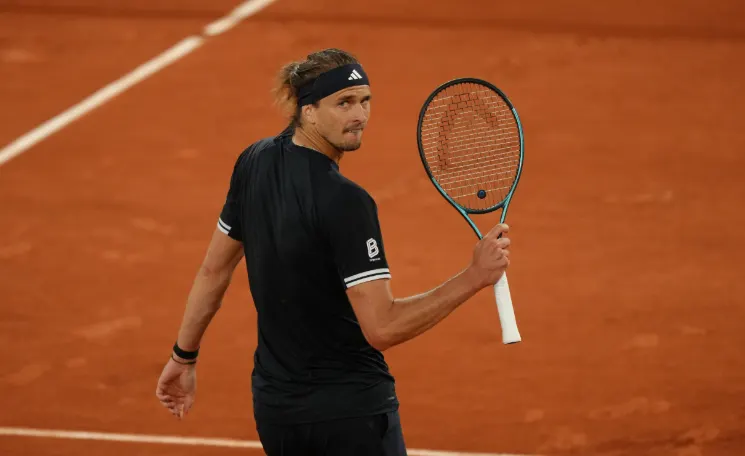
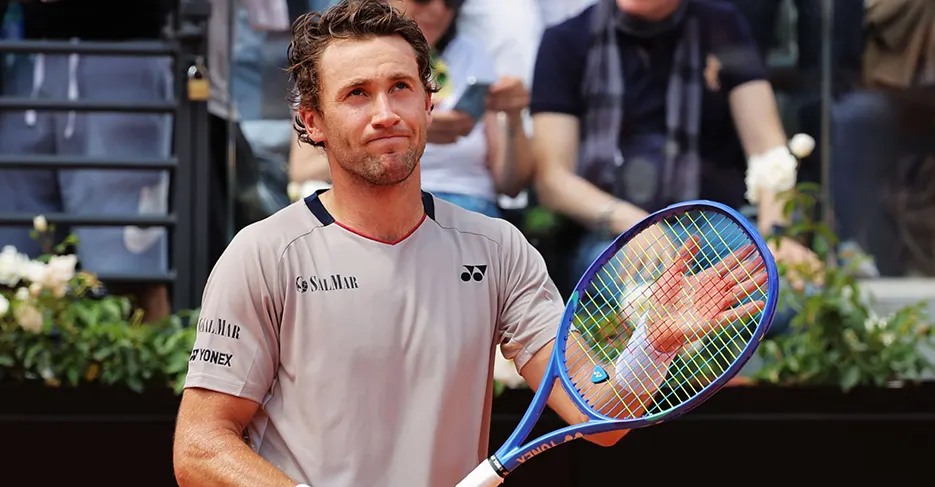
Valentin Vacherot, Alejandro Tabilo, Sebastian Baez, Roman Andres Burruchaga and Tomas Machac are all listed with VCORE 100s. Zverev is on a Gravity Tour 100. Casper Ruud is on an EZONE 100.
So while 97–98 is still king, the men’s tour is clearly drifting toward bigger heads as well. It’s part of a broader shift I’ve talked about plenty on this site before: frames are getting lighter, swingweights have come down, and larger heads just aren’t the taboo they used to be. The old “every pro needs a 90–95 sq. in. club weighing 350+ grams” mindset is well and truly gone.
The old-school stuff hasn’t disappeared
Good news for us racquet nerds, there’s still plenty of traditional gear out there if you know where to look.
Denis Shapovalov is on a VCORE 95. A few Prestige molds are still hanging on – Vit Kopriva plays a Prestige S mold. Marin Cilic is still running a very compact, old-school Prestige-style setup, somewhere in that low-90s range depending on how you measure the mold.
Taylor Fritz’s HEAD Radical cosmetic is actually hiding an older IG Radical MP-style mold, smaller than the current retail Radical MP. Francisco Cerundolo is on the PT57A, one of the most famous HEAD pro-stock molds ever made.
Djokovic is the face of the Speed line but plays something much closer to a customized Radical-derived pro-stock frame. Sinner is another great pro-stock example, he’s the Speed guy on paper, but his actual setup is a customized Speed Touch MP / TGT 301.4 build.
So no, “Sinner plays a Speed” or “Djokovic plays a Speed” really doesn’t tell the whole story. It never does with these guys.
The curious case of the Wilson Ultra
The Wilson Ultra is another one where the paint job can trick you. I couldn’t find many, maybe any, players in this group running a genuine retail Ultra 100.
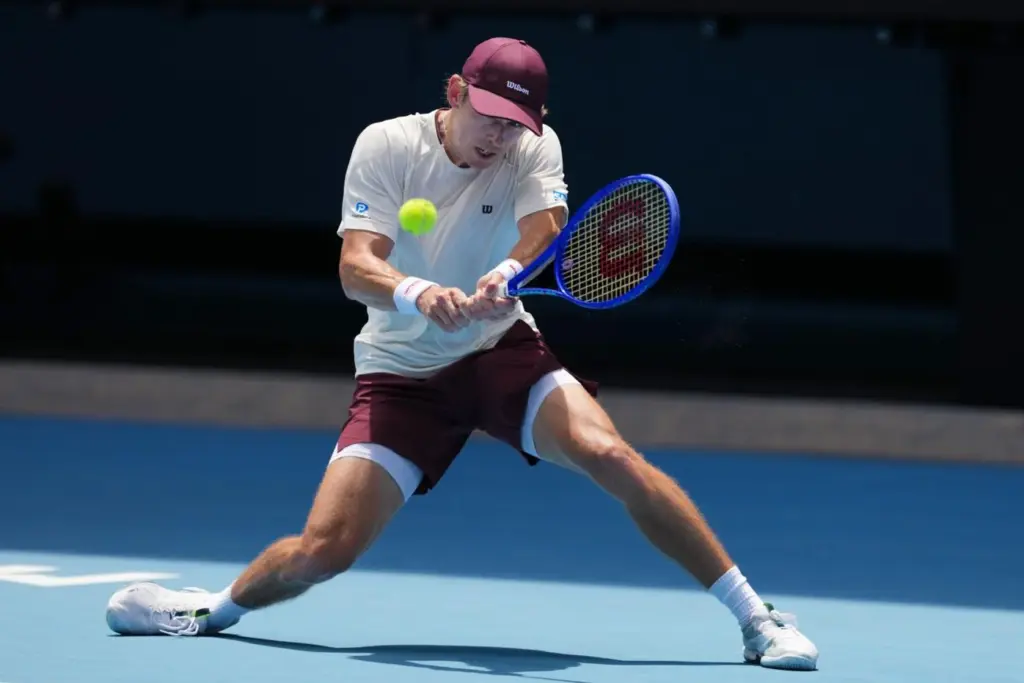
A lot of the “Ultra” listings are actually older Wilson pro-stock platforms. Alex de Minaur and Quentin Halys are on Ultra Pro 99 / Steam 99-style frames. Coleman Wong and Hugo Gaston are connected to the Wilson Pro Open pro-stock platform.
Handy visual tell if you’re trying to spot these: look for the PWS (Perimeter Weighting System) at 3 and 9 o’clock. So if you see an Ultra cosmetic on tour, don’t assume it’s the same racquet sitting on the shelf at your local shop.
Defyer is starting to show up
Wilson’s newer Defyer line is finding its way onto tour too. On the WTA side, Anastasia Potapova and Maria Sakkari are both listed with it.
On the ATP side, the Defyer 98 Pro shows up with Arthur Fery, Karen Khachanov, Terence Atmane, Thiago Agustin Tirante and Sebastian Korda – five Top 100 players already. Whether every one of those is truly retail-equivalent is a fair question, but from a visibility standpoint, the Defyer is getting real airtime.
ATP vs. WTA, side by side
| Brand | WTA | ATP |
|---|---|---|
| Wilson | 35% | 25% |
| Yonex | 33% | 25% |
| HEAD | 11% | 21% |
| Babolat | 13% | 17% |
| Tecnifibre | 2% | 7% |
| Dunlop | 2% | 4% |
The WTA is heavily concentrated on Wilson and Yonex. The ATP is far more spread out. But honestly, what I find more interesting is the type of racquet being played, not just the brand.
WTA – power first. EZONE 100s, VCORE 100s, Blade/Steam 100s, Pure Drives, Speed MPs, Gravity MPs. The common thread is 100 sq. in. frames with accessible power. There are control sticks in there too (Sabalenka being the obvious one) but as a whole, the WTA Top 100 leans firmly toward the modern power-racquet category.
ATP – control and spin. Blade 98s, Pure Aero 98s, VCORE 98s, Percept 97s, Prestige molds, Radical pro stocks, T-Fight control frames. Plenty of 100s now too, but the 97–98 bracket still has a much stronger hold here than on the women’s tour.
Do WTA players actually hit slower?
This is where it gets more interesting than a simple brand table.
I looked at some Australian Open ball-speed data comparing the tours, and the raw pace difference on groundstrokes isn’t as massive as you might assume – backhand speeds in particular can be surprisingly close between the tours.
WTA players hit the ball extremely hard. Full stop. The bigger gaps show up elsewhere: spin rate, racquet-head speed, weight of shot and serve speed. ATP players generally generate a lot more spin, which means the ball isn’t just arriving fast – it’s arriving with a lot more rotation, and therefore more “weight” behind it. The first serve is another huge separator.
So “ATP players just hit harder” isn’t really the right way to frame it. A better way to put it: the men’s game tends to combine high pace with more racquet-head speed and considerably more spin.
Could racquet choice reflect that?
Now we’re getting into speculation territory, but the racquet data lines up pretty well with the playing-style data.
If your game is built around generating big racquet-head speed and heavy topspin, a Pure Aero, VCORE, Blade 98 or Percept makes a lot of sense. If your game leans more toward taking the ball early and driving through it for easy depth, an EZONE 100, Pure Drive, Blade/Steam 100 or Speed MP fits that picture better.
None of that means an EZONE can’t spin the ball, or that a Pure Aero can’t be hit flat – obviously they can. But racquet design absolutely shapes the balance between power, control, launch angle and spin potential. Line up 100 players and those tendencies start to become visible.
Is the WTA just ahead of the ATP on this one?
Here’s a thought I kept coming back to while putting this list together: maybe the WTA is simply further along in the shift toward 100 sq. in. racquets, and the ATP is following behind.
For decades, pros were reluctant to give up smaller heads. But modern poly strings changed that equation completely, you can now get real control out of a bigger, more powerful frame, and stability no longer requires a 350-gram club. Players get a bigger sweet spot without losing control over the ball.
We’re already seeing more 100s on the ATP Tour than we did ten or fifteen years ago. Wouldn’t shock me at all if that keeps going. The WTA data might just be a preview of where the men’s game is slowly heading.

GREAT OFFERS ON TENNIS PRODUCTS
Don’t miss our new deals and discounts for some of our favorite tennis products!
Good discounts on new racquets, strings, bags, apparel or other tools and services such as coaching or training equipment.
Final thoughts
A few things stand out from this year’s list.
On the WTA side, Wilson and Yonex are absolutely dominant, 68% of the Top 100 between them. The Blade is still the biggest single family, but the EZONE is right there with it, and the EZONE 100 is the single most common exact model in the whole dataset. The women’s game has clearly embraced the 100 sq. in. performance frame.
On the ATP side, it’s a much more even market. Wilson and Yonex are tied, HEAD isn’t far behind, and Babolat is still very strong. Blade, Pure Aero and VCORE are basically neck and neck. 100s are creeping in, but 97–98 sq. in. is still much more common here than on the WTA.
And as always, there’s the pro-stock caveat hanging over all of it. A “Blade” might actually be an H22. An “Ultra” might really be a Pro Open. A “Speed” might trace back to a Radical or an older Speed mold entirely. A “Blade Pro 100” might just be an old Steam 100 BLX in disguise.
That’s the part that makes pro racquets endlessly interesting to me. The paint job tells you one story. What’s underneath can tell you a completely different one.
I’ll keep this list updated as players switch racquets, new models land and we dig up more info on the trickier pro-stock molds. And if you’ve got something reliable on a frame that looks wrong here – drop it in the comments. That’s the fun part of being a tennis nerd.