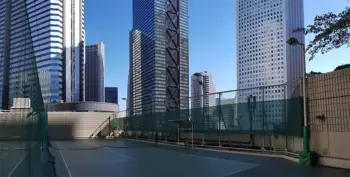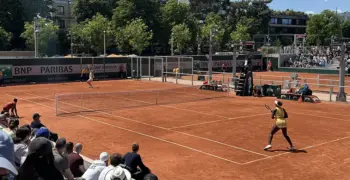
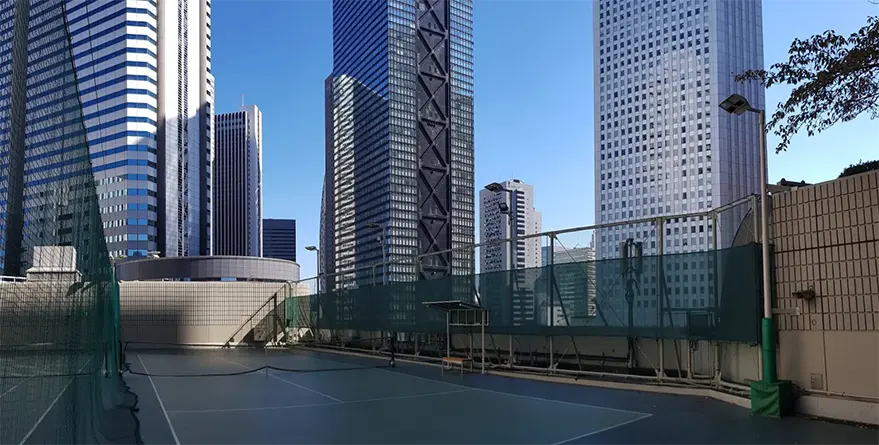
Tokyo is one of those cities where tennis is everywhere, but not always easy to find if you don’t know where to look.
There are public courts tucked into parks, traditional private clubs, large tennis centres and, of course, Ariake – home of the Japan Open and one of the most important tennis complexes in the country. For a visiting tennis player, though, Tokyo can be slightly frustrating. Many public courts use Japanese-language reservation systems, some require registration, and the most interesting traditional clubs are generally not open to casual visitors.
That is part of what makes tennis in Tokyo interesting. You get a mixture of very modern facilities, old-school club culture and a surface that many visitors from Europe or the US won’t have played on before.
If you’re coming to Tokyo for the Japan Open, or simply want to hit a few balls while you’re in the city, these are some of the places worth knowing about.
The Surface: Understanding the “Omni Court”
Before booking a court in Tokyo, it is worth understanding what the locals mean by an “Omni” court.
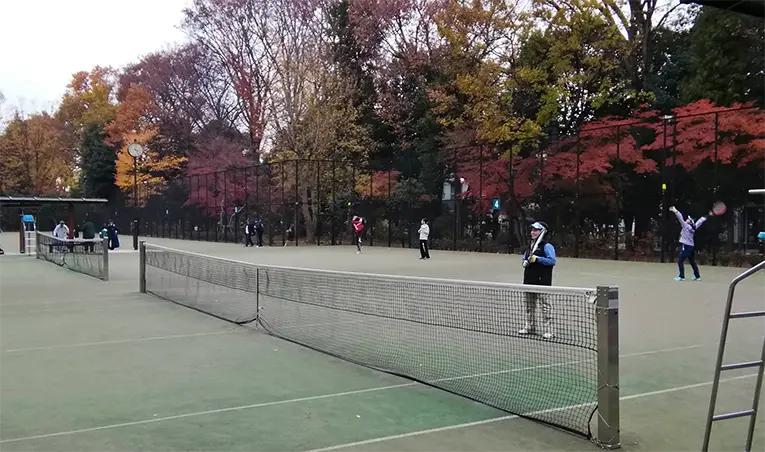
A large number of public courts use a sand-filled artificial-grass surface. It isn’t clay, and it doesn’t really play like clay. The sand gives the court a relatively slow, sometimes low and skiddy bounce, while the footing and movement are quite different from both European clay and a normal hard-court.
The amount of sand and the condition of the surface can also make a noticeable difference between courts. Some feel relatively quick and clean, others can feel loose underfoot.
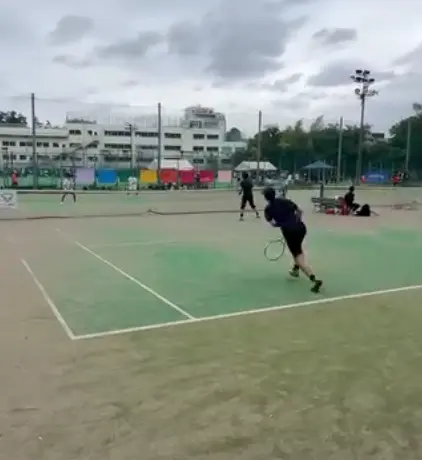
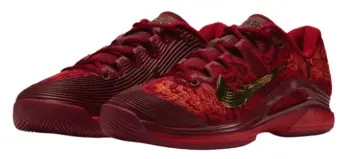
If you’re used to hard courts or clay, give yourself a little time to adjust. The first few games can feel strange. There are also special Omni Court tennis shoes designed for these courts, but it’s not always a must to use these. More on that further down.
There are also plenty of other surfaces in Tokyo which is great for us tennis nerds. Ariake uses hard courts for the Japan Open, Meiji Jingu Gaien has indoor carpet and outdoor clay, while Takanawa has indoor artificial grass for example.
The Major Venues
Ariake Tennis Park
Ariake is the obvious starting point for any serious tennis fan visiting Tokyo.
The complex is home to Ariake Coliseum and the Japan Open, as well as a large collection of outdoor courts. The tournament courts are hard, while the wider park also includes sand-filled artificial-grass courts.
The Japan Open usually takes place from the end of September into October each year. If you’re visiting during the tournament, this is obviously the place to start.
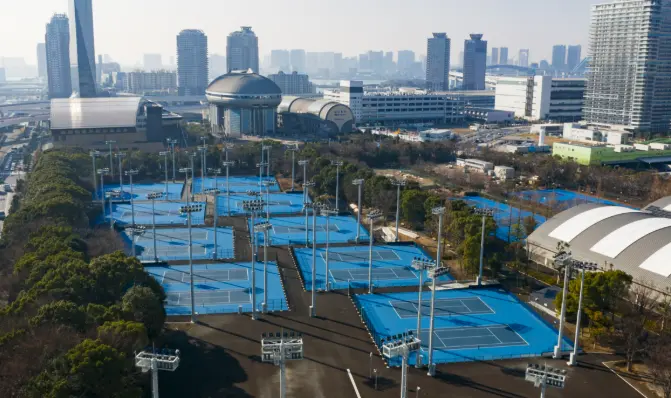
Outside the tournament, the public courts are part of Tokyo’s wider reservation system, so getting on court is not necessarily as simple as turning up and paying. Registration and booking rules apply, and the system can be a little intimidating if you don’t read Japanese.
That said, even if you don’t manage to book a court, Ariake is worth seeing. Walking around the complex gives you a sense of how much tennis there actually is in Tokyo, and during the Japan Open the area becomes the centre of the Japanese tennis world.
Shiba Park Tennis Courts
Minato-ku, Tokyo
If you want the classic Tokyo tennis photograph, this is probably the one.
The courts at Shiba Park sit beneath Tokyo Tower, and on the right court you can spend a changeover looking straight up at one of the city’s most recognisable landmarks.
The surface is Omni, and the courts have a much more local, everyday feel than Ariake. They are not particularly easy to book and court condition can vary.
This is all about the combination of setting and atmosphere. Tokyo Tower, Zojoji Temple and the surrounding city make this one of those courts that you will remember. If you can get Court 1, even better.
Komazawa Olympic Park Tennis Courts
1-1 Komazawakoen, Setagaya
Komazawa Olympic Park was built for the 1964 Tokyo Olympics and remains one of the city’s large sporting parks.
The tennis courts are Omni and sit among a much larger park filled with running and cycling paths and other sports facilities. The setting is considerably more relaxed than central Tokyo.
This is a good option if you want to experience ordinary Tokyo tennis rather than a famous tennis landmark. The downside is the same one you’ll encounter at many public courts: booking requires navigating the relevant reservation system, and the process isn’t designed primarily for international visitors.
The park itself is worth a visit even if you don’t manage to get a court. The 1960s Olympic architecture and the mix of students, families, runners and local players give it a very different atmosphere from the more tourist-heavy parts of Tokyo.
The Private and Semi-Private Clubs
Meiji Jingu Gaien Tennis Club
Kasumigaoka/Aoyama area, Tokyo
Meiji Jingu Gaien is one of the more interesting tennis facilities in central Tokyo, partly because it has something that is increasingly difficult to find: both indoor carpet and outdoor clay.
The club has eight indoor carpet courts, as well as 21 outdoor clay courts. The indoor courts are available for rental in certain circumstances, but this is not a simple public facility where a tourist can necessarily walk in and book a court. Current rental access involves registration and club rules, so check the situation before making plans.
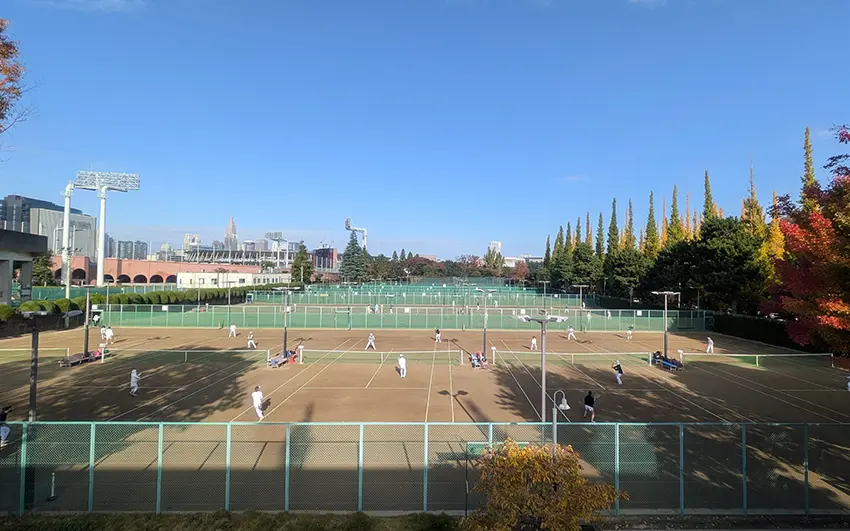
There is also a strict dress code for the indoor courts. White clothing and appropriate white tennis shoes are required.
Here you’re in the middle of one of Tokyo’s major sporting areas, close to Jingu Stadium and the famous ginkgo-lined avenues.
Takanawa Tennis Center
Takanawa, Minato-ku
If your priority is simply to find an indoor court without dealing with a complicated public-park system, Takanawa is one of the more straightforward options.
The centre has seven general indoor artificial-grass courts and two private courts, within the Shinagawa Prince Hotel complex. It is open to non-hotel guests as well as hotel guests.
This is not budget tennis though. It is a hotel tennis centre, and can be a bit expensive at certain times.
The upside is that it is indoors, centrally located and much less dependent on Tokyo’s public-court lottery systems.
Jinji Tennis Center
Tokyo – based around Takaido, with courts at different locations (image on top)
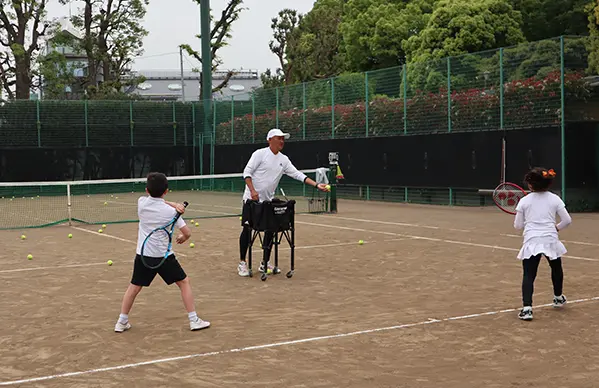
Jinji is a slightly different from the other places on this list. It is less a traditional tennis club with a fixed set of courts and more a tennis school and coaching operation that works with courts at different locations around Tokyo. That can actually make it useful for visitors.
Jinji offers private and group lessons in English and Japanese, as well as hitting sessions with a coach. It also arranges court rentals for players who simply want somewhere to play, with indoor and outdoor options depending on the season and location.
For a travelling tennis player, the interesting option is the hitting-partner service. If you’re coming to Tokyo for a few days and don’t want to spend your time trying to work through Japanese public-court reservation systems, arranging a session with a coach or hitting partner can be a much simpler way to get on court.
The other advantage is language. The centre offers coaching in both English and Japanese. Note though that the actual court, surface and location depend on what is available for your session.
It is also more expensive than booking a municipal public court yourself. You’re paying for coaching, organisation and convenience rather than simply renting an hour of court time.
Tokyo Lawn Tennis Club
Minami Azabu, Minato-ku
The Tokyo Lawn Tennis Club is another very different proposition.
Its history goes back to the late 19th century, and it is one of the most historically significant tennis clubs in Japan. The club has ten outdoor natural-clay courts and a long connection with Japan’s international and diplomatic communities.
This is not a public tennis centre, and a tourist should not expect to turn up and rent a court.
Visitors need to be accompanied by a member, while international tennis connections and reciprocal relationships can sometimes provide a route into the club. If your home club has international reciprocal arrangements, it is worth asking before your trip.
For most visitors, therefore, TLTC is more of a piece of tennis history than a practical place to book a casual hit.
But if you do get an invitation, take it. Playing on the clay courts of a club with this much history is a very different experience from booking an hour at a municipal sports park.
Hidden Gems
Hibiya Park Tennis Courts
1-6 Hibiyakoen, Chiyoda-ku
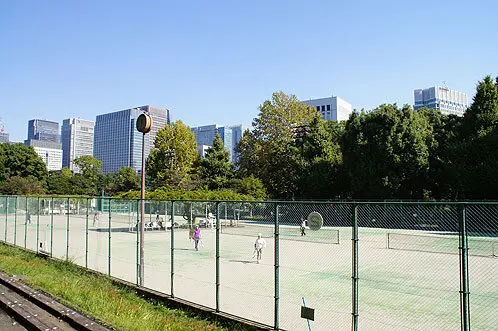
Hibiya Park is about as central as you can get, with Ginza and the Imperial Palace nearby, and it has five artificial-grass tennis courts.
The setting is much more interesting than you might expect from a public court in the middle of central Tokyo. The park itself dates back to the early 20th century and has ponds, gardens and mature trees.
The courts require registration through the Tokyo Metropolitan sports reservation system, and from June 2026 users are required to present identification when using the facility. So maybe a bit less convenient for a spontaneous tourist hit than it might first appear.
Still, if you’re already staying around Ginza or Marunouchi and manage to secure a court, the location is hard to beat.
Kiba Park Tennis Courts
Koto-ku, Tokyo
Kiba Park is another large public park with Omni courts, this time in eastern Tokyo.
The setting is quieter and more residential than central Tokyo, with paths, greenery and the Kiba Canal nearby. It can make a nice change from the dense city centre.
There are six artificial-grass courts, and the courts are part of the local public reservation system.
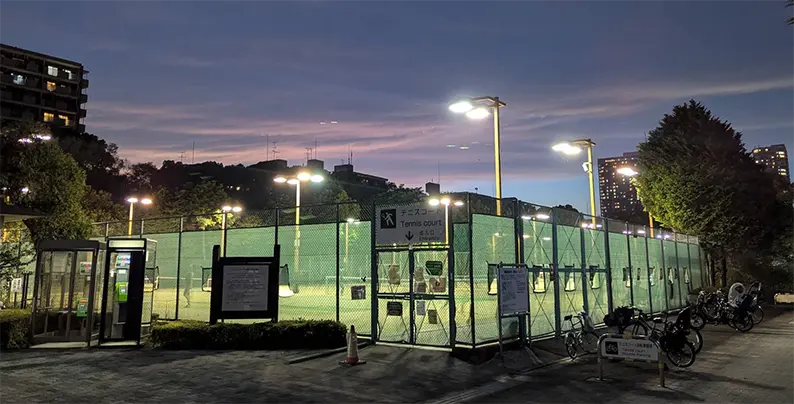
Inokashira Onshi Park Courts
Kichijoji, western Tokyo
Inokashira Park is one of the more enjoyable places to combine tennis with a day out in Tokyo.
The park has eight artificial-grass courts, and the surrounding Kichijoji neighbourhood is very different from the skyscraper-heavy image of central Tokyo.
You have the famous Inokashira pond, small restaurants and bars around Kichijoji, Harmonica Yokocho and the Ghibli Museum nearby.
The tennis itself is public-park tennis rather than anything luxurious, but that is exactly why it is interesting. If you want to spend a day playing a little tennis and then exploring a neighbourhood where people actually live, this is a good combination.
The downside, again, is the booking system. These courts are not necessarily useful for a traveller who decides that morning that they fancy a hit, so make sure you plan your travels and bookings.
A Few Other Courts Worth Knowing About
Tokyo has far more tennis courts than can sensibly be included in one article. If your priority is simply finding somewhere to play, don’t limit your search to famous venues, it will require some research.
The city’s ward and metropolitan parks contain a large number of public courts, often using Omni or artificial-grass surfaces. They are generally much cheaper than private indoor facilities, but the trade-off is the reservation system.
For a short trip, it can make sense to ask your hotel whether they can help with a public-court reservation rather than trying to work everything out yourself. Especially if you don’t speak Japanese.
How Difficult Is It to Actually Play Tennis in Tokyo?
Tokyo has plenty of courts. That doesn’t mean they are easy for a tourist to book.
There are several different systems rather than one simple city-wide tennis booking platform. Metropolitan parks have one system, individual wards can have their own arrangements, and private clubs operate separately.
Some facilities also require registration or identification.
For a visitor, I’d approach it in this order:
1. Hotel/private tennis centre
The easiest option if you just want to guarantee a session. It will usually cost more.
2. Public court with advance planning
Good value, but expect registration, lotteries or Japanese-language booking systems.
3. Tennis club connection
Potentially the most interesting option if you belong to a club that has reciprocal relationships in Japan.
4. Turn up and ask
Don’t count on it. Tokyo is not a city where I’d build a tennis holiday around finding an empty public court at the last minute.
Tennis Shoes
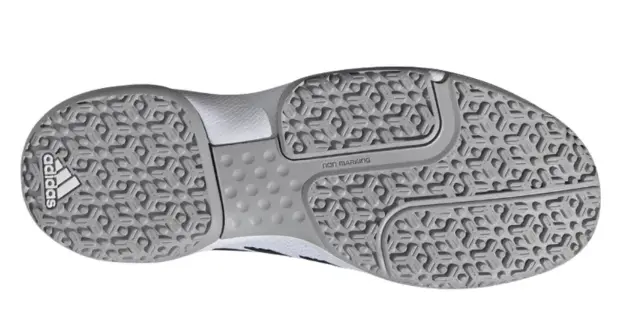
Omni courts are not the same as European clay, and specialist surfaces such as carpet have their own requirements. Some private clubs also have strict shoe rules.
At Meiji Jingu Gaien, for example, the indoor courts have specific footwear and clothing requirements.
For a trip where you’re planning to play several different surfaces, check the individual facility rules rather than assuming your usual hard-court shoes will be suitable everywhere.
When Should You Play?
Tokyo can be played year-round, but the seasons matter.
Summer is hot and humid, and outdoor tennis can be hard work. September can still feel very much like summer, despite the approach of the Japan Open.
Autumn is probably the most appealing time for an outdoor tennis trip, particularly around the Japan Open. Spring is also pleasant, although rain can interfere with plans.
Winter is cold but generally much drier, making indoor courts more attractive.
If you’re coming specifically for the Japan Open, don’t assume that late September automatically means perfect outdoor tennis weather. It can still be hot, humid and wet.
Have you played at any of the Tokyo courts? Let us know your experience or recommendations in the comments below!
Find more tennis travel recommendations.