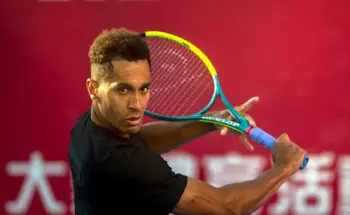
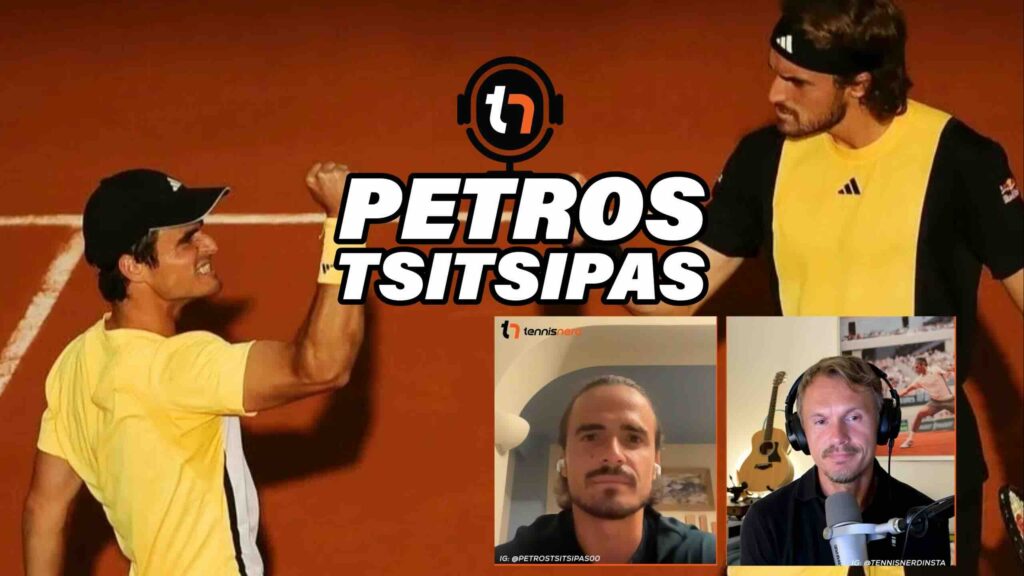
In this podcast with Petros Tsitsipas, we talk about his recent shift towards singles after spending the last few years focusing on doubles. We also get into the dynamic and psychology of being a part of a tennis family with both Stefanos and Pavlos playing professionally, the father being a coach and the mother having played high-level tennis. Petros is also into learning more about tennis gear, so a part of the podcast is also dedicated to that.
You can listen to the podcast on audio platforms like Spotify, but can also be enjoyed in the embedded player below or on YouTube as a video podcast.
Below are some excerpts from the podcast.
Growing Greek Tennis
Although the Tsitsipas family has become synonymous with Greek tennis, Petros is quick to point out that Maria Sakkari was instrumental in building interest in the sport in Greece. She set an early example of what was possible, inspiring Stefanos and creating momentum for a new generation of players.
Petros himself represented Greece at the Olympic Games, which he cites as one of his proudest moments. He also highlighted the rise of younger talents such as Rafael Pagonis, who already made noise at Wimbledon juniors, as proof that Greek tennis is on the right trajectory.
Brothers on Court
Petros has partnered with both Stefanos and his younger brother Pavlos in doubles. The experience with each is different: Stefanos, the established star, often takes the lead, while with Pavlos, Petros finds himself in the mentor role. He admits Pavlos does not yet love doubles as much, but he hopes to help him see the joy in it.
“Playing with Stefanos, I used to look up to him and follow his lead,” Petros explained. “But over the last couple of years, I was guiding the team more in doubles, which was a new feeling. With Pavlos, I’m more of the boss, and I try to pass on what I’ve learned.”
From Doubles Specialist to Singles Aspirations
Between 2021 and 2024, Petros dedicated himself fully to doubles after a serious hamstring tear disrupted his singles career. That shift paid off: he reached the top 100 in doubles, played Grand Slams alongside Stefanos, and fulfilled his dream of competing at the Olympics.
But after the Games, the drive to return to singles grew stronger. Since late 2023, he has been training primarily for singles while continuing to play doubles. His goal is to compete consistently at the Challenger level in both disciplines, with the long-term aim of establishing himself as a strong all-around player.
How Doubles Has Changed
We also discussed the evolution of doubles itself. Petros sees a major shift away from traditional serve-and-volley dominance to more baseline play and aggressive “closing” from the server’s partner at the net. Players like Andrea Vavassori and Simone Bolelli have perfected this style, cutting off angles and relying on lightning-fast reflexes.
He believes doubles deserves a rebrand: “It’s incredibly exciting once you understand it, but ATP needs to market it better. Teams don’t stay together as long, which makes it harder to create brands like the Bryan Brothers. Still, doubles is one of the most entertaining forms of tennis if you know what to watch for.”
Training and Preparation
On the Challenger circuit, preparation is everything. Petros admits he used to overtrain when younger, which contributed to injuries, but now he has found a better balance. His daily routine includes long practice sessions, conditioning, and plenty of focus on recovery. Sleep and nutrition play a big role, although he admits life at the lower levels of the tour makes Djokovic-style routines impossible.
One ritual remains non-negotiable: a cold Fredo Espresso before matches. Combined with journaling key tactical notes, this simple habit helps him get into the right mental space.
Gear Experiments and Strings
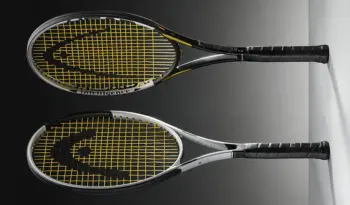
Naturally, we had to talk about equipment. Petros plays with the Wilson Blade 98 (18×20) and has become increasingly detail-oriented about strings. An appendicitis surgery in 2023 led to an experiment with natural gut in the mains and Luxilon 4G in the crosses, which he immediately loved. Since then, gut hybrids have been his go-to setup, despite the expense and complications of traveling with such a sensitive string.
He’s well aware of the challenges: different stringers, varying machines, and weather conditions can all affect the feel of gut. Still, he prefers its crisp, powerful response, especially since his flatter, more attacking game benefits from the extra pop.
Petros also shared insights into how much pros actually talk about gear. “The older I get, the more I realize everyone obsesses about it. Specs, tensions, strings—it’s something you can’t avoid. At some point, every player goes through that process of trying to figure out what setup really suits them.”
The Harsh Economics of the Tour
One theme that came up repeatedly is the difficulty of making a living as a tennis player outside the top 200. Despite improvements in Challenger prize money, Petros believes the system still fails most professionals.
“You can be ranked 300 or 400 in the world, playing amazing tennis, and still struggle to survive financially. That’s not right. Tennis is one of the toughest sports in the world, and yet only a small group can truly make a living from it. Hopefully the ATP and PTPA find ways to spread resources more evenly.”
Final Thoughts
Talking to Petros gave a real sense of the passion, discipline, and challenges that come with life as a professional tennis player. From injuries to equipment experiments, from family dynamics to the grind of the Challenger tour, his story reflects both the difficulties and the rewards of chasing tennis dreams.
For fans of doubles and gear alike, Petros offers valuable insight into the evolving game—and for Greek tennis, he represents both a proud contributor and a hopeful sign for the future.