Djokovic Returns as Rybakina, Sabalenka and Gauff Headline WTA Field
The China Open in Beijing gets underway on September 30, bringing together the ATP and WTA Tours for one of the biggest combined events of the Asian swing.
The men’s tournament is an ATP 500, while the women’s event is a WTA 1000, with both competitions being played on outdoor hard courts at the National Tennis Center.
Slow hard-courts
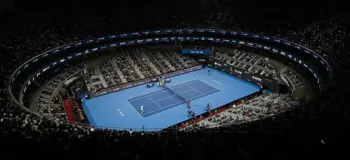
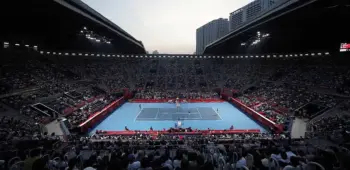
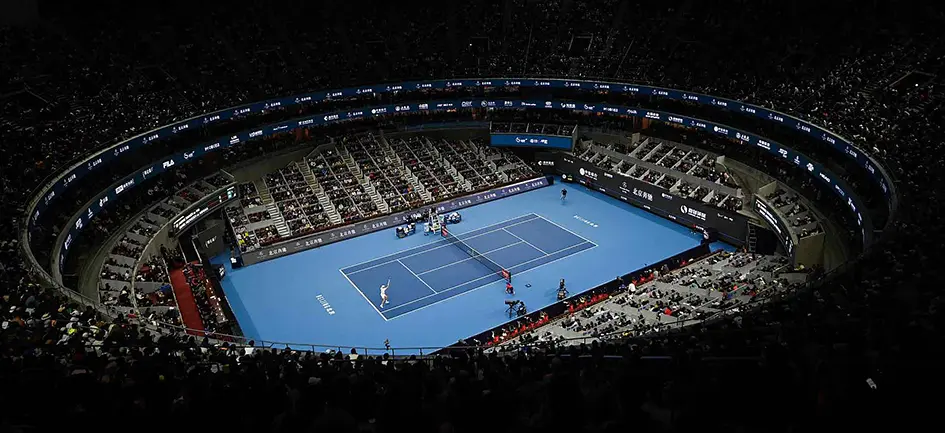
The Beijing Olympic Green Tennis Center has been the home of the China Open since the tournament moved to the Olympic Green. The complex was expanded to 11 courts by 2011, creating one of the most impressive tennis facilities in Asia.
Its centrepiece is the spectacular 15,000-seat Diamond Court. The main stadium is equipped with a retractable roof, while the venue also features advanced air-cooling technology designed to improve conditions for both players and fans.
These hard-courts are some of the slowest ones on tour and it can get even slower at night matches, and especially if the humidity is high.
The slow courts, paired with the notoriously slow HEAD balls, will make it difficult to hit winners. Other tournaments on the Asian swing (Tokyo, Shanghai and Chengdu) have transitioned to Yonex Tour Platinum, a livelier and faster ball, but Beijing is still using HEAD/PENN. HEAD are working on their ball quality as you can read and hear in our interview with their Product Director for North America, Felix Schumann.
Player news
Novak Djokovic is returning to Beijing for the first time since 2015, while the ATP’s defending champion, Jannik Sinner, has withdrawn with a knee injury. On the women’s side, Elena Rybakina arrives as the top seed after winning the US Open, with Aryna Sabalenka, Coco Gauff and Iga Swiatek among the other leading names.
The WTA event runs through October 11, while the ATP tournament concludes on October 6.
Check also our preview for the 2026 ATP Tokyo tournament.

ATP: What to Watch
The biggest men’s storyline is undoubtedly Novak Djokovic’s return to the China Open.
The Serbian has not played in Beijing since 2015, but his record at the tournament remains extraordinary. Djokovic is a six-time champion and has a 29–0 record (!) at the event, having won every match he has played there.
His return comes as the sixth seed, with a first-round meeting against Nuno Borges. It is Djokovic’s first competitive appearance since his US Open first-round exit.
The draw has also placed Djokovic in the same quarter as top seed Alexander Zverev, meaning the pair could meet in the quarterfinals.
No Sinner
The biggest change to the men’s tournament came shortly before the draw.
Jannik Sinner has withdrawn from Beijing because of an ongoing knee injury, meaning the defending champion will not be able to attempt to retain his title.
Zverev Leads the Remaining Field
With Sinner out, Zverev is the No. 1 seed and odds favorite to win China Open.
The German has reached the semifinals in Beijing three times and will be looking to convert his previous deep runs into a title challenge this year.
Behind Zverev and Djokovic, there are some strong contenders in Felix Auger-Aliassime, Flavio Cobolli, Alex de Minaur and Daniil Medvedev, giving the ATP 500 a particularly strong collection of established players.
Other notable names include Alexander Bublik, Jakub Mensik, Andrey Rublev and Francisco Cerundolo.
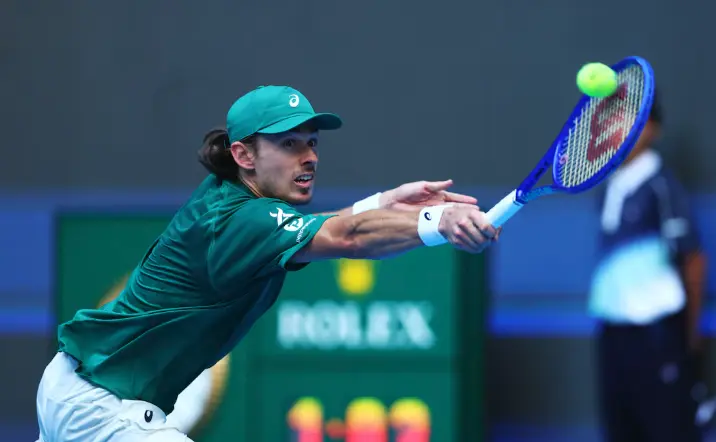
“The conditions are slow so I gave myself a bit of room to return. When the balls are so big and also quite slow, it’s tough to be aggressive and almost counterproductive at certain times.” De Minaur commented last year about the conditions.
WTA: A Star-Studded 1000 Event
The women’s tournament is even larger, featuring a 96-player singles draw, with the 32 seeds receiving first-round byes.
The China Open is the second-to-last WTA 1000 event of the 2026 season, making it a major stop in the final run towards the WTA Finals.
Rybakina Arrives as World No. 1
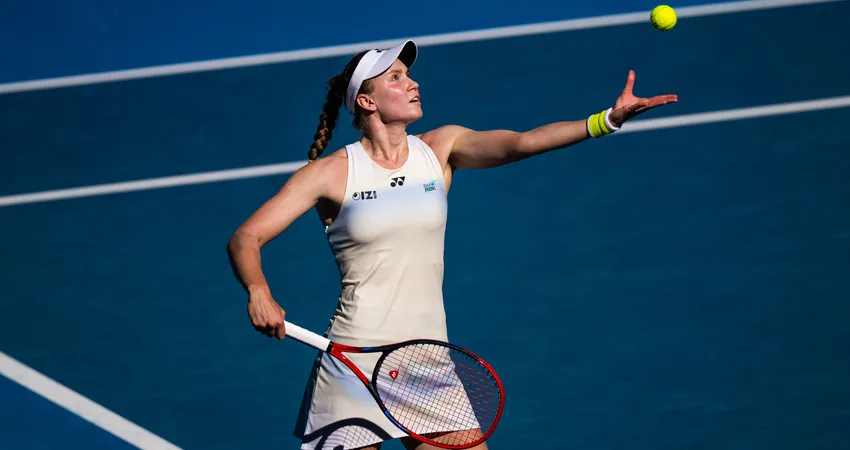
Elena Rybakina is the No. 1 seed in Beijing and enters the tournament as the reigning US Open champion.
The Kazakh will be making her first WTA Tour appearance since winning her third Grand Slam title in New York, making her return one of the major storylines of the tournament.
Rybakina’s opening section of the draw includes former world No. 4 Belinda Bencic, with the pair potentially meeting in the quarterfinals.
Sabalenka and Osaka
Sabalenka is the No. 2 seed and occupies the opposite quarter from Rybakina.
The Belarusian could face another former Beijing champion in the quarterfinals, with Naomi Osaka seeded No. 12 in the same section.
Gauff vs. Swiatek is a Potential Quarterfinal
The second quarter of the women’s draw contains another blockbuster possibility.
Coco Gauff, the 2024 Beijing champion, is seeded third, while Iga Swiatek, who won the tournament in 2023, is seeded eighth. The pair could meet in the quarterfinals, which would be the 17th meeting of their careers.

The third quarter is headed by Mirra Andreeva and Linda Noskova.
Andreeva is seeded fourth, while Noskova is fifth and returns to Beijing after reaching the final last year.
The Defending Champions are Missing
Neither defending singles champion will be in the tournament.
On the men’s side, Sinner withdrew with his knee injury. On the women’s side, Amanda Anisimova, last year’s champion, withdrew because of a left wrist injury.
Our past five champs in Beijing ?@ChinaOpen | #ChinaOpen pic.twitter.com/Z6IfSwIYKy
— wta (@WTA) September 28, 2026
Prize Money
Total prize pool for the 2026 China Open Beijing event. Men’s: $4,089,385, women’s (WTA 1000 event): $9,415,725
Singles men
| Winner | $764,750 |
| Runner-up | $411,480 |
Doubles men
| Winner | $251,200 |
| Runner-up | $133,970 |
Singles women
| Winner | $1,151,380 |
| Runner-up | $612,340 |
Doubles women
| Winner | $468,200 |
| Runner-up | $247,870 |
Chinese Players to Watch
The China Open also provides an important home stage for Chinese tennis.
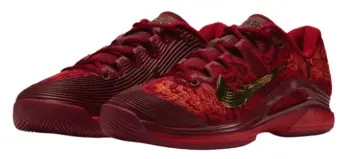
On the women’s side, Zheng Qinwen (don’t miss her new shoes) has received a wildcard and is one of the most prominent home players in the field. Other Chinese players receiving wildcards include Sun Xinran, Yuan Yue, Zhu Lin, Gao Xinyu, Shao Yushan, Lin Yujun and Qu Yihan.