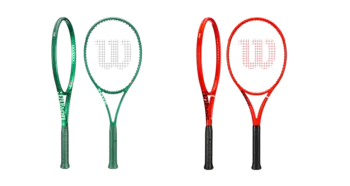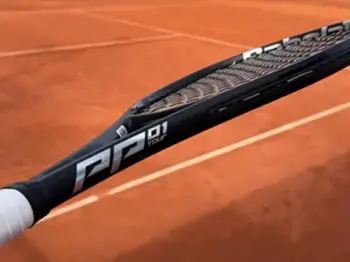
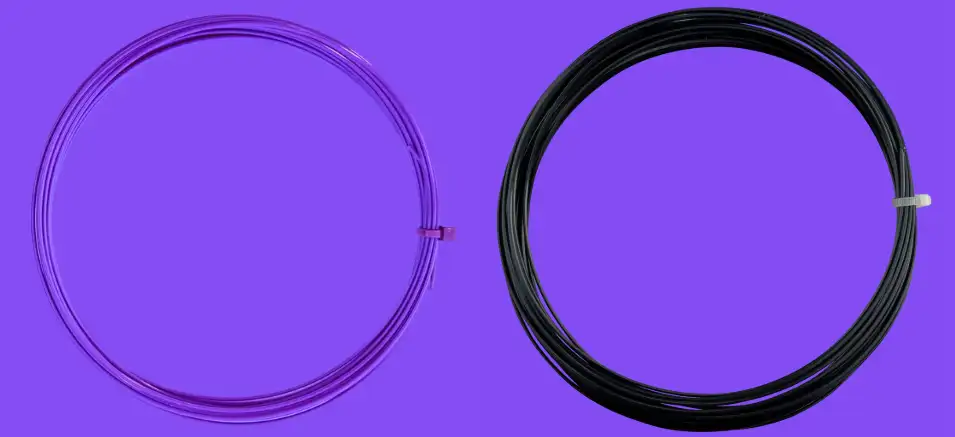
Toroline O’Toro Snap Flex prototype is Toroline’s most recent rounded co-polyester designed for those wanting a modern, firm, and controlled response, but avoiding shaped strings which deliver a more aggressive bite. I have tested it in two racquets, the Wilson Blade 98 v9 and the Tecnifibre Tfight 300 ID, and the distinct contrasts in string set performance between the two frames, I have to admit, really surprised me.
From the start, I could sense the shape and structure of the string in the Blade, though it didn’t feel harsh. In the Tfight 300 ID there was, however, a complete transformation of the string after the first hour. As it settled in, the strings began to open up and the ball started coming off the strings more lively, even responsive, and the snap was there.
This review gives you the real, on-court experience: how it feels, how it plays, who it suits, and how it compares.
Tech & specs
- Gauge: 1.25mm / 16L
- Material: Co-polymer (polyester)
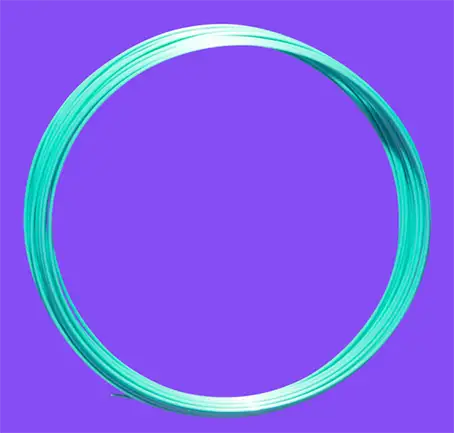
- Color: Mint, Black (Note: this is a prototype only so far)
- Shape: Round
Playability
Wilson Blade 98 V9 Playtest
After stringing up the O’Toro Snap Flex prototype into the Blade 98 v9, I began thinking about the initial response. This is firmer than I was expecting, but can still be considered on the softer side, as the response is not uncomfortable at all, but rather, it is pretty responsive.
A firm feeling response and solid control of the ball on each stroke, clean and predictable control of the launch, as acceleration was linear with a good amount of pop. The rounded-string response yields less pocketing at lower swing speeds during a deceleration of the stroke.
Whilst I did get good access to spin, I feel as though it was a ‘speed and friction’ spin rather than an active shape and depth bite. While still stable, I feel as though it would benefit from more feedback on the volleys and defensive strokes.
Tecnifibre Tfight 300
Things changed a lot with this string in my Tfight 300 ID. The first hit with O’Toro Snap Flex Prototype had a great feel to it, and it was nicely controlled, but after about an hour, the strings really settled in. After that I felt the following:
- Better pocketing
- A more lively and improved rebound
- Better snap-back
- A better connection with the ball (really enjoyed the feedback)
The strings felt different after the break-in period. Where the Blade felt the strings to be more firm and structured, the Tfight 300 ID really let the O’ Toro Snap Flex have a more lively feel yet still and consistent depth response. This tells me the string pairs especially well with more modern, and slightly more open and flexible frames.
Pros and cons
Pros
- Firm, modern control-oriented response
- Good stability on baseline ground strokes
- Predictable, low-launch trajectory
- Great for fast swings and attacking baseline players
- Comes alive beautifully after break-in (especially in the Tfight)
- Very durable after hard hitting
Cons
- Feels a bit too firm in some control frames like the Blade
- Not as much ball bite as shaped polys (by design)
- Needs the first hour to settle
- Not ideal for touch players or those on slower swings
- Arm-sensitive players may want lower tension or a hybrid
Comparable strings
Since Snap Flex is rounded, these are the natural comparisons in my mind:
- Head Hawk – Similar firmness and linear response. Snap Flex has a bit more pop when unlocked.
- Restring Sync – Maybe a tad softer and more forgiving, while Tour Snap Flex is firmer and more explosive.
- Silvester Energy – Snap Flex is firmer and more controlled.
- Luxilon ALU Power – Snap Flex is less metallic, more predictable, and more stable over time.
- Yonex Poly Tour Pro – Softer, more muted; Snap Flex is crisper and higher-performance.
If I had to summarise:
Snap Flex feels like a more stable, slightly firmer, more controlled alternative to Hawk or ALU Power — with better consistency / precision.
Summary
The O’Toro Tour Snap Flex prototype is a rounded, firm, control-focused poly. I think it would suit aggressive baseliners who naturally generate good racket-head speed. Can feel less stable on volleys and touch shots especially in more open pattern setups. Some key takeaways:
- In the Blade 98 v9, it felt a little firm but still offered great pop and predictability.
- In the Tfight 300, it really came alive after the first hour – this was easily my favourite pairing.
- Spin is good for a rounded poly
- The feel is crisp, clean and feels stable at the baseline – ideal for confident hitters.
- Players seeking comfort or maximum pocketing won’t love it, but competitive baseliners will.
If you like a slightly firmer feel and a consistent response and you’re curious about what Toroline is building next, this prototype is absolutely worth a try – especially if you are comfortable generating your own pace. It will hold up well under heavy hitting but don’t expect lots of feel or control in and around the net, I don’t think that is what this string is designed for.
Visit the Toroline website here (10% discount with code TENNISNERD) or check our overview of all Toroline strings. You can also read more string reviews at Prostrung.