
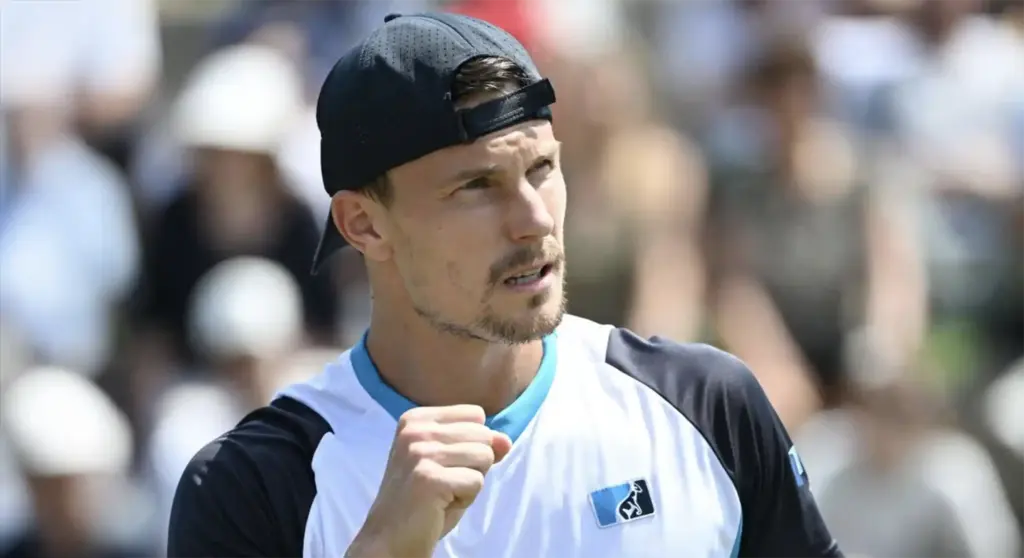
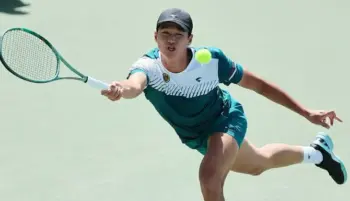
Hungarian tennis player Marton Fucsovics is currently the no 2 Hungarian player on the tour. But what is Marton Fucsovics tennis racquet?
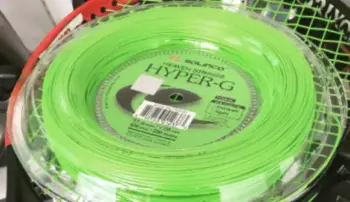
Marton Fucsovics racquet and strings
Marton Fucsovics is actually using a retail Yonex Ezone DR98

Marton Fucsovics Tennis Racquet – Not racket science
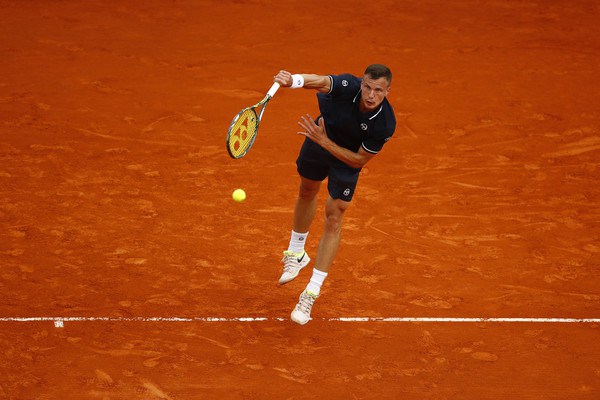
As a tennis nerd and licensed racquetholic it is easy to become obsessed with pro player racquets (that is probably why you are reading a post called Marton Fucsovics Tennis Racquet) and their specs (see the list of posts on this topic here), but there are plenty of professional tennis players that know less about tennis racquets and strings than recreational players. They know when they like a setup, but they might not know why, for example. Then there are also pros who are testing new racquets and setups as often as some tennis nerds do, but I would say this group is smaller.
More and more professional players are using lighter racquets. It is partly a generational change where younger players grow up with the lighter racquets of today. But it is also that the game is changing and becoming a lot faster so racquets are becoming lighter (so you can swing them faster) and stiffer (to increase stability). So it is no real surprise that Marton Fucsovics tennis racquet weighs around 330 grams strung. Both Kokkinakis, Pouille and Goffin are using racquets with similar weight. The days when most pros were using racquets weighing 360 grams or more are over and I think a telling sign is that both Federer and Djokovic have aimed to reduce swing weight in recent years.
Marton Fucsovics Tennis Racquet – Lighter than you would think
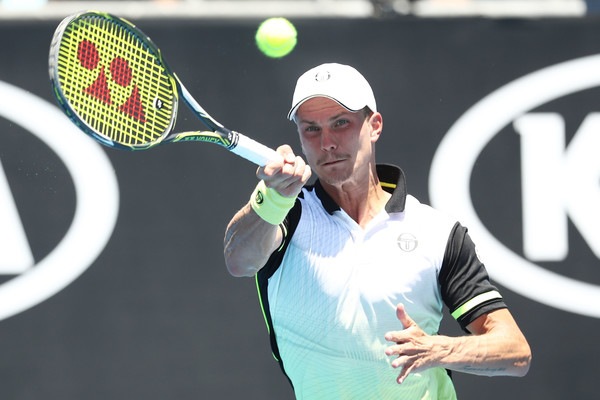
So if ATP pro Marton Fucsovics tennis racquet weighs only 330 grams strung, why do some lesser players such as myself “play better” with 350 grams? Well, I think it is mainly two things: the extra weight helps on off-center shots (which you tend to hit a lot more than the pro players) and you get more power even with a slower racquet head speed. I am not saying it is like this for everyone, but a lot of recreational players might recognize themselves here. I definitely notice that I can swing faster and get more spin with lighter racquets, but usually not enough to be consistent with control and depth of my shots. This is definitely something I personally need to work on. Because if Marton Fucsovics tennis racquet weighs 330 grams, why do I need a 350-360 gram racquet?
Thanks to Ferenc Ferdinánd Weisz for notifying me about the Fucsovics Q&A and his specs.
Bio and Career
Marton was born on February 8th, 1992, in Nyíregyháza, Hungary, and began playing tennis at age 5 with his father.
Turning pro in 2010, Fucsovics peaked at No. 1 in the ITF junior rankings in July 2010, winning the 2009 US Open boys doubles title with Hsieh Cheng-peng and the 2010 Wimbledon boys singles title over Benjamin Mitchell.
His professional breakthrough came in 2018, winning his first ATP title at the Geneva Open, defeating Stan Wawrinka and Peter Gojowczyk, becoming the first Hungarian ATP champion since Balázs Taróczy in 1982.
In 2020, he upset No. 5 Daniil Medvedev at Roland Garros, his first Top 10 win, and reached the fourth round. In the following year he reached the Wimbledon quarterfinals, his best Grand Slam result, defeating Andrey Rublev. His second ATP title came in 2024 at the Bucharest Open, beating Mariano Navone 6-4, 7-5.
In 2025, ranked No. 89, he made history as the first lucky loser to reach Wimbledon’s third round with consecutive five-set wins over Aleksandar Kovacevic and Gaël Monfils, but then falling to Ben Shelton. He also won his seventh Challenger title in Canberra in January 2025.
Fucsovics career high rank is 31 and this was achieved in March 2019.
Stats and More Info
- Plays right-handed with a two-handed backhand
- Favorite Surface: hard-court
- Favorite shot: forehand
- Prize Money: $7,744,551
- Titles: 2 ATP singles, 7 ATP Challenger
- Top 10 Record: 3-27
- Tennis Idol: Roger Federer
Follow Marton Fucsovics
Fans can follow him on Instagram where he has around 73K followers and posts about his professional career or personal life.

Hi,
My opinion is that most of the people play with the racquet which is to demanding for them.
I don’t know why is that.
I have played with the racauet that is 275g unstrung, and with the racquet that is 320g unstrung. Results were almost the same. But thing that did make the difference is my physical condition.
At my level player who is physical and mental stronger wins. That is almost always the case at amateur level.
I have a frined who is way better than me, he plays with 295 unstrung racquet. He plays fantastic.
Hi Vedran,
In one way I agree about this. Many of us might play with racquets that are too heavy to generate any racquet head speed. Like you, I know guys who play on Futures level with 300 gram (unstrung racquets) and then guys who are 3.5-4.0 NTRP racquets who play with 90 sq inch racquets weighing 370 grams. But it’s possibly that the stability of the frame at least helps them with off-centre shots and the small racquet head gives them more control on their (mostly flat) shots. So I still think it’s personal thing.
I tried a Babolat Soft Drive the other day that weighed 303 grams strung with close to even balance and I hit really well with it and enjoyed it immensely. The strings were old (and dirty) natural gut strings so I didn’t expect to hit a good ball with it.
Racquets are a personal thing, that’s why we spend so much time finding a good one (and a matching string setup). But I think having an open mind about the racquet and your own abilities is the right way to go.
Cheers / J
You need to be very strong physically to maneuver an over 300g racquet and have good technique. I saw a video of someone who met Francisca Schiavone and as she got older she moved to a lighter racquet. Power is not really that important on the non pro level. A racquet that’s hard to maneuver will always make you less consistent.