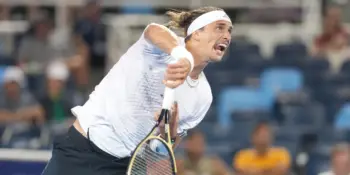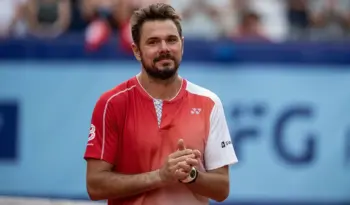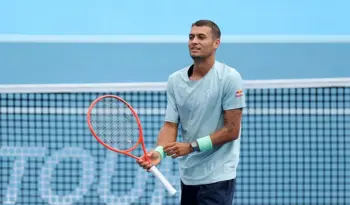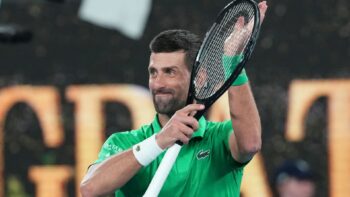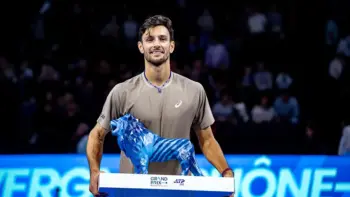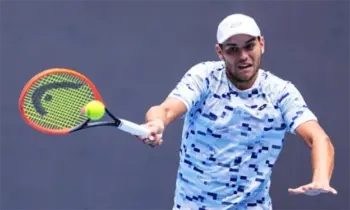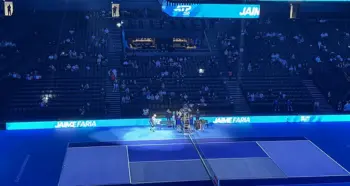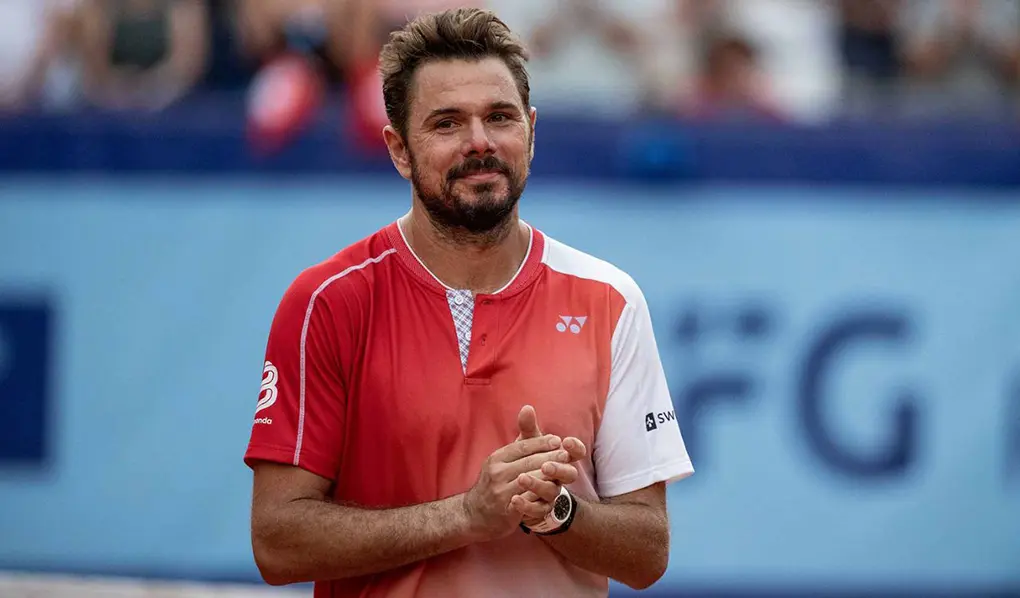
Stan Wawrinka played the last match of his career on Tuesday night in Basel, falling 7-5, 7-6(2) to eighth seed Jiri Lehecka in front of a raucous home crowd.
Poetically, the last point of his career was a backhand that landed wide. Of course it was the backhand. It couldn’t have been anything else.
The Swiss legend ends his career aged 41, having turned pro back in 2002. I doubt we’ll see another career quite like his. He spent most of his 20s as Switzerland’s other tennis player, before taking three majors off the Big Three of Roger Federer, Rafael Nadal, and Novak Djokovic at a time when they were nigh on invincible.
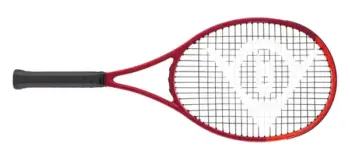
This is my thank-you note to Wawrinka. Read on for the stories behind his biggest wins and the case for why he’s one of a kind. Here’s more info on Wawrinka’s racquet.
Wawrinka’s career by the numbers
Here’s what he walks away from tennis with:
- Three Grand Slam singles titles (Australian Open 2014, Roland Garros 2015, and US Open 2016)
- 16 ATP singles titles, the last coming in Geneva in 2017
- A career-high ranking of world No 3 in 2014
- Olympic gold in men’s doubles at Beijing 2008 alongside Federer
- A Davis Cup title with Switzerland in 2014, the country’s first
- A 3-1 record in major finals, beating the world No 1 in all three he won
- The record for most five-set matches played at the majors, which he took off Federer in Melbourne this year
A late bloomer like no other
Wawrinka won the boys’ title at Roland Garros in 2003 and cracked the top 10 for the first time in 2008. That summer, he won Olympic doubles gold in Beijing with Federer.
But at the majors, not much happened for a long time. By the end of 2012, he was 27 and had never made it past a Grand Slam quarterfinal. Wawrinka was a very good player stuck in a great era – most had him categorized as the second-best Swiss player and left it at that.
Then he hired Magnus Norman as his coach in 2013, and things clicked. Norman had coached Robin Soderling to two Roland Garros finals, and the results came almost straight away.
At the Australian Open that year, he lost to Djokovic 12-10 in the fifth set of a fourth-round epic that ran for more than five hours. At the US Open, he beat defending champion Andy Murray in straight sets to reach his first major semifinal at 28. He took Djokovic the distance again before going down in five.
Four months later, he won the Australian Open.
Most men who won majors in the Big Three era did it young. Wawrinka won his first at 28 and his third at 31.
When he won Roland Garros in 2015, he was the oldest champion in Paris since Andres Gomez in 1990. When he won the US Open a year later, he was the oldest men’s champion in New York since Ken Rosewall in 1970.
Few saw this kind of late surge coming for Wawrinka, but it’s this kind of underdog, back-against-the-wall vibe that is what makes him so loveable.

The wins that defined Wawrinka’s career
Wawrinka won 16 titles, but these are the four matches that I’ll personally remember him for (not all of them pleasant memories, given I’m a Djokovic fan…).
Australian Open 2014 quarterfinal: Wawrinka d. Djokovic
Djokovic arrived in Melbourne as the three-time defending champion, riding a 25-match winning streak at the Australian Open. He’d beaten Wawrinka 14 times in a row, including those two five-set heartbreakers in 2013.
For a while, it looked like more of the same. Djokovic took the opening set 6-2, they traded sets from there, and it went to a fifth for the third time in 12 months.
But this time, Wawrinka got it done. He won 2-6, 6-4, 6-2, 3-6, 9-7 and ended Djokovic’s run in Melbourne.
He’d finally beaten the guy he couldn’t beat, and he’d done it in a fifth set at a major. Everything that came after started here.
He got past Tomas Berdych in four sets in the semifinals to set up a final against Nadal.
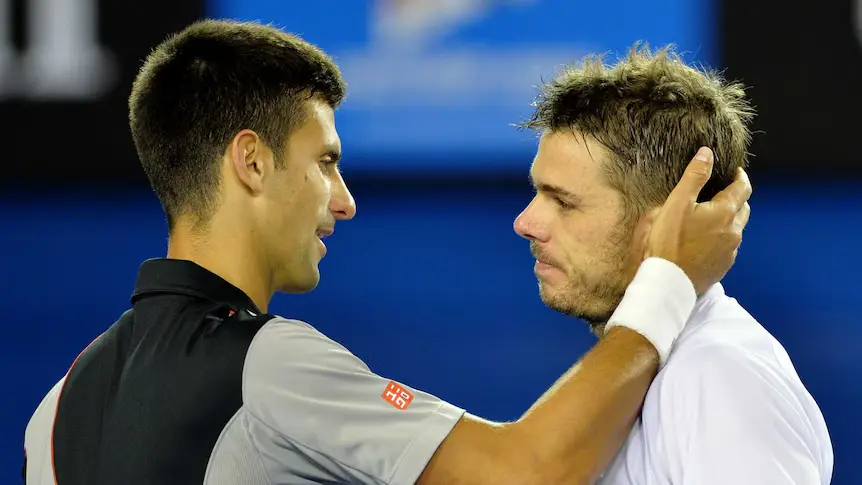
Australian Open 2014 final: Wawrinka d. Nadal
If Stan’s record against Djokovic was bad, his one against Nadal was even worse. Wawrinka was 0-12 against him and had never taken a set off him.
Yet, on the biggest stage of all, he won the first 6-3, swinging freely and taking the ball early. Then, early in the second set, Nadal’s back went. Nadal left the court for treatment, and Wawrinka wanted answers from the chair umpire about it.
Wawrinka took the second set 6-2 against a clearly hampered opponent. Then things got weird. With the title right in front of him, against a player who could barely serve, he tightened up and dropped the third. Nadal kept fighting, as he always did.
The Swiss steadied, closed it out 6-3 in the fourth, and became the first man outside the Big Four to win a major since Juan Martin del Potro at the 2009 US Open. It was also the only time in history that a player would beat both Djokovic and Nadal in the same slam.
Some people wanted an asterisk next to this one because of Nadal’s injury. I’d point them back to the quarterfinal. He’d just beaten the world No 2 in a fifth set, and he’d won the first set of the final against the world No 1 with Nadal fully fit.
Roland Garros 2015 final: Wawrinka d. Djokovic
This is by far Wawrinka’s most memorable victory, purely from a level-of-play perspective.
Djokovic was the overwhelming favorite. He’d already won the Australian Open that year, and in Paris he’d beaten Nadal in the quarterfinals before outlasting Murray in a five-set semi. Roland Garros was the only major missing from his collection, and the career Grand Slam was right there.
Wawrinka had beaten Federer in straight sets in the quarterfinals and Jo-Wilfried Tsonga in the semis. Not many people gave him much of a chance in the final.
Djokovic took the first set. Then Wawrinka started swinging, and he never stopped. He hit 60 winners and won 4-6, 6-4, 6-3, 6-4, all in a pair of plaid shorts that got almost as much airtime as the tennis.
Some of the backhands he hit down the line in that match were insane. He was flattening them out from well behind the baseline, and Djokovic, the best defender in the sport, had no answer.
Federer’s reaction on social media was one word: “CHAMP.”
See the highlights below:
US Open 2016 final: Wawrinka d. Djokovic
This title almost never happened.
In the third round, Dan Evans had a match point against him in a fourth-set tiebreak. Wawrinka saved it, then ran away with the fifth set 6-2. One point the other way, and it’s a third-round exit.
He beat del Potro in the quarterfinals and 2014 finalist Kei Nishikori in the semis to set up yet another major final against Djokovic, the defending champion and world No 1.
Then came the part I love most. Wawrinka later admitted he’d been shaking and crying in the locker room before the final. The nerves had got to him before he even walked out.
He lost the first set in a tiebreak, 7-1. And then he did what he always seemed to do in finals. He lifted, dragged Djokovic into long, physical rallies, and won 6-7(1), 6-4, 7-5, 6-3. Djokovic needed treatment on his feet late in the match, and Wawrinka was hurting too.
Why Wawrinka’s career is unique
It’s not just Wawrinka’s slam count that makes him a unique legend. Here’s why I don’t think there’s anyone else quite like him:
He beat the Big Three in their prime
Wawrinka’s majors didn’t come during some lull. They came between 2014 and 2016, right in the middle of the Big Three’s dominance.
Between Federer’s first major at Wimbledon in 2003 and Carlos Alcaraz’s first at the 2022 US Open, he was the only man outside the Big Four to win more than one. Del Potro, Marin Cilic, Dominic Thiem, and Daniil Medvedev managed one each in that stretch. Wawrinka got three.
Look at what Djokovic was doing at the time. In 2015, he won three of the four majors. The one he didn’t win was the Roland Garros final he lost to Wawrinka.
In 2016, Djokovic won the first two majors of the year to hold all four at once. A few months later, he lost the US Open final. To Wawrinka.
Djokovic was close to unbeatable in those two years, and Wawrinka beat him in two major finals anyway.
His overall records against the three are rough. He won just three of 26 meetings with Federer and three of 22 with Nadal. But he picked his moments. When he did beat them, it was usually with a big title on the line.
He saved his best for the biggest stages
Wawrinka finished with a 3-1 record in major finals. The only one he lost was to Nadal at Roland Garros in 2017, and let’s be honest, nobody is holding that against him.
The same went for Davis Cup. In the 2014 final against France in Lille, he beat Tsonga in the opening rubber and then teamed up with Federer to win the doubles. Switzerland lifted the trophy for the first time.

His ceiling was ridiculous
Consistency was never Wawrinka’s thing. He’d lose early to players he should have beaten, then turn up a few weeks later and beat the best of the best.
For all his big-match pedigree, he won just one Masters 1000 title, in Monte Carlo in 2014, beating Federer in the final. The weekly grind didn’t always suit him – the big occasions did.
But on his best days, he could hit anyone off the court. Djokovic included. I’ve rarely seen a player hit through the court the way he did in those finals, with a one-handed backhand that could conjure up a winner from just about anywhere.
His “Stanimal” nickname is apt. When he got rolling, there wasn’t a lot the other guy could do about it.
Why crowds loved Wawrinka
Few retiring players have got the reception Wawrinka has had this year, everywhere he went. Why?
He was relatable
Wawrinka never pretended to be a natural. He has a Samuel Beckett line tattooed on his forearm, ending with “Fail again. Fail better.” For a guy who lost to the Big Three as often as he did, it fit.
He wore everything on his sleeve. The finger pointed at his temple after big points. He was honest about his nerves. After losing the 2017 Indian Wells final to Federer, a teary Wawrinka called himself Federer’s biggest fan.
He wasn’t a prodigy who had it all figured out at 19. He got there the hard way, and he never hid how much it meant to him.
He kept coming back
In 2017, Wawrinka had two knee operations. His ranking fell outside the top 250. Plenty of players would have called it there, especially with three majors already in the bag.
He came back. At Roland Garros in 2019, he beat Stefanos Tsitsipas in a fourth-round match that lasted more than five hours and made the quarterfinals. He reached the last eight at the US Open that year too, after Djokovic retired hurt against him in the fourth round.
Then came foot surgery in 2021, which wiped out most of that season. He came back again. In 2023, at 38, he made the final in Umag.
He played Challengers at 40 for the love of it
For me, what really solidifies Wawrinka’s legacy isn’t his highlight moments, but the fact that he loves tennis so much that even after his level dropped off, he kept playing for the love of the game.
Wawrinka didn’t need to keep going. He had three majors and an Olympic gold medal, and tournaments would have handed him wildcards for years on name alone.
Instead, he spent a lot of his final seasons on the Challenger Tour, the level below the main tour. Smaller crowds, and young players desperate to take down a big name.
The day before he turned 40, in March 2025, he snapped Borna Coric’s 16-match winning streak at the Naples Challenger. He then made two Challenger finals that year, in Aix-en-Provence and Rennes, each time with a shot at becoming the oldest Challenger champion in history.
A three-time Grand Slam champion, at 40, grinding through Challenger draws in France. He did it because he loved playing, and I think that’s a big part of why people loved watching him.
Wawrinka’s farewell season
Wawrinka announced last December that 2026 would be his final year. His post opened with “Every book needs an ending.”
He got a lot out of that last chapter, first by helping Switzerland reach the United Cup final alongside Belinda Bencic. Then came Melbourne, and I was lucky enough to be there for it.
My Wawrinka moment at the Australian Open
On a wildcard, Wawrinka beat French qualifier Arthur Gea in a fifth-set tiebreak in the second round. The match went for four hours and 33 minutes, and it made him the first man 40 or older to reach the third round of a major since Rosewall in 1978. It was also his 49th five-set match at a major, moving him past Federer for the most ever.
Two days later, I watched him take on ninth seed Taylor Fritz on John Cain Arena.
I didn’t expect much. He’d just spent more than four and a half hours on court, at 40. Fritz is a top-10 player with one of the biggest serves on tour.
Wawrinka didn’t care. He was in conversation with the crowd all night, and he had a rowdy bunch of fans firing behind him, egging them on whenever he needed a lift. They responded every time.
He dropped a tight first set in a tiebreak, then took the second 6-2, and for a while the whole arena believed. He needed a medical timeout after the third set, and Fritz (who hit 30 aces) eventually got through 7-6(5), 2-6, 6-4, 6-4. But Wawrinka poured everything he had into that match. Fritz said afterward he couldn’t blame anyone in the crowd for backing him.
To top if off, after the on-court tribute, Wawrinka asked tournament director Craig Tiley if he’d share a beer with him, grabbed two cans from a courtside ice box, and the pair cracked them open in front of the crowd.
It was about as Wawrinka as it gets.

The rest of the farewell tour
In Dubai, with Federer watching, he beat Benjamin Hassan to become the oldest man to win a match at that event. He said goodbye in Paris, Geneva, and Gstaad. Matteo Berrettini knocked him out in the first round of both Wimbledon and the US Open.
In Lyon last week, he beat Spanish youngster Martin Landaluce for one more tour-level win. Then came Basel, his 19th and final appearance at his home event. The crowd there had already given him a tribute lasting close to an hour on center court the day before his match.
He’ll play one more time, in an exhibition in Geneva on December 19 alongside Federer, Murray, and Gael Monfils. But Tuesday was the last time he’ll play for real.
Afterward, he said the farewell was “much more beautiful than I could have dreamed.” He also said he had no regrets.
Fair enough. Three majors against Federer, Nadal, and Djokovic in their primes isn’t a bad return.
I’m going to miss that backhand.