
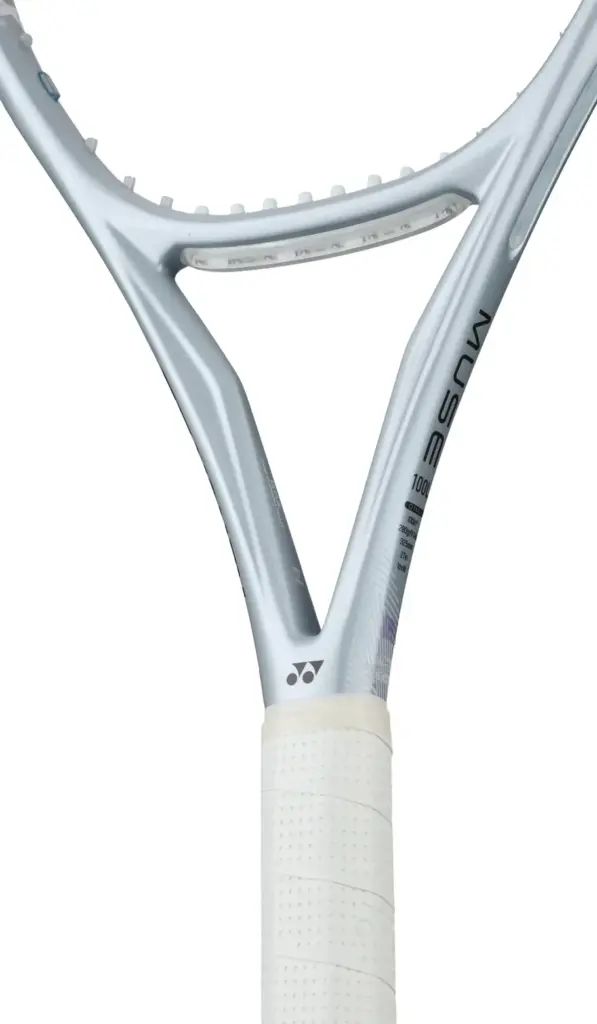
It was quite difficult to get hold of the Yonex Muse in Europe. Thanks to Tennis Warehouse Europe, we managed to get a review copy of the Yonex Muse 100L. This is lighter than what I am used to playing, but racquets in general are getting lighter, so I think most club players might end up playing with racquets that are too heavy. Also, since the 100L has the same mold, layup and string pattern, we could always add some weight to it for this play-test.
But even in stock form, the Yonex Muse 100L impressed us! This is a fun racquet that probably will be overlooked by many club players. We did love the HEAD Squared when we tested it and here is another comfort-oriented racquet that can compete. We should give a shoutout to the Wilson Clash that started this trend of very flexy but powerful racquets (thanks to trampolining) in 2017, but I think both the Muse and the Squared might beat the Clash at its own game.
I am keen to hear what you think about the Yonex Muse in the comments.
Find the Yonex Muse available via these links: Tennis Warehouse Europe (code TNERD10 for 10% off), Tennis Warehouse (North America) or Tennis Only (AU)
Spec and tech
Here is something refreshing. There is not much talk about the tech in the marketing texts for this racquet. What is mentioned is the low stiffness, making it a very comfortable racquet and the 16/18 pattern giving you good spin and depth. They say that the racquet is for beginners or intermediate players and I would agree with that. It is a quite perfect racquet for this demographic.
Specifications
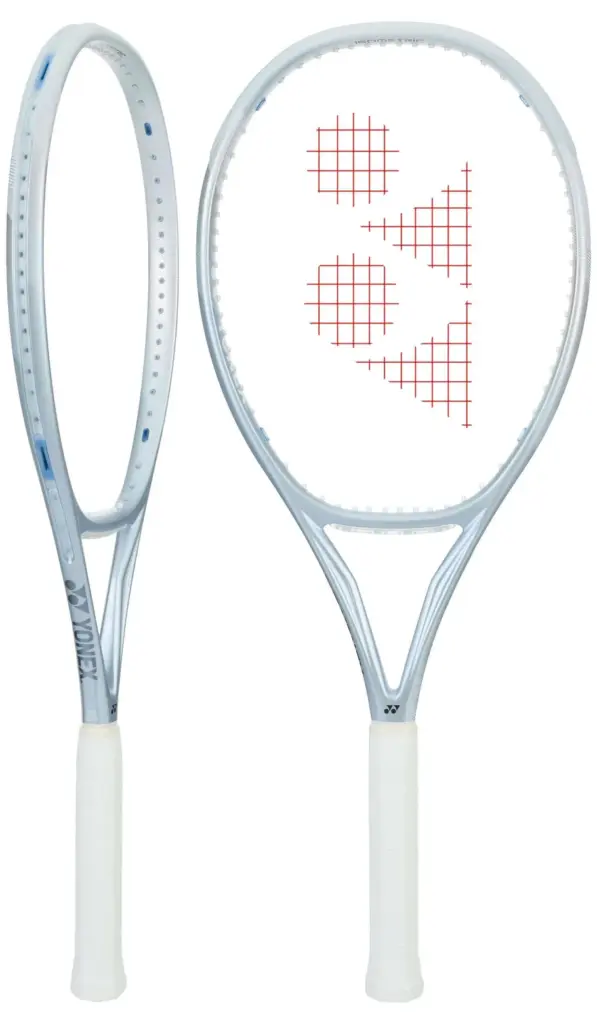
| Head Size: 100 in² / 645.16 cm² |
| Length: 27in / 68.58cm |
| Strung Weight: 10.4oz / 295g |
| Balance: 13.18in / 33.47cm / 3HL |
| Swingweight: 310 |
| Stiffness: 56 |
| Beam Width: 24.5mm / 24.5mm / 18mm |
| Composition: HM Graphite |
| Power Level: Low-Medium |
| Stroke Style: Medium-Full |
| Swing Speed: Medium-Fast |
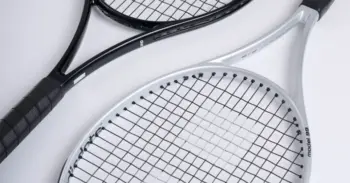
| Racquet Colors: Silver |
| Grip Type: Yonex Synthetic |
| String Pattern: 16 Mains / 18 Crosses Mains skip: NONE Two Pieces Shared: 8T,8H |
Playability
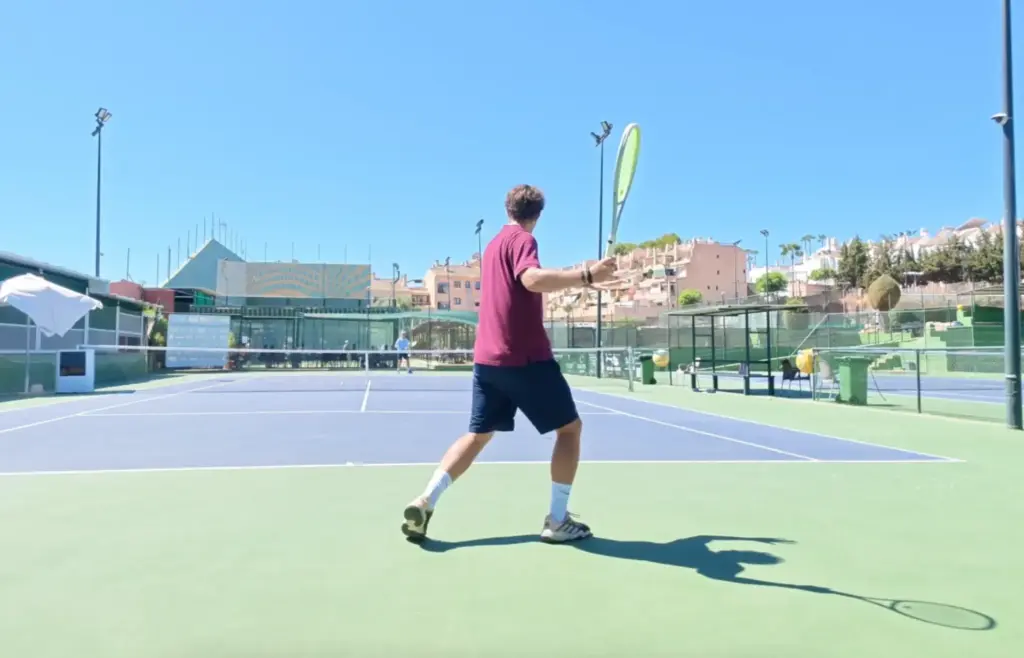
There are strong pros and cons with these comfort-oriented racquets like the Squared, Clash and Muse. The pros are comfort, ease of use, and spin potential. The cons are control and weight of shot.
I would say that both the Squared and the Muse can offer more confident ball-striking than the Clash based on better control. I never felt like the ball was travelling to unexpected places when I hit with the Muse. Neither did my fellow play-tester. It was actually quite an addictive experience. I think Yonex hits on the nail on their website when they write FUN in capital letters. That is what you get with these racquets – loads of fun!
If you are a semi-advanced competitive player, I think you might want a bit more on the ball and once you start adding weight, there might be a risk of control issues, but there is a Muse 98 for players who like that ultra-flexible feel and cannot find much of it in the modern racquet market. You will have less power with the smaller head, but at least you can have more weight on it and get better stability and plow-through that way.
The play-testers of the Muse were in three different level categories. One is Stefan, who has played tennis regularly for a bit more than a year and uses a HEAD Radical MP. He could easily have played with this one instead and loved the playability and feel of the racquet.
Then we have Adam on the other side of the spectrum. Adam is a former D1 college player with a top UTR of 13, so he can ball for sure. He still enjoyed the Muse a lot and could play dangerous tennis with it. It might not be a racquet he brings into a match (he usually uses a slightly customized Tecnifibe TF40 16/19), because his shots might lack weight on them, but when we rallied from the back he felt like he could swing out fully and go for the lines thanks to the fast swing and I did not feel like his balls were weak or easy. Sure, if he plays with his normal racquet, they will probably be heavier, but they were still potent enough.
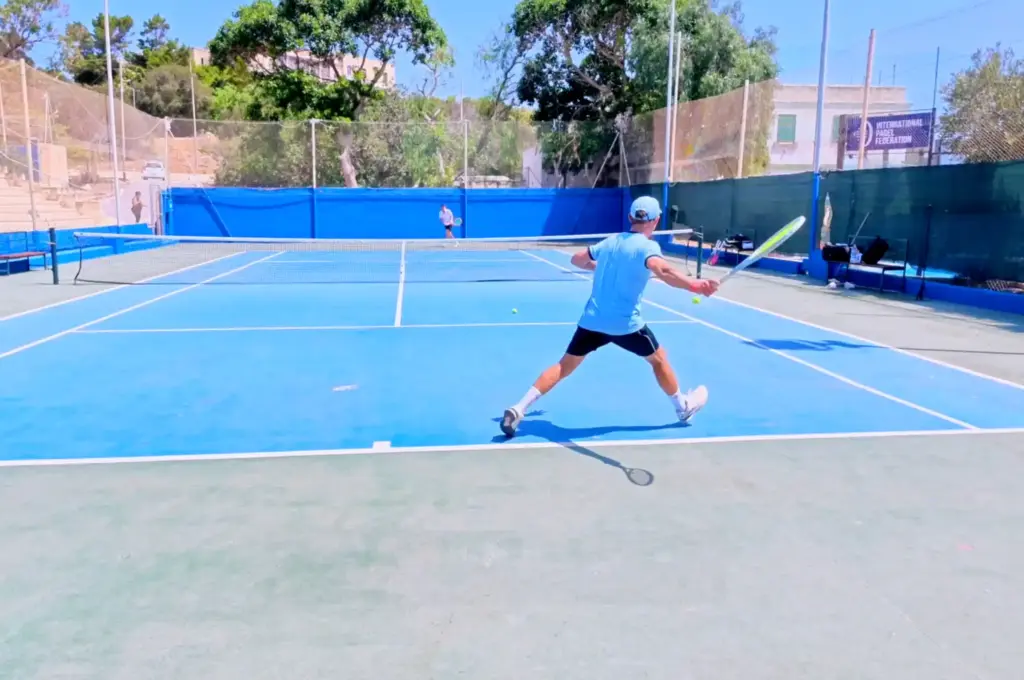
Adam beats me, but I can hang and we can have fun rallies and points. I am where you find many tennis nerds, an advanced amateur somewhere around NTRP 5.0 or UTR 8.5-9. When I coach or hit with weaker players, the Muse 100L worked really well and was a racquet I really loved hitting with. But when I play with higher-level players, I will not have enough on my shots to trouble them. But that is to be expected when you look at the specs.
Overall, a fun, comfortable, easy-to-use, spinny and whippy racquet!
Stringing advice
We hit the Muse with Volkl Cyclone at 22 kg or 49 lbs. This was a great string for this racquet. But if you want to maximize comfort and power, you might want to string it with a multifilament like Yonex Rexis Control or Tecnifibre Triax. Do not go for a stiffer poly than Cyclone and avoid stringing it higher than 50 lbs, because other you lose a bit of the magic that the Muse can bring.
Summary
I am happy that racquets like the Muse and the Squared exist. Now, it is a lot easier for me to recommend racquets to beginners and lower-level intermediate players, because the racquets are so good and comfortable that is just an easy decision. I think the oversize racquets that many say are for beginners are for veteran doubles players, not every beginner. These racquets do most things well and can also be played up until a higher level, which makes it possible for ambitious beginning players to stay with it as they improve.
If you are an intermediate player looking for comfort, I would probably go straight for the Muse 100. But if you prefer a lighter racquet that is easier to swing, the 100L is the one.
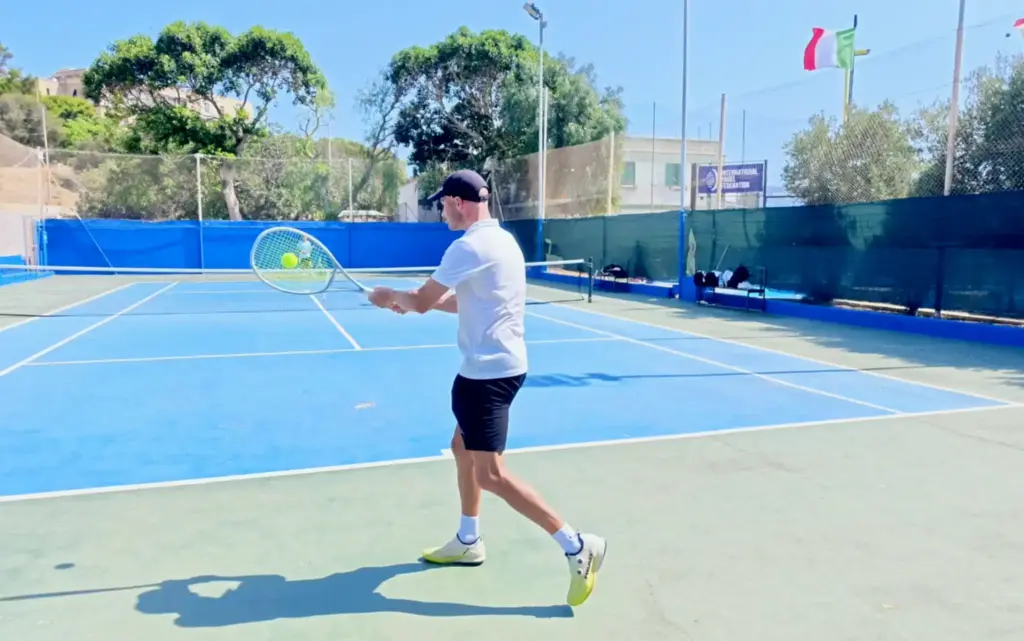
I was skeptical about this one at first because of its strong shape, but it convinced me with excellent playability. It also looks different and does not have a weird or off-putting color. The Muse is simply a winner for the right player.
Let me know in the comments if you have tried this frame and what you think of it.
A video review is in progress.
If you’re looking to buy a Yonex Muse, try these links: Tennis Warehouse Europe (code TNERD10 for 10% off), Tennis Warehouse (North America) or Tennis Only (AU)

How many points headlight is Yonex muse racquet? Price point?
Thank you
Millard
Hi Millard, 3 pts strung. Price is 305 USD at Tennis Warehouse.
An NTRP 3.0-3.5, playing mostly 40+ men’s doubles, have solid strokes/form, and play club and USTA matches. I demo’d over a dozen rackets and found most modern rackets are either too heavy, too stiff, or too powerful. I wonder if reviewers should give more (any) commentary/recommendations in the context of doubles play.
I chose the Muse 100 and added 2g of lead tape at both the 3 & 9 position (for twist stability at the net) and a bit of putty in the butt cap (for balance). With any racket, you choose a compromise. For the many benefits of the Muse, I’ll sacrifice a few “outright winner” power shots. Intermediate players… demo this racket, feel the plush, enjoy the fun!
Good to hear, it is a nice frame!