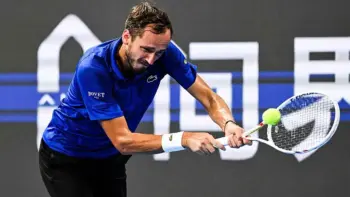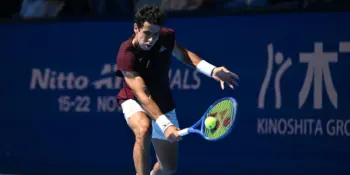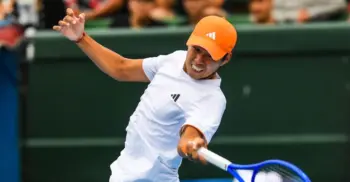
The drop shot has become one of the defining shots on the modern ATP Tour. Carlos Alcaraz has turned it into a trademark, but he’s far from alone. Fabian Marozsan hits one of the cleanest drop shots on tour, and even players like Jannik Sinner have openly discussed the need to add more variety (drop shots included) to stay competitive at the very top.
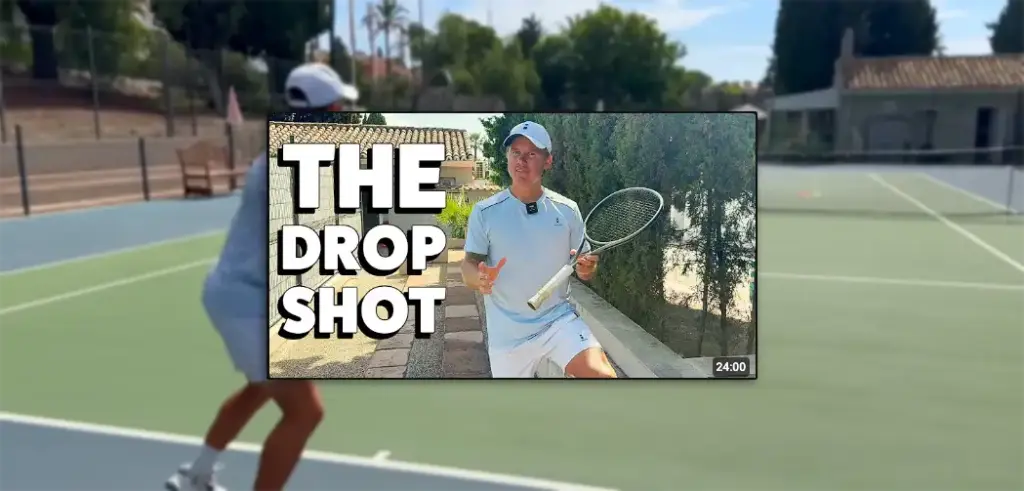
Coach Adri and I recently took a closer look at this shot, as part of our recent tennis coaching instructions: how to execute it, when to use it and how to follow it up. Below are the key ideas from that session.
The True Purpose of a Drop Shot
A lot of club players assume a drop shot should be a winner. It doesn’t have to be. A good drop shot puts your opponent in a difficult, uncomfortable position. Even if they reach it, they will often have to lift the ball from below net height, inside the court, with limited options.
Think of the drop shot as an attacking shot, not because of pace, but because of intention. You’re not defending. You’re taking time away, forcing awkward contact, and moving forward to finish the point.
Start With the Grip
Use a continental grip (Adri calls it the hammer grip). This grip allows you to come under the ball and create backspin. Backspin is essential: it keeps the ball from springing forward after the bounce and helps produce a second bounce that stays inside the service box.
If you come over the ball or add forward spin, the ball might land short but then sit up nicely for your opponent. You want the opposite—low, dead, and hard to lift.
Don’t Aim Too Short
This is a mistake everyone makes at some point. Trying to land the ball as close to the net as possible usually leads to one of two outcomes:
- The ball floats too high, giving your opponent time to chase it down,
- You clip the net and give away the point.
A better target is the space between the net and the service line. A slightly deeper drop shot that stays low is far more effective than a super-short ball that bounces high.
A simple rule to remember:
If the second bounce stays inside the service line, it was a good drop shot.
When to Use It
Use the drop shot when you’re inside the court and on offense. That typically means you’ve recognized a short, weaker, or slower incoming ball. If your opponent hits short and you step in, they will often retreat in anticipation of a heavy forehand or backhand. That’s the perfect moment to disguise the drop shot.
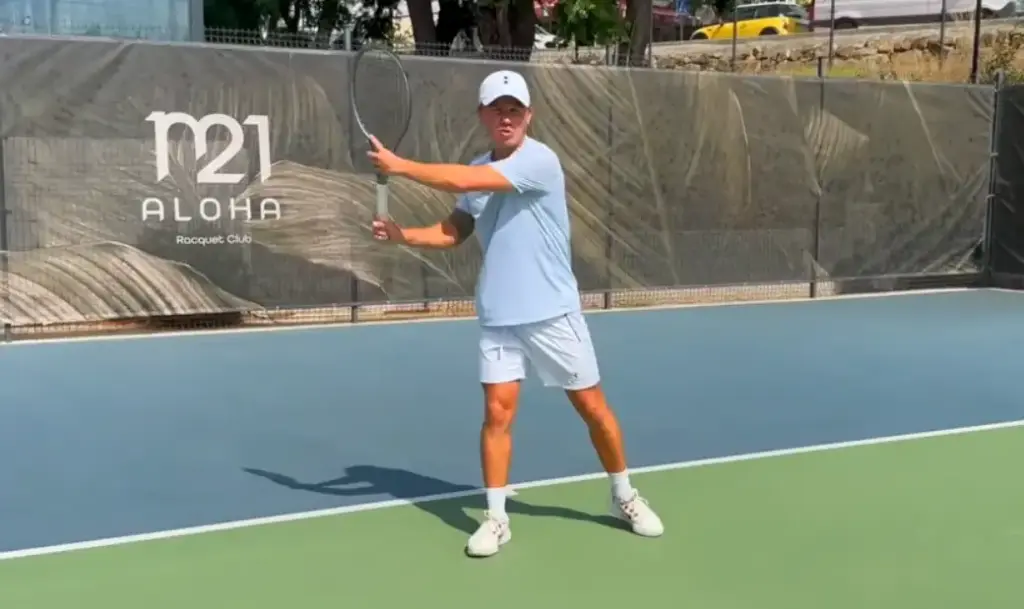
Your preparation should mimic an attacking shot. Hold your forehand or backhand grip as you move into position. Only at the last moment do you switch to the continental grip. The later you change the grip, the harder it is for your opponent to read what’s coming.
If you run into the ball with the racket face already open, everyone on the court, and perhaps even the spectators, will know what’s coming.
Watch the full video
Technical Keys
1. Short swing.
The drop shot is a soft shot. You don’t need a big backswing.
2. Get under the ball.
Come from behind and under it to create backspin.
3. Step through the shot.
This small but important step generates enough momentum to clear the net consistently. Many players freeze their feet during the shot and leave the ball short. Stepping through gives you margin and naturally helps you move toward the net afterward.
4. Know your target before you hit.
Pick your direction early. Don’t hit down the middle unless you want to give your opponent the shortest possible run. Pull them to a corner.
What Happens After the Drop Shot
This is where most points at the recreational level are lost.
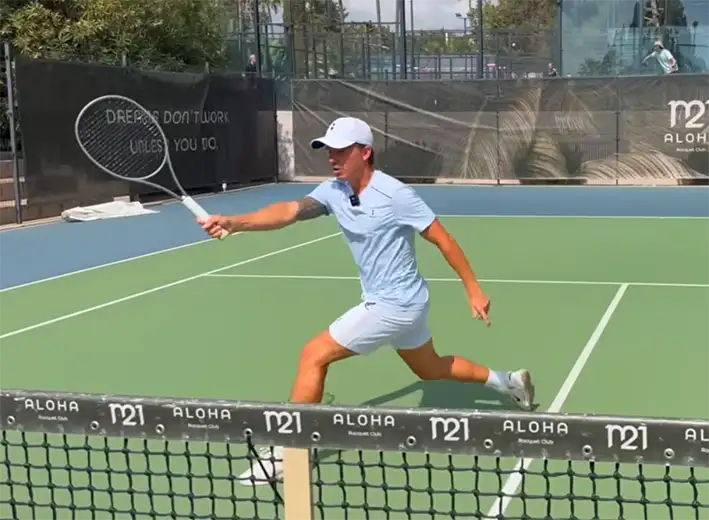
Once you hit the drop shot, you must move forward. Treat it like an approach shot. If your opponent manages to scrape the ball up, you should already be in position to volley into the open court.
If you stay back, you’re handing over the offense. Your opponent suddenly has angles and time, and you’re forced to scramble forward from the baseline. That is not where you want to be.
When you finish the drop shot with that step-through, your momentum naturally carries you forward. From there, your movement should be slightly diagonal toward the net, not sideways toward the tramlines. This angle helps you cover both the pass and the counter-drop.
Using the Shot Wisely
The drop shot is a valuable tool, but only when used at the right moments. Overusing it makes you predictable. Hitting it while stretching, defending, or simply because you are tired rarely works.
You can (and should) practise it frequently: feeding, using a ball machine, repeating the reps until you feel confident. But in match play, use it with purpose, not as a bailout.
Final Thoughts
A well-executed drop shot adds a new dimension to your game. It forces your opponent to respect more parts of the court, makes your aggressive groundstrokes more effective, and keeps rallies on your terms. Combine disguise, good grip work, controlled backspin, and smart court positioning, and the drop shot becomes a reliable attacking option rather than a gamble.
If you want a reference point:
Short first bounce, second bounce inside the service line.
Work toward that, follow your shot to the net, and you’ll start winning a lot more points with this underrated weapon.
Want to see all coaching videos from coach Adri?