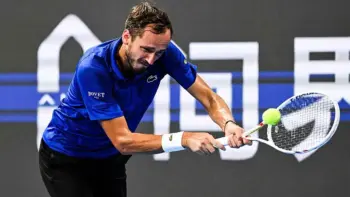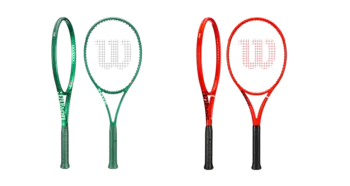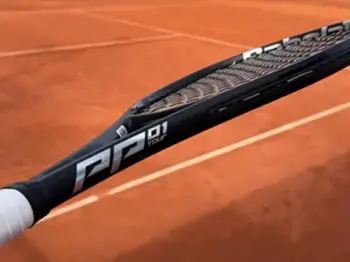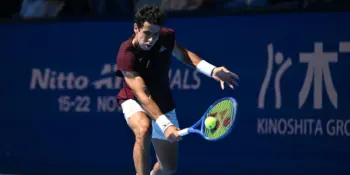
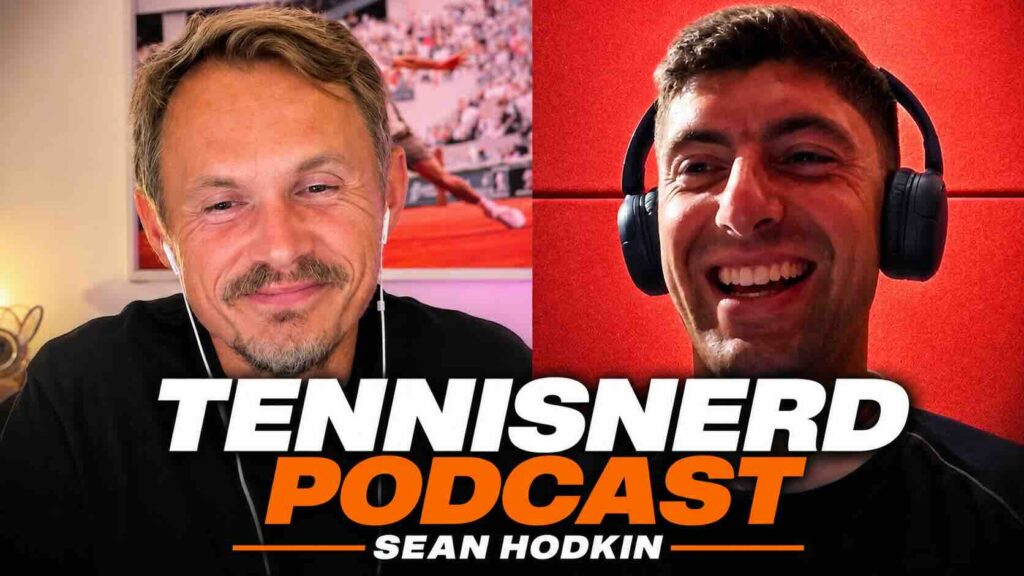
I have a soft spot for the one-handed backhand. It looks beautiful when it’s timed right, and it makes you question your life choices when someone starts kicking heavy topspin above your shoulder. So when I sat down with Sean Hodkin for the podcast, I knew we’d end up talking backhands. But obviously, that is not all!
Sean has spent years grinding on the professional circuit, and we covered a lot of ground — court speeds, racquets, technique, travel, and the financial reality of chasing ranking points. Here’s a taste of what’s in the episode. You can listen to it below or watch it on YouTube. Remember to also follow Sean on his YouTube channel.
Conditions change everything
We love slapping labels on players — “fast-court player,” “clay-courter” — but it’s rarely that simple. Temperature, humidity, balls, altitude, indoors versus outdoors: all of it changes how tennis actually feels in your hand.
Sean grew up on fast indoor carpet, but somewhere along the way he found himself preferring the slow stuff. His reasoning surprised me: slower courts give him more time to wind up and build the point on his own terms. Humid conditions too — that heavy, sluggish air that some players despise because it kills the pace. Sean loves it, because it buys him the extra fraction of a second he needs to load up properly.
It’s a good reminder that at a high level, you’re not just learning your own game. You’re learning how your game behaves in ten different versions of the same sport.
The backhand that became the trustworthy one
Here’s the twist: the one-hander, usually painted as the fragile side under pressure, is actually the shot Sean trusts most. His forehand might do more damage on a good day, but the backhand is the one that’s always there.
That didn’t happen by accident. Sean told me about the years spent making the shot repeatable, and one piece of coaching advice that changed everything — on high-bouncing balls, stop trying to do too much. Keep the racket stable. Play through the ball.
It’s a lesson recreational players (myself included) could use. We turn the one-hander into a whole production (well, I do at least). Big take-back, big loop, dramatic finish. Looks great on Instagram. Terrible when you’re a fraction late. A compact, repeatable swing beats a pretty one every time.
Is the one-hander dying? Not according to Sean
Fewer juniors are picking up the one-handed backhand these days. The two-hander is just easier to stabilize on high balls and gives young players more margin for error. But Sean’s game is proof the shot still holds up when it’s built right. You don’t need a Wawrinka screamer from two metres behind the baseline every rally. You need a shot that absorbs pace, redirects the ball, and doesn’t panic. The fireworks can wait for when the opening actually shows up.
The part nobody posts about: life on tour
We also got into the less glamorous side of the tour. From the outside it looks like flights, hotels, and sunny Instagram posts. Lower down the rankings, it’s a different story. Sean spoke honestly about the grind — bouncing between tournaments, staying with other players to save money, and figuring things out on the fly. He genuinely enjoyed the travel, even at its hardest, but he didn’t sugarcoat the other side of it either.
What it actually costs to chase ranking points
This might be the most eye-opening part of the episode. Flights, hotels, food, coaching, stringing, it all adds up before you even know if the week is going to pay off. Sean talked candidly about stretches early in his career when the bank account was uncomfortably close to empty while he was still trying to cover travel and accommodation.
That changes what’s actually on the line in a deciding set. It’s not just about ranking points anymore — sometimes winning determines whether next week is even financially workable. Worth remembering next time you’re watching a Futures or Challenger match and wondering why a player looks so locked in over what seems like a “small” tournament.
The grind builds something too
Despite all of it, Sean didn’t sound bitter, quite the opposite. He talked about how that lifestyle forces you to become adaptable, resourceful, comfortable with uncertainty—no private jets. Just finding the cheapest room near a tournament in a city you’ve never been to, then waking up the next morning and playing good tennis anyway.
Court conditions shape technique. Technique gets tested by pressure. The shots you end up trusting aren’t always the flashiest ones. And underneath all of it: travel, money, and the constant need to adapt. It’s easy to see pro tennis as a string of matches. For the players living it, it’s a lot more than that.