
Every season I restring, demo and hit with more frames and string sets. And every season the most common question I get from clients is not “what’s most powerful” or “what spins the most”.. It’s usually some version of: my elbow is killing me but I don’t want to sacrifice performance so what should I try?
I built my testing around this question. I played each racquet over and over for several months (serves, groundstrokes and volleys included, because elbow pain shows up differently depending on the shot), and recorded how my forearm felt the next morning. I did the same on the string side, restrung the same test racquet with each string at a controlled tension, so only the string was a variable.
None of this is a replacement for a doctor or a physio, and if you are experiencing real, persistent elbow pain, the tips below are a supplement to that conversation, not a substitute for it. But if you’re trying to keep the ache from ever showing up in the first place, here’s what actually made a difference on my arm.
My top 5 arm-friendly racquets
| Rank | Racquet | Strength | Best For | Trade-offs |
|---|---|---|---|---|
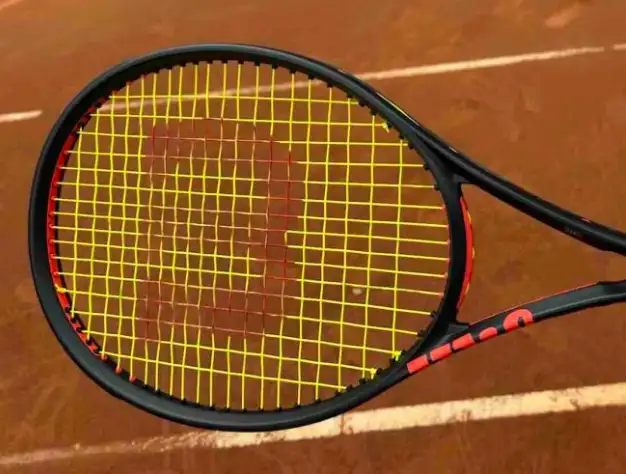
| 1 | Wilson Clash 100 | Lowest stiffness frame with extended dwell time to disperse impact shock | Players with existing elbow soreness who still want plow-through and shape | Very flexible response may feel unusual to traditional stiff-frame hitters |
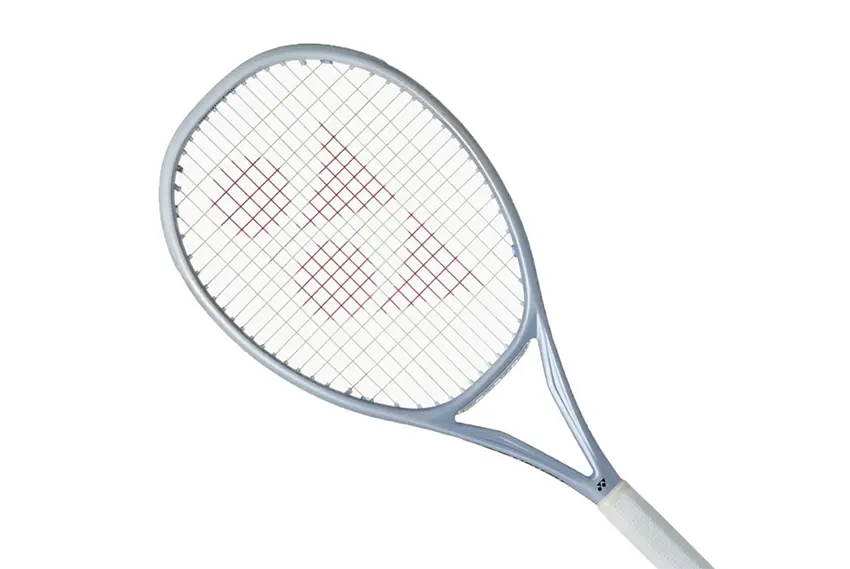
| 2 | Yonex Muse 100 | Servo Filter mesh catches high-frequency vibration; Energy Flow Shaft flexes on mishits | Returning players or newer players in their 30s–50s needing joint forgiveness | Targeted more towards comfort and ease of use than pure heavy-hitting control |
| 3 | ProKennex Ki Black Ace | Kinetic shock-absorption technology provides unmatched dampening at ball contact | Players with a chronic history of tennis elbow seeking maximum relief | Kinetic mass movement produces a distinct feedback sound/feel during swings |
| 4 | Head Gravity MP | Auxetic 2.0 tech and low RA create a plush contact feel with ~9/10 touch and comfort | Intermediate to expert players wanting a versatile all-court frame with zero arm toll | Requires full swings to generate deep penetrating pace compared to stiffer frames |
| 5 | Prince Phantom 100X 18×20 | Zylon-reinforced layup takes the punishing edge off a traditional dense string pattern | Precision control players who love 18×20 patterns but suffer from elbow fatigue | Tighter pattern offers less free launch angle and spin compared to open stringbeds |
1. Wilson Clash 100 – the softest “real” performance frame I hit with all year
The Clash line has been leading the “flexible frame” conversation since it launched, and the v3 remains, by a comfortable margin, the lowest-stiffness racquet I tested that doesn’t feel like a beginner’s frame. What I noticed on the court was the dwell time. The ball stays on the string bed a little longer which disperses the shock instead of slamming it into your arm all at once. If you already have elbow soreness and don’t want to give up plow-through and shape, this is the one I would hand you first. Read our review of the Wilson Clash 100.
2. Yonex Muse 100 – purpose-built comfort tech, not just a soft layup
The Yonex Muse is the racquet I reach for when I want to show someone what arm-friendly means. Yonex has added a vibration-dampening mesh called the “Servo Filter” in the handle to catch high-frequency shock before it reaches your hand, and a “Energy Flow Shaft” that flexes like a spring at the throat on off-center hits. It’s very much for those players returning to the sport, or newer players, in their 30s-50s (the body doesn’t forgive like it used to). On-court, that was exactly who it felt best for.
3. ProKennex Ki Black Ace – built by people who clearly prioritise elbow comfort
ProKennex has made “kinetic” shock-absorption tech its whole identity, and it’s not just marketing copy, I could feel a definite dampening at contact that other frames in this weight class didn’t match. This was the racquet that several guys in my hitting group who have a history of tennis elbow gravitated to on their own without me even mentioning it, and that told me more than my own notes did.
4. Head Gravity MP – the all-court frame that quietly out-comforts its category
The Auxetic 2.0 dampening in the Head and a genuinely low RA for an all-court MP frame combine to produce what I’d describe as a “plush” feel at contact. I gave both comfort and touch close to 9/10 in all of my sessions. The Gravity is the choice for the intermediate to expert player wanting a true all court weapon (spin, control, decent pace) that doesn’t take a toll on your forearm to get it.
5. Prince Phantom 100X 18×20 – proof a dense pattern doesn’t have to punish your arm
This is the outlier on my list. An 18×20 dense-pattern control frame that still tested arm-friendly, thanks to a Zylon-reinforced layup that takes the edge off the stiffness these patterns normally carry. If you want the control of a dense stringbed but your elbow has ruled out every other 18×20 you’ve tried, put this on your demo list. Check our review of the Prince Phantom 100X.
My top 5 arm-friendly strings
String choice did more to move the needle on arm comfort than anything else I tested this year, more than most players expect. I’ve intentionally kept this list to softer polyesters. These are the strings I’ve strung up for players who love what a poly does to their spin and control, but refuse to let it destroy their elbow.
| Rank | String | Strength | Best For | Trade-offs |
|---|---|---|---|---|
| 1 | Grapplesnake Alpha | 5-sided profile with a soft, cushioned impact feel, reliable snapback/spin, and above-average tension maintenance for a soft poly | Juniors transitioning from multifilament and poly players concerned about tennis elbow who want to preserve stringbed feel | Slightly less direct bite compared to ultra-stiff, rigid shaped polys |
| 2 | Head Lynx | Round monofilament with softening additives for elastic power, smooth touch, clean pocketing, and reliable snapback | Juniors and players wanting classic poly control with an arm-friendly pop and forgiving response | Lacks the sharp, aggressive mechanical bite of a shaped polyester |
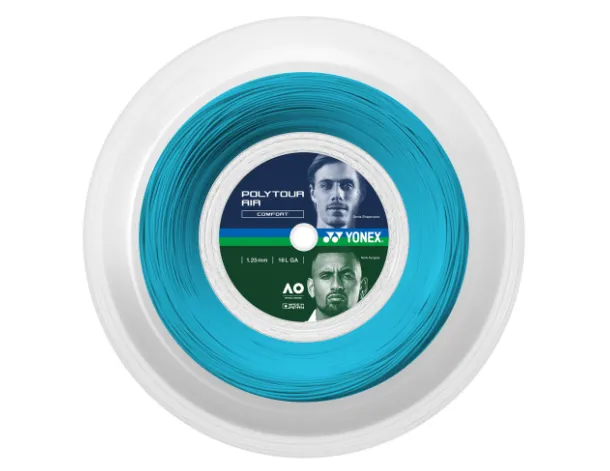
| 3 | Yonex Poly Tour Air | Maximum plushness with gut/multifilament-level comfort feedback and clean ball pocketing | Skeptics of “soft poly” wanting ultimate arm comfort and shock absorption in a round profile | Tension holding is well below average; requires frequent restrings |
| 4 | Silvester Evolution | Balanced all-around playability pairing standout comfort with strong tension maintenance deep into sessions | Juniors, touch/control-oriented players, and hybrid setups (soft cross paired with a firmer shaped main) | Tuned for control and touch rather than explosive raw power |
| 5 | Tru Pro Ghost Wire | Ultra-slick round profile offering elite arm comfort, high tension stability, and frictionless snapback | Players seeking plush control full-bed or an exceptional slick cross string to soften stiffer shaped mains | Relies purely on snapback rather than sharp geometric edge-bite for spin production |
1. Grapplesnake Alpha – cushioned impact feel without giving up spin
5 sided, gold/yellow co-poly. This one I often use for juniors transitioning from a multifilament. The Grapplesnake Alpha has a soft cushioned impact feel that still delivers real snapback and spin in testing. I now recommend it as the go-to string for poly players who are particularly concerned about tennis elbow but don’t want to totally sacrifice their stringbed feel. This string does an incredible job of providing spin, control and comfort yet still has decent tension holding for a softer poly. An excellent all round package for me. It feels like an underrated string for me as despite being a solid choice for juniors, I have plenty of adult clients that prefer this to other spin focussed polys such as RPM Blast, Head Lynx Tour etc.
2. Head Lynx – the lively all-rounder, included for players who want classic poly control with an elastic, arm-friendly pop
I put this on a lot of junior racquets and they always enjoy the feel and soft feel of it. It is a co-polyester monofilament core, round profile, infused with specialized softening additives to boost elasticity and touch. I’ll be honest with you, it doesn’t offer the sharp, aggressive mechanical bite of a shaped string, but it provides decent snapback and pocketing without triggering any elbow sensitivity. It gives you a plusher, more forgiving response than traditional dead polyesters, and if you want a dependable blend of accessible power, smooth touch, and clean control without the jarring impact, this is one of the most arm-conscious ways to get it.
3. Yonex Poly Tour Air – the softest poly I strung all year, full stop
Co-poly round shape. This was intended by Yonex to be the plushest polyester in their entire line-up, and it shows on the stringbed. I got the type of comfort feedback you usually only hear about multifilament or gut, while still pocketing the ball well enough to know what you’re doing with your shot. This is the string for the person who is skeptic of “soft poly” as your default response. A word of caution though, the tension holding on this string is well below average so keep in mind if not getting regular restrings!
4. Silvester Evolution – very good tension holding and comfort levels in one soft poly
This one is a real all rounder on my list as it’s not based on one big strength. For me it’s a truly balanced, arm-friendly poly with two standouts for a softer poly. Tension holding and comfort are both very good. It feels built for control and touch instead of raw power and keeps its playability deep into a session, without going dead early. Again one I recommend for juniors and also often used as a cross string with a slightly firmer shaped poly to soften up the string bed.
5. Tru Pro Ghost Wire – ultra-slick, arm-friendly response with decent tension holding
Ghost Wire is a round co-poly designed to be one of the softest, smoothest polys on the market. I often get asked to put this in the cross with a shaped poly to soften up the string bed.That said, I tested this full bed and It delivers an exceptionally plush, cushioned impact feel while maintaining precise directional control and depth. Unlike many soft polys that go mushy or lose elasticity quickly, I found this string offers surprisingly good tension holding and durability across long hitting sessions.
A quick word on non-poly options
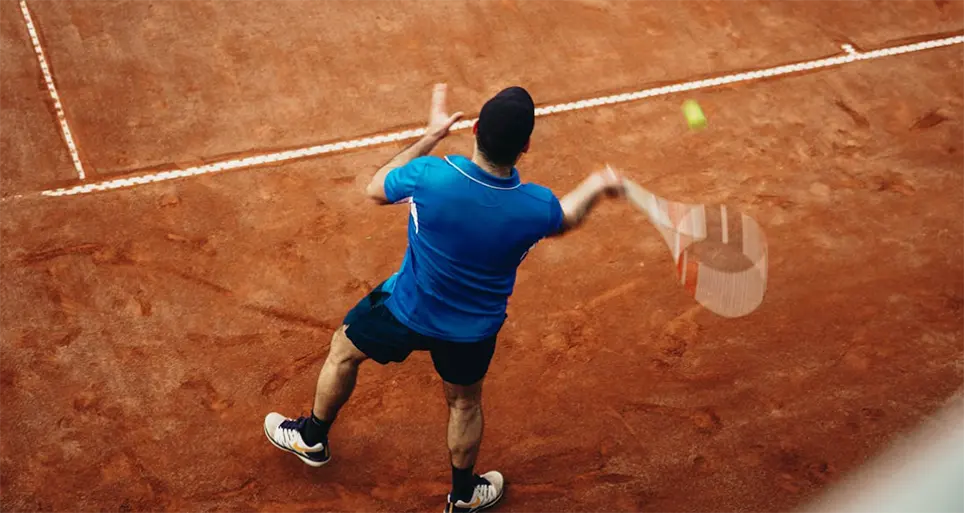
I have focussed on softer polys because most of my clients wanted the control and spin of a poly but not the arm damage that can come along with it. But let’s be honest, if you can play your best tennis without a poly at all, multifilament is the natural choice and a more friendly choice for your arm.
Strings like Babolat Xcel, Wilson Sensation and Tecnifibre Multifeel are excellent, dependable options in that category. And, if comfort is really your no. 1 priority, above all else, natural gut is even better! Nothing I used this year could touch it for pure shock absorption. Above, my goal with the poly picks was more narrow: performance without needlessly beating up your arm, for the players who aren’t willing to give up what a poly does for their game.
Other notables
There were a couple more racquets that made it into my bag this year that didn’t quite make the top 5. While not the softest of frames on paper, the Yonex Ezone 100 played more comfortably than the RA rating would imply, thanks to the fiber technology that helps filter vibrations.The Völkl V-Cell 7 105 is also worth trying. It has a large head and a soft construction and would make the budget pick of the group,comfortable at a reasonable price. And the Yonex Astrel 105 is a light, more open, forgiving frame and a strong shout for club and social players rebuilding confidence after a flare up
On the string side, Head Lynx, Kirschbaum Flash Orange and MSV Swift are three more comfortable co-polys that are worth a demo if you want to continue exploring the soft-poly category beyond my top 5. All 3 are on the softer end of polys and suit a wide range of frames. One caution on Flash Orange, the tension holding is well below average so again not one to go for if not changing strings regularly.
If your elbow pain is chronic rather than occasional, treat this as equipment advice rather than a treatment plan. Go and see a physio or sports medicine doctor to rule out anything structural before you go and spend a season chasing the right frame.

GREAT OFFERS ON TENNIS PRODUCTS
Don’t miss our new deals and discounts for some of our favorite tennis products!
Good discounts on new racquets, strings, bags, apparel or other tools and services such as coaching or training equipment.
My tips for avoiding tennis elbow
Loosen your string tension. This was the one biggest lever in my testing. Instead of stringing in the 55+ range, go for something in the high 40s to low 50s (lbs). This will allow the string bed to behave more like a trampoline, catching the ball, absorbing the impact, and not transmitting it straight into your arm. Are you stringing too tight?
Change the strings more often than you think you have to. All strings lose their elasticity as time goes on, even before they break. I found that the arm-friendliness of every string on this list degraded noticeably after the 15-20 hour mark. A “dead” string bed is a stiff string bed with little responsiveness or control.
Test your grip size with your fingers. Hold the racquet as you normally would, with room between your fingertips and palm for the index finger of the other hand. A grip that’s too small forces you to squeeze harder by contact, loading forearm tendons with unnecessary impact.
Warm up your forearm, not only your legs. A couple minutes of wrist curls, reverse wrist curls and light band work before you hit made a huge difference in how my arm felt during and after sessions. Tendons react to gradual loading, not a cold first serve at full pace.





You did not mention the weight of each rackets.
Please.
Thanks