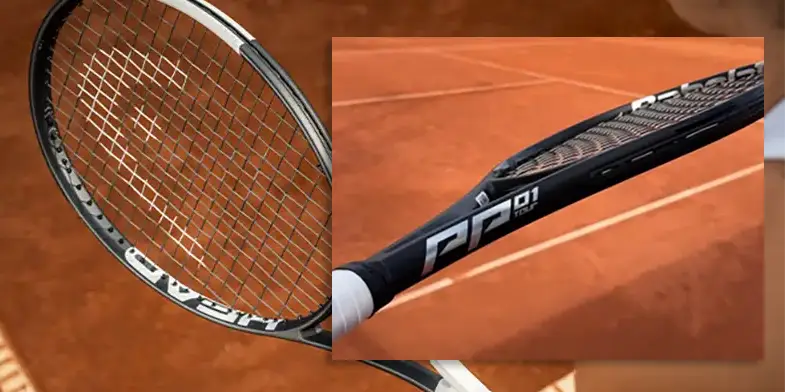
Every time I publish something about the Babolat PP01, the same question lands in my inbox: how does it compare to the HEAD Speed? It makes sense. When I wrote my first impressions of the PP01, the closest comparison I could make was “a little of the Speed-style all-round character.”
One important caveat before we start: the PP01 is still a prototype. The name, the layup, the beam, the RA, the price and the launch date are all unconfirmed. Everything I say about it is based on the two frames I have in my bag, a 300-gram version and the heavier Tour. The HEAD Speed MP, by contrast, is a finished retail product you can buy today. So this is partly a comparison between two racquets and partly a comparison between a finished idea and an unfinished one. Keep that in mind.
The fundamental difference
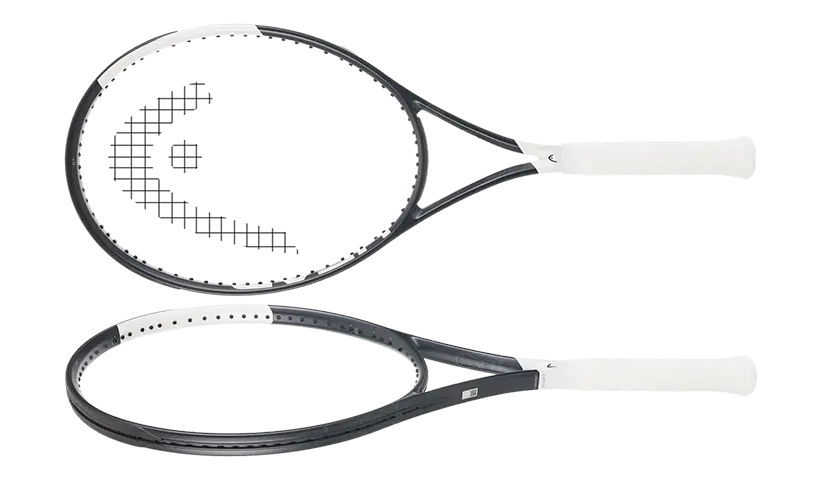
HEAD Speed MP 2026 – HEAD’s bestselling frame and the definition of a modern all-rounder. 100 square inches, 300 grams, 16×19, a 23 mm constant beam and a 60 RA flex. The 2026 version adds Hy-Bor in the shaft, which makes it feel more solid and connected than the slightly muted 2024 version. It is the racquet I would hand to most intermediate-to-advanced players who want a bit of everything.
You can buy the HEAD Speed frames from HEAD, or at retailers such as Tennis Warehouse, Tennis Warehouse Europe and Tennis Only (AU).
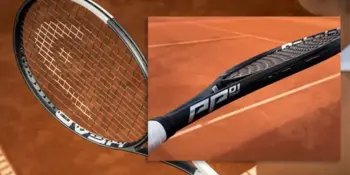
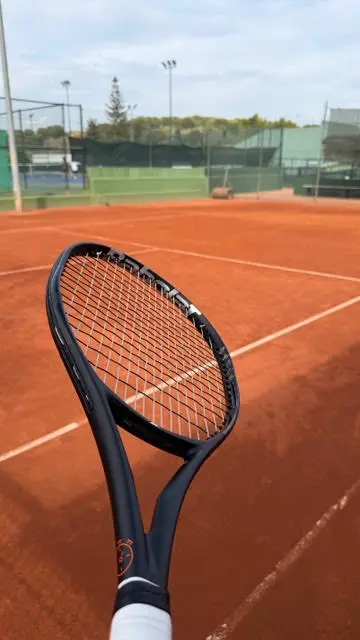
Babolat PP01 – something else entirely. 100 square inches, 300 grams, but with a near-diamond head shape and an 18×18 string pattern. Babolat hasn’t published an RA and I haven’t had mine measured, but there is clearly more flex here than in a Pure Drive or Pure Aero. It plays like a control frame with a stability obsession, not like a Babolat power frame. More on our first impressions of trying the PP01 racquet.
Specifications
| Babolat PP01 | HEAD Speed MP 2026 | |
| Head size | 100 in² | 100 in² |
| Unstrung weight | 300 g | 300 g |
| Balance (unstrung) | 31.0 cm | 32.0 cm |
| String pattern | 18×18 | 16×19 |
| Beam | Not confirmed | 23 mm constant |
| Stiffness (RA) | Not published | 60 |
| Swing weight (strung) | 327 (my sample) | 329 (TW average) |
| Length | 27 in | 27 in |
| Price | TBC | Around €260 / $259 |
There is also a PP01 Tour at 310 grams and a 30.5 cm balance, which I’ll come back to. And in the Speed line, the Pro is the 18×20, 310-gram alternative – which, as you’ll see, matters more than you might think.
1. Feel and playability
This is where the two frames are furthest apart, and also where they strangely meet.
The Speed MP 2026 feels like a modern HEAD. Plush, dampened, with a long dwell time on the string bed. You feel the ball sink in and then leave. It is comfortable without being vague, and the Hy-Bor has given it a more solid, connected impact than the 2024 version, which I found a touch muted (it also had a higher swing weight on average). It is a very easy racquet to like from the first ball. Not exciting, necessarily, but immediately familiar.
The PP01 is not immediately familiar. The head shape changes how you perceive the contact point, and for the first hour I kept wondering whether I should be hitting the ball in the middle of the string bed or slightly higher, the way I do with most modern frames. The sweet spot feels like it sits a bit higher than usual, and the whole frame gives you the sensation of a slightly longer racquet without actually being one. That is an adjustment. I said “interesting” about twenty times during my first session, and I stand by it.
Once you stop fighting it, the feel is actually very good. There is enough flex and dwell to make it comfortable, but not so much that it becomes a pillow. I wouldn’t call it a Prestige-style classic feel, and there is still a slightly metallic, vibrational edge to the response that reminds me of recent Pure Aeros. But the pocketing is pleasant and, crucially, it doesn’t feel disconnected.
So: the Speed is the easier frame to pick up. The PP01 is the more interesting one to learn.
It will be interesting to see what everyone thinks of the new Babolat frame, a truly unique one. @babolat https://t.co/icKhTJR1b2
— Tennisnerd (@Tennisnerdnet) October 26, 2026
2. Power and launch angle
Here the difference is clear and it will decide the argument for most of you.
The Speed MP gives you real power and a high launch angle. Chris on the team calls the launch angle “insane” on this frame, and I understand what he means. The 16×19 pattern and the 23 mm beam send the ball up and out with very little effort. On a good day, that is free depth. On a bad day, it is a ball in the back fence (a slight exaggeration), which is why I keep coming back to Toroline Vamos at 52 lbs in this frame. You need to tame it a little.
The PP01 is the opposite. Power is moderate. There is some free depth, but nothing like a Pure Drive, a Pure Aero or a Speed MP. The launch angle is low, and that is the single most defining characteristic of the frame. When I drove through the ball it behaved beautifully. When I tried to get underneath a short ball and lift it aggressively, I hit the tape more than once. That tells you most of what you need to know.
If you want the racquet to help you get the ball up and down, the Speed MP is the friendlier choice. If you hit through the court and want a flatter, more penetrating trajectory, the PP01 is the more natural fit.
3. Spin and flat hitting
The Speed MP is the better spin frame on paper and in practice. Open pattern, higher launch, easier net clearance, more shape on the ball. It is not a VCORE or a Pure Aero, but generating topspin is straightforward and the ball kicks up off the court.
The PP01 is not a spin racquet, and I don’t think Babolat is pretending otherwise. The 18×18 pattern gives a very evenly distributed, predictable string bed, and you can absolutely play spin with it. But it rewards driving through the ball rather than brushing up the back of it. Slice, on the other hand, is lovely. The stability and low launch make it very easy to knife the ball and keep it low.
This is the part where I would be honest with myself if I were buying. I’m not a natural topspin player, and I liked the PP01’s flat-ball behaviour a lot. If you are a heavy topspin player who relies on height and margin, the Speed MP will feel like much less work.
4. Stability and defence
This is the PP01’s party trick, and it is genuinely impressive. You never feel the racquet twist on off-centre shots. The stability is the most impressive thing about it, full stop. Against heavy pace it absorbs and redirects the ball with a calm that a 300-gram frame has no business having. Defensively I found it excellent. Stretched wide, hitting a passing shot, redirecting a difficult ball – I could find my targets surprisingly well, and the sweet spot felt forgiving.
The Speed MP 2026 is also a stable frame, and the Hy-Bor update has made it more so. But it is stable in the normal way: a 329 swing weight doing its job. The PP01 feels torsionally stubborn in a way that reminds me more of a heavier players’ frame, and that is clearly the design intent. Babolat appears to have built this thing for modern baseline tennis, where you stand deep, absorb heavy balls and redirect pace.
If you play against big hitters, that difference is not marketing. You feel it.
5. Comfort
Both are comfortable, which is not a sentence I expected to write about a Babolat prototype.
The Speed MP at 60 RA with Auxetic 2.0 is one of the softer frames in HEAD’s line-up, and I had no arm issues with it at all. The PP01 surprised me even more. Babolat has a reputation for firm frames, but this one has noticeably more flex. I’ve had wrist trouble with certain racquets, including the Pure Aero 98 2023, and the PP01 has been considerably friendlier to my wrist. The low balance point helps as well, because it creates less leverage on the forearm.
I wouldn’t call either one a Clash. But if arm comfort is a priority for you, neither frame will be the reason you stop playing.
6. Serve and return
The Speed MP is the better serving racquet for most players. The higher launch and easier access to power give you a bit more free pace, and the 329 swing weight gives the ball some serious weight when you connect. My only complaint, and it’s the same one I’ve had with the Speed line for years, is that the high swing weight can make it feel slightly sluggish late in a match when you’re serving tired.
The PP01 is quick. It moves through the air much faster than it looks, which makes it excellent on returns and reflex volleys. On serve, I wouldn’t call it exceptional, but it is easy to accelerate and the slice serve out wide came naturally. The Tour version gives you more pop, but you pay for it in manoeuvrability.
On return, the PP01 wins for me. Low balance, quick through the air, very stable against a big serve. That is a nice combination.
7. Strings and setup
On the PP01, I would not go too low. There is enough movement in that 18×18 string bed that dropping the tension makes it lively, and lively is not what this frame is about. Low fifties felt sensible. I used Yonex PolyTour Pro 1.25 at around 53 lbs in the 300-gram version, and a hybrid of Vamos at 51 lbs in the mains with RPM Blast 1.25 at 49 lbs in the crosses in the Tour. Both worked.
On the Speed MP 2026, I would go the other way: 53 lbs or higher with a controlled poly like Toroline Vamos (slightly softer) or Lynx Tour (slightly firmer), precisely because the launch angle is so generous. If you string this frame loosely with a soft poly, you will spend the first set watching balls land long.
8. PP01 or Speed – which one?
This is the part where I usually give you a neat set of bullets. I’ll do that, but with one honest addition first.
Choose the Babolat PP01 if:
- You hit flat and want a low, penetrating trajectory
- You play against heavy pace and want a frame that doesn’t flinch
- You value stability and defence over free power
- You like a quick, low-balance frame that comes through the air fast
- You enjoy learning a racquet rather than being flattered by it
Choose the HEAD Speed MP 2026 if:
- You want easy depth and a higher launch angle
- You rely on topspin and net clearance
- You want a frame that does everything well without a long adjustment period
- You want to buy a racquet today, with a known spec and a known price
- You play an all-court game and want something predictable at the net
And the honest addition: if you’re a flat hitter who loves the Speed line, your real comparison isn’t the MP. It’s the Speed Pro. The 18×20 Pro has the laser-like trajectory, the low launch and the stability that the PP01 is chasing, and it is the HEAD frame I’ve felt most at home with in recent years. Put a PP01 next to a Speed Pro and you have a genuinely fascinating test. Put it next to an MP and you’re comparing two different answers to two different questions.
The verdict
The Speed MP 2026 is the best racquet for more people. It is more versatile, more forgiving, easier to string, easier to serve with, and you can actually buy one. That is not a knock on it. It is one of the best-balanced 100 square inch frames on the market, and HEAD has quietly made it better again.
The PP01 is the more interesting racquet, and for a certain type of player it might be the better one. If you hit flat, play against pace and want a stable, quick, low-launch frame that lets you take the ball early and take time away from your opponent, it does something the Speed MP cannot do. It just asks you to meet it halfway.
My advice, as always, is to demo both if you can. But since you can’t demo a PP01 yet, here is the practical version: if you’re shopping now and you want one racquet to do everything, buy the Speed MP. If you’re a flat hitter who has been waiting for a Babolat that feels like a control frame, wait for the PP01 and try it before you commit to anything else.
And if you’re somewhere in between, try the Speed Pro. That’s the frame this comparison kept pointing me back to.
Let me know in the comments which one you’d pick, and if there’s another head-to-head you want to see.