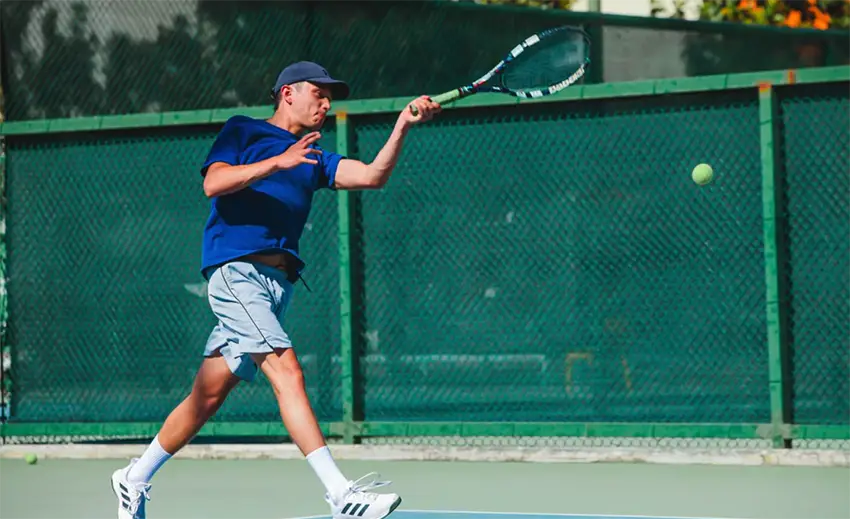
The jump from a junior 26-inch racket to a normal 27-inch adult frame is seldom a single leap. Jumping straight from a 245g junior racquet to a 300g tour frame usually results in late contact, shortened follow-throughs and serious wrist or elbow fatigue. In my experience the pathway is a two-step process:
Step 1 (The Bridge): Move to a lightweight (sub-285g unstrung), big (100-107 sq in), arm-friendly adult frame for 6 to 18 month minimum.
Step 2 (The Step-Up): With the physical strength, swing speed and baseline timing in place, step up to the standard-weight (300g / ~11 oz strung) version of that exact same family of racquets. I caveat that this would be in close discussion with a coach or tennis shop and video analysis of technique can also be helpful here.
The First Adult Racket (Lightweight & Forgiving Bridge)
| Racquet | Key Specs (Unstrung) | Category / Play Style | Key Strengths | Step 2 Upgrade Path |
|---|---|---|---|---|
| 1. Wilson Clash 100L v3 |
100 sq in 280g / 315 mm 16×19 pattern ~54–57 RA |
Maximum arm comfort, flex, and vibration dampening | Superb ball pocketing; absorbs off-center shock on growing joints while keeping full swing mechanics fluid. | Wilson Clash 100 v3 (295g unstrung) |
| 2. Babolat Boost Drive |
105 sq in 260g / 345 mm 16×19 pattern ~68–70 RA |
Lightweight free power & generous sweet spot | Effortless baseline depth and easy handling; ideal bridge for juniors moving off 25″/26″ Babolat junior frames. | Babolat Pure Drive (300g unstrung) |
| 3. Yonex EZONE 100L |
100 sq in 285g / 325 mm 16×19 pattern ~65 RA |
Modern all-court performance, power & clean feel | Isometric expanded upper sweet spot, solid directional control, and VDM vibration dampening for tournament juniors. | Yonex EZONE 100 (300g unstrung) |
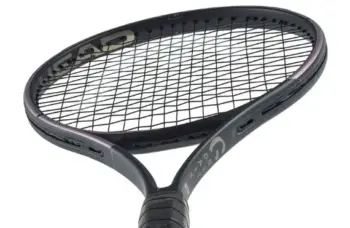
| 4. HEAD Boom Team L |
107 sq in 260g / 340 mm 16×19 pattern ~64–66 RA |
Forgiving sweet spot & lively, plush pop | Morphing teardrop hoop that provides easy depth on inconsistent contact; Auxetic tech gives a solid, comfortable feel. | HEAD Boom MP (295g unstrung) |
| 5. Babolat Pure Aero Team |
100 sq in 285g / 320 mm 16×19 pattern ~67–69 RA |
Aggressive topspin, aerodynamics & snapback | Aeromodular beam cuts fast through the air; FSI Spin provides high launch angle and heavy RPMs for aggressive baseline play. | Babolat Pure Aero (300g unstrung) |
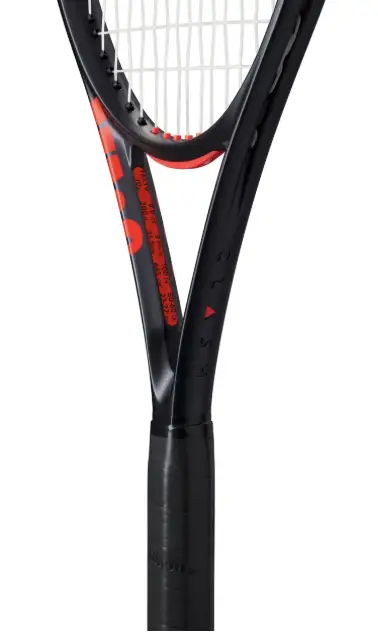
1. Wilson Clash 100L v3
Specs: 100 sq in | ~280g unstrung | 16×19 pattern
My top choice for transitioning juniors is the Clash 100L because it solves the biggest problem that young players have when they move to a full 27-inch stick: off-center shock on growing joints. Wilson’s proprietary carbon mapping gives this frame a very low flex rating without making the racket uncontrollable. Juniors caught on the back foot, or hit late on defensive shots, are pocketing the ball, with the frame absorbing the impact rather than jarring the wrist and elbow.
2. Babolat Boost Drive
Specs: 105 sq in | ~260g unstrung | 16×19 pattern
If a junior has been playing with Babolat’s 25” or 26” junior frames and loves natural power, the Boost Drive is maybe smoothest bridge into adult dimensions. It weighs a light 260g, and with a long 105 sq in head it offers immediate depth without the player having to over-muscle their groundstrokes.
The sweet spot is a lot wider with a little more hoop, so ball speed is still high even when your footwork gets lazy in long matches. It has that Pure Drive family’s stiff and crisp DNA that makes it easy to get deep penetrating balls, but the light static weight means it never feels like too much racket to accelerate through contact.
3. Yonex EZONE 100L
Specs: 100 sq in | ~285g unstrung | 16×19 pattern
For a serious competitive junior coming up through the tournament ranks, the EZONE 100L is the performance frame that pops out. Yonex’s signature Isometric head shape provides an upper hoop sweet spot larger than conventional oval frames.
At 285g, it’s on the upper weight limit but provides great stability against heavy incoming balls. The handle features Vibration Dampening Mesh (VDM) to cut out harsh vibrations and deliver clean, connected feedback to help emerging tournament players fine-tune their directional targeting and depth control.
4. HEAD Boom Team L
Specs: 107 sq in | ~260g unstrung | 16×19 pattern | ~64–66 RA
The Boom Team L features a 107 sq in head size. Head’s unique teardrop beam geometry raises the sweet spot higher in the hoop to match modern swing mechanics. On court this racket feels very lively and forgiving with mishits that would normally fall short in the service box popping cleanly over the net with good depth.
Head’s Auxetic technology in the bridge provides a plush, elastic feel on impact meaning the 260g frame won’t feel hollow or unstable. It’s the ideal confidence booster for juniors who are still dialing in their contact points and can swing away confidently without the fear of mis-hitting.
5. Babolat Pure Aero Team
Specs: 100 sq in | ~285g unstrung | 16×19 pattern | ~67–69 RA
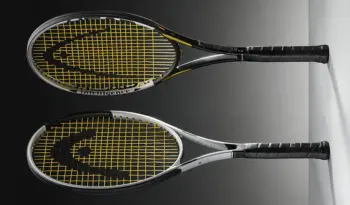
The Pure Aero Team is the best spin-centric bridge into adult performance frames for serious competitive juniors developing a heavy topspin, modern baseline game. It’s weight is 285g unstrung with a standard 100 sq in head. It is a good step up in stability and ball penetration from ultra light entry level rackets, but is still maneuverable enough to get through quickly.
The open string pattern offers plenty of spin, has a high launch angle, and dampened, clean feedback. It aids aggressive shots to dip inside the lines for rising baseliners. It also offers the natural progression to the standard 300g Pure Aero down the road once technique is robust.
Other notables
Depending on a junior’s specific technical ability,, other specialty frames beyond the main lineup are worth serious consideration.
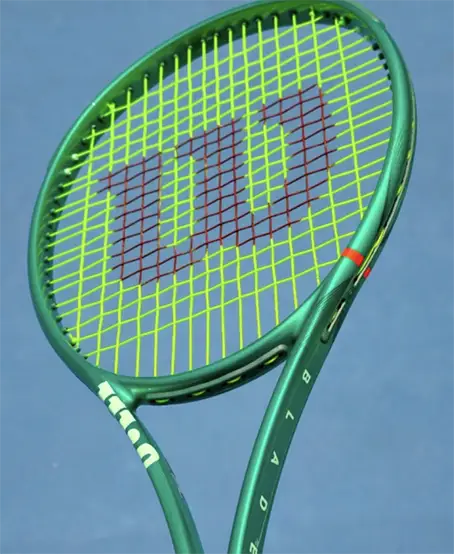
The Wilson Blade 100L (285g, 100 sq in) is an excellent choice for juniors wanting a tactile feel, directional accuracy and early-ball redirection rather than just free power. It maintains the signature thin-beam, flexible DNA of the Blade family, making it the perfect stepping stone for juniors working on flatter, classic strokes who eventually want to move up to the standard Blade 98. The VCORE 100L (~280g, 100 sq in) is another good option. I would describe it as a more nimble, spin-friendly alternative to the EZONE.
Other options for players seeking all-court control maneuverability would be the HEAD Radical Team (~280g, 102 sq in) and Dunlop FX 500 LS (~285g, 100 sq in).
The Radical Team has a slightly increased head size and reduced static weight helping to provide an arm-friendly, dynamic response. The FX 500 LS is more power focussed but does a good job of dampening vibrations while delivering explosive pop on defensive shots, providing easy baseline depth for rising juniors before they develop the physical mass required for 300g tour frames.