
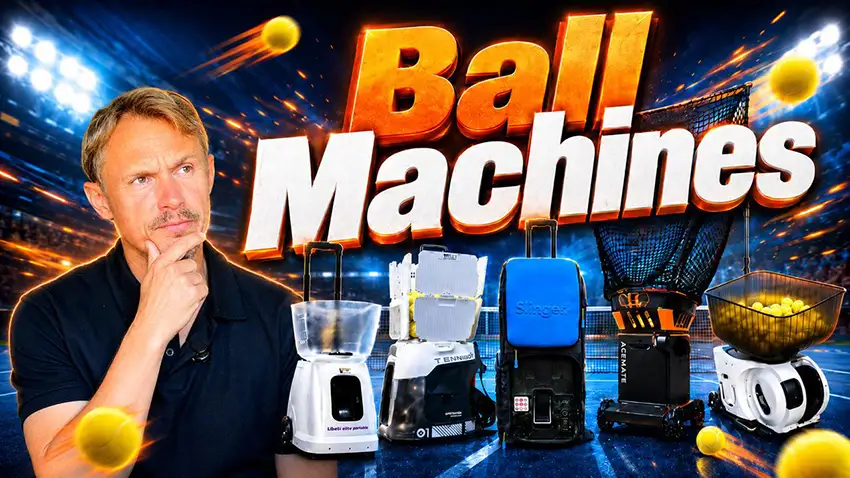
I’ve spent the last several months testing ball machines: moving ones, portable ones, stationary models at different price points. The market is exploding right now. There’s no perfect machine, but there’s probably one that fits what you actually need. Here’s what I learned.
The Market Has Changed
A few years ago, your options were limited: Slinger, Lobster, Spin Shot. The Slinger arrived as a portable breakthrough, but it only did topspin. Now? There are machines doing more than the Slinger ever did, at lower prices, in smaller packages. The industry is ultra-competitive, and that’s good for consumers.
But here’s the reality check: none of these machines work perfectly out of the box. They all need firmware and software updates. Some have bugs. Some have exaggerated claims about AI features or ball speed. You need patience, and you need to manage expectations.
What Actually Matters in a Ball Machine
Before diving into specific machines, let me break down what I think separates good machines from mediocre ones.
Spin variety is essential. You need topspin, flat, underspin, lobs. Every machine here does that reasonably well.
Movement or rotation matters, but not for everyone. Can the machine move around or rotate the head? This gives you different ball placements. It’s nice for advanced training, but it’s not essential if you just want to work on a specific stroke.
Ball speed gets oversold. Manufacturers claim 80 mph, but you rarely see it. Realistic expectation: 60 mph minimum for a challenging ball. Most machines claim higher speeds under optimal conditions that don’t actually happen. I’ve tested with speed guns. The numbers rarely match real-life scenarios. Smaller machines usually have weaker speeds, but you can mitigate some of that by moving the machine towards the service line.
A remote beats carrying your phone. These machines all have apps, and the apps are fine. But a lightweight remote means you’re not destroying your pocket carrying a phone around the court while you’re trying to move smoothly. Not every machine has one. That matters.
Portability is underrated. If it’s a pain to transport, you won’t use it. Simple as that.
Advanced AI drills don’t work yet. I’ve tested AI tracking, sensors that detect where you are and adjust ball placement, pre-programmed drop-shot sequences. They sound amazing in marketing. Reality? They’re often buggy, inconsistent, and honestly not that useful. I’m not saying there is nothing good there, some drills are fun and I am sure they will improve. But personally, I tend to stick with basic or customized drills. They’re more reliable.
The Machines
Acemate S10 – The Ambitious One
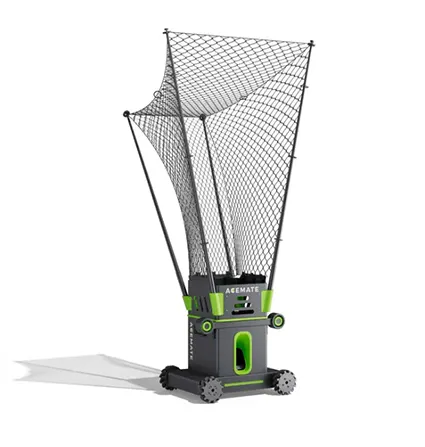
The Acemate S10 is eye-catching and ball-catching (literally, it has a net). It’s the most ambitious machine here. Built rugged with handles, it moves in all directions, and you can control it remotely to roll alongside you during practice.
The concept is genuinely cool: you hit to a point on the court, the machine moves to that location, and serves from there. It simulates having a moving opponent. My friend Leah tested it with me and loved it – she said it felt almost like playing against someone who was moving and hitting from different spots.
The problem? Setup is tedious, especially the net. The calibration process frustrated me initially, though software updates have improved it. The ball-catching net doesn’t catch every ball. Some of the AI features had bugs. It has no physical remote, which means app-dependent control.
On the pro side: the build quality is genuinely robust. If you have an academy, a club, or work with kids, this machine’s “wow factor” could get people excited about training. The basic features work really well. Ball speed is decent, though not the fastest.
Best for: Coaches, academies, anyone training groups where the wow-factor payoff justifies the setup hassle and weight.
Watch out for: Setup time, battery drain during movement (significantly worse than stationary use), and the need to troubleshoot initially.
Buy the Acemate ball machines here. (Code: tennisnerd)
Veva Sports P3 Pro – The Sleeper
Here’s the honest take: I initially had low expectations for the Veva Sports P3 Pro. It’s not visually striking. The design is dated. It doesn’t have wheels. It looks basic.
Then I actually used it, and it impressed me.
The ball speed is genuinely solid, probably the fastest or tied for fastest alongside the Pongbot. The remote is excellent: it changes ball speed, adjusts elevation, stops and starts drills without needing your phone. The remote doesn’t have a display, but it does everything you need efficiently.
The machine uses sensors instead of cameras for AI features. Those sensors work sometimes and don’t work other times. Advanced drills can be buggy. But when you customize your own drills or use basic settings, it’s reliable and straightforward.
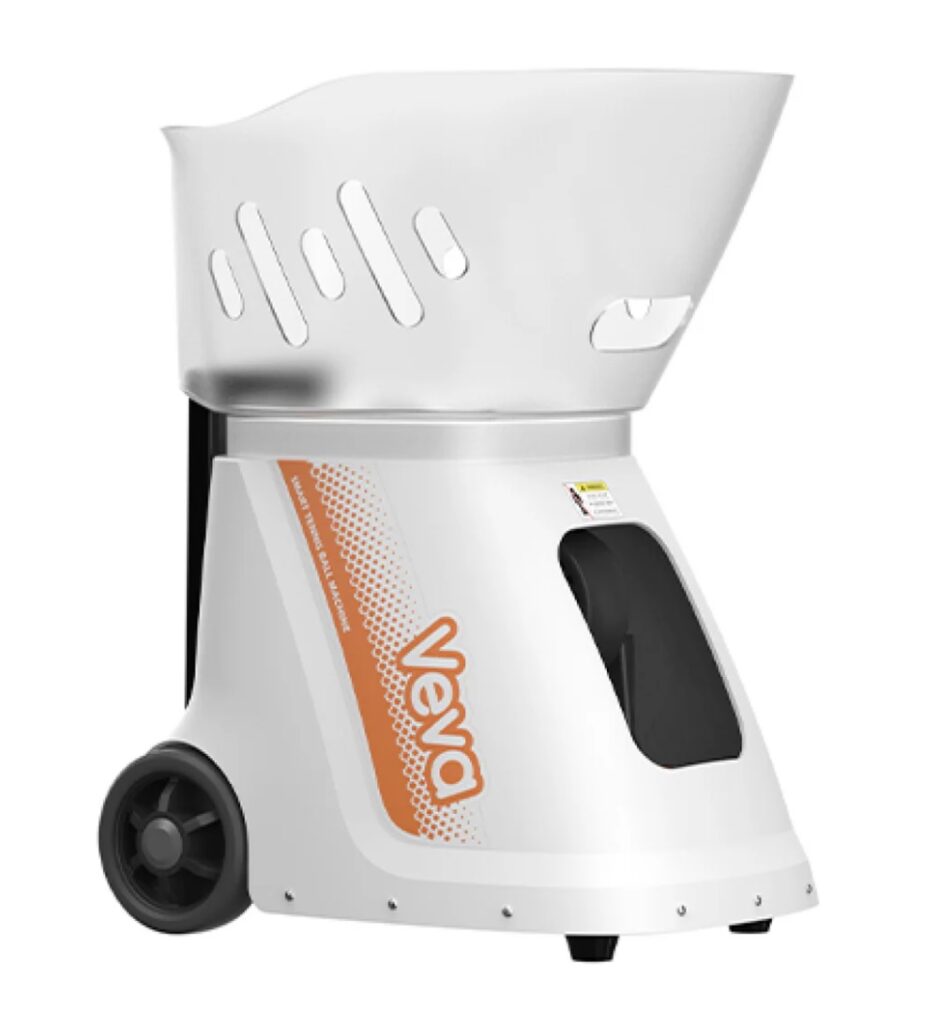
The portability wish: it rolls like a suitcase, but there are no handles to actually carry it up stairs or from your car to the court. For a future generation, they need to address that. Below 20 kilos but still heavy enough to matter.
The price point is roughly half the Acemate, which makes it compelling.
Best for: Players who want solid fundamentals without paying premium prices or dealing with complex features.
Watch out for: Carrying it when it’s not on flat ground.
You can find the Veva ball machines available via this link, (code: tennisnerd).
Pongbot Pace S Pro – The Familiar Choice
The Pongbot Pace S Pro ball machine does what the Veva does, at a slightly higher price point, with some nice additions.
Solid ball feed. Good ball speed. The remote has a display, which is really useful and you see what you’re controlling. The app has a community drill library with hundreds of pre-made routines. That library is a real differentiator. Some community drills are terrible (because someone made them terribly), but others are solid, and having options matters.
The downsides are identical to the Veva: portability and weight. Same handling issues. Same “suitcase” rolling with no easy way to lift and carry.
If I had to choose between Veva and Pongbot as a solo player? It’s genuinely close. Pongbot has the drill library as an advantage. Veva has the price advantage (but using the code tennisnerd, you get $200 off the Pongbot). Both machines are reliable, both produce good ball speed, and both have the same carrying limitations.
Best for: Players who want a solid machine with extensive pre-made drill options and don’t mind paying a bit more.
Watch out for: Same portability issues as Veva. The remote display drains battery faster than basic remotes.
Use this link to purchase the Pongbot ball machines with a 5% discount.
Tenniix – The Portable Compromise
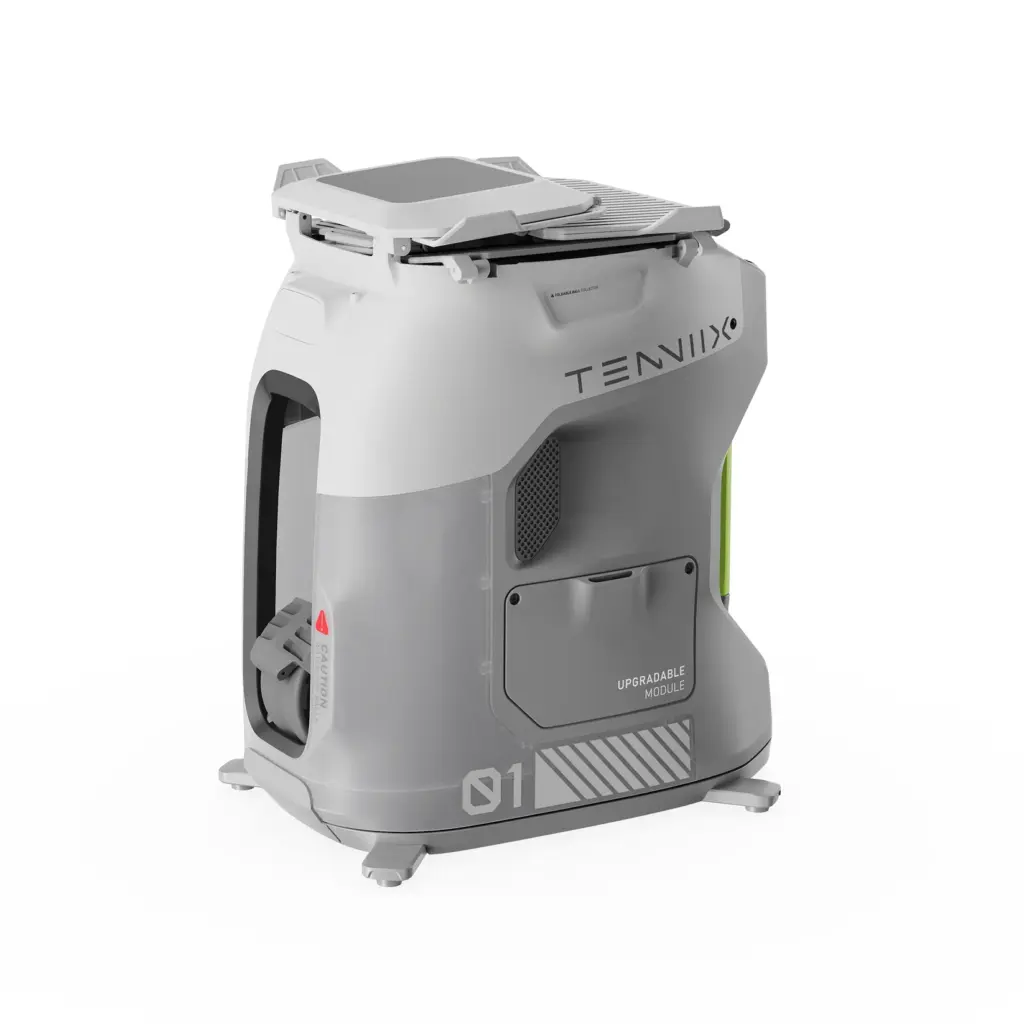
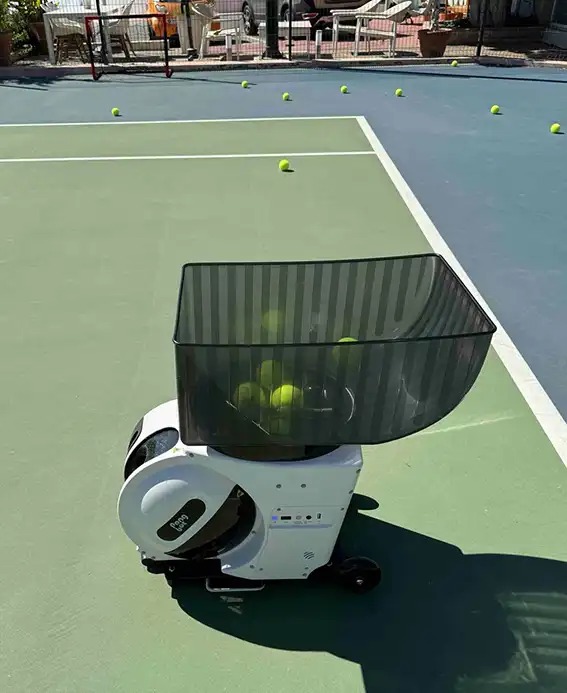
The Tenniix looks like a Star Wars droid. It’s portable in a way the other machines aren’t – you can strap it to your shoulder and carry it like a bag from your car to the court.
That portability is my primary reason for using it most of all these machines. When friction goes down, usage goes up. I bring it out because it’s easy to transport.
The tradeoffs are real. Ball speed is questionable, not as consistent or fast as Viva or Pongbot. The ball hopper is smaller, so you’re refilling more frequently. It doesn’t move. The strap can get in the way.
But here’s the thing: it still produces usable balls. It still works for a training session. It has a smart LED screen showing ball direction, which is a nice touch. Friends who’ve used it with me enjoyed it. I only heard good things about adding the vision-model for the Tenniix Pro, but I have not yet bought one to try.
Tenniix has faced criticism online for misleading ball-speed claims. They’ve provided videos showing that yes, under optimal conditions, they hit those speeds. But in real-world use, it’s not consistent. If you’re specifically seeking high-speed challenging balls, this machine will frustrate you. If you want basic feeds to work on footwork and technique, it gets the job done.
The company is clearly keeping up with updates, pushing out firmware and software improvements regularly. They seem to be managing rapid demand.
Best for: Solo players who prioritize portability above all else. If you won’t bring a machine out because it’s too heavy or awkward, this one breaks that barrier.
Watch out for: Ball speed variability. Limited hopper capacity. Lack of advanced features if you want them.
Read more about Tenniix ball machines or get buy one via our link here, by using the code Tennisnerd5 you will get a 5% discount at checkout.
The Real Question: What Do You Actually Need?
This is where I think most people get the machine wrong. They buy based on features (AI tracking, ball-catching nets, community drills) and then realize they don’t actually use those features. Or they buy the heaviest machine and it sits in the garage.
Ask yourself these specific questions:
Do I want to train with a group, or alone? The Acemate’s movement feature makes more sense for group training or coaching. Veva and Pongbot make sense for solo work.
How important is portability? If you have a home court, weight doesn’t matter. If you’re hauling to different locations, Tenniix is the only real answer.
What’s my budget? Acemate is premium. Veva is mid-range value. Pongbot is mid-range at a higher price (unless you use discount codes). Tenniix depends on current pricing but started around €700-800. The Pro is $1599, which is a little steep.
Do I customize drills or use pre-made routines? If you customize, any machine works fine. If you want library options, Pongbot’s community drills matter.
What ball speed do I actually need? 60 mph is challenging. 70+ mph is very challenging. Most players don’t need the absolute max speed that’s advertised. I have yet to see 80 mph on one of these machines, but I do not really have the need for it either.
One More Reality Check
None of these machines are perfect. Expect some bugs. Expect firmware and software updates to fix things that don’t work at launch. Expect setup time. Expect to learn the quirks. That’s just the current state of the industry.
But I do think every one of these machines is useful for improving. Ball machines let you repeat specific shots hundreds of times without needing a hitting partner. That’s valuable for targeting weaknesses: your backhand, your slice, your approach shot. You can isolate and drill relentlessly.
Will they become perfect? Nothing is perfect, but they are for sure improving. The companies are iterating rapidly. Firmware gets better. Bugs get fixed. AI features offer more and more value. But we’re early. Set expectations accordingly, and you’ll have a good experience.
Which ball machine do you use and how is it working for you? Please comment below.





i use the Titan and love it. doesn’t have a remote but the app is fine for me. i can put it in my trunk with no problems. does everything i need