
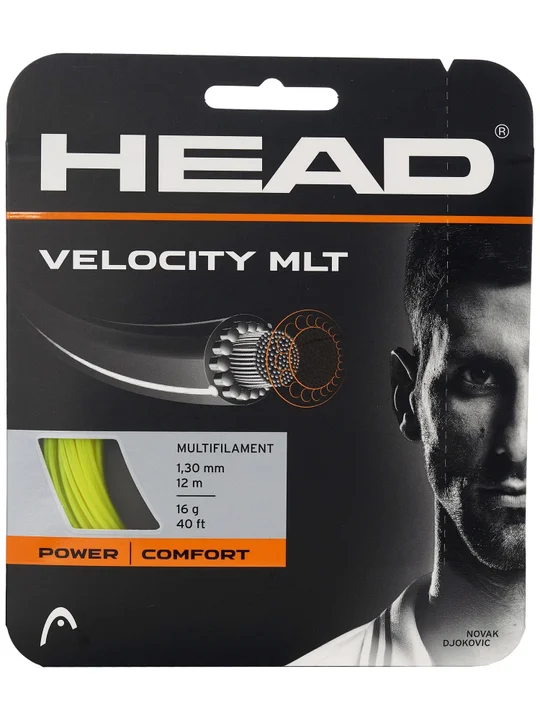
A durable, arm-friendly multifilament that prioritizes control over power. My go-to recommendation for players transitioning from poly or dealing with arm issues.
I’ve played with HEAD Velocity MLT on and off for years now, and it’s become one of my default recommendations when players ask about comfortable strings that still offer decent control. It’s not the softest multifilament on the market, and it’s not the most powerful – but that’s exactly why it works.
What Makes Velocity MLT Different
Most multifilament strings chase power and comfort as their primary selling points. Tecnifibre X-One Biphase gives you effortless depth. Wilson NXT is plush and forgiving. Babolat Xcel offers a nice blend of feel and playability.
HEAD Velocity MLT takes a different approach: it’s a control-oriented multifilament. That might sound like an oxymoron—multifilaments are supposed to be about power and comfort, right?—but this is what makes Velocity special.
The string holds tension remarkably well for a multifilament. It doesn’t give you that mushy, trampoline-like feel that some multis produce after a few hours. You can string it relatively high (54-55 lbs / 24-25 kg) and still get comfort without sacrificing control.
I like more control from my strings, so Velocity MLT fits my game perfectly for a multifilament (although I tend to prefer medium firm polys). But if you’re looking for maximum power and that “effortless depth” feeling, this probably isn’t your string.
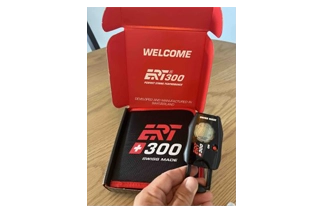
ERT300
Is it time to restring your racquet?
Get an ERT 300-string tension tester, a great tool to see how fast a string drops tension, when it is time to restring your racquet and get a better idea of what tension works the best for you. We use it all the time.
Available in Two Colors (And They Play Differently)
HEAD offers Velocity MLT in two versions:
Black (1.25mm and 1.30mm): This is my preference. The black coating adds texture that helps with spin generation. It’s not going to bite the ball like a poly, but for a multifilament, it produces noticeably more spin than the natural version.
Natural/Neon Yellow (1.25mm and 1.30mm): Slightly softer feel, less spin potential, but some players prefer the classic multifilament experience without any coating.
I gravitate toward the black version at 1.30mm gauge. The thicker gauge helps with tension maintenance and durability, while the coating gives me just enough grip on the ball to feel confident loading up with topspin.
Durability – The Surprise Factor
Here’s where Velocity MLT really stands out from the multifilament crowd: it lasts.
Most multifilaments start fraying early. Babolat Xcel can look rough after 4-5 hours depending on weather conditions. Tecnifibre X-One Biphase isn’t known for longevity either. You’re paying €14-15 per set and getting maybe 6-8 hours if you’re lucky.
Velocity MLT? I’ve seen it go 8+ hours in the right racquet and string pattern without major issues. My hitting partner Mike strings his Volkl Organix MP 10 with Velocity MLT 1.30 at 56 lbs and gets decent lifespan out of it.
The trade-off for this durability is reduced string movement. The strings don’t snapback as aggressively as fresher, softer multis. Even at low tensions (22-21 kg), I’ve found the mains can stick in awkward positions unless mechanically brought back by hand.
But if you’re a recreational player who doesn’t break strings and wants a multifilament that won’t need replacing every week, this is a massive advantage.
Where I Use It
Velocity MLT works best in certain contexts:
Full bed in control-oriented racquets: I’ve used it successfully in racquets like the HEAD Prestige Classic 2.0 and other player’s frames. The multifilament softens up stiff, control-focused racquets while the string’s inherent control characteristics prevent things from getting too wild.
Hybrids with poly: I like Velocity MLT in the mains paired with a poly in the crosses for added spin and durability. However, be warned, multifilaments don’t last as long in hybrids, especially with shaped polys that can chew them up.
When using it in hybrids, I put Velocity MLT 1.30 in the mains at 55 lbs and something like HEAD Hawk Touch or Tour Bite Soft in the crosses at 53 lbs. This gives you comfort where you need it (on the hitting surface) while the poly crosses add spin and durability.
Not ideal for: Very open string patterns (16×19 in 100+ sq inch racquets) if you’re a heavy hitter. The string movement just isn’t there for maximum spin generation, and you might find it limiting.
Arm Health and Comfort
Due to my elbow and wrist issues over the years, I’ve become very conscious of string choices. Velocity MLT has been a reliable option when I need a break from poly.
It’s not as plush as X-One Biphase or as soft as Wilson NXT Comfort, but it provides enough dampening to keep my arm happy during extended hitting sessions. I can string it higher than softer multis (which need lower tensions to remain comfortable) and still avoid arm soreness.
For players transitioning from full poly setups who are experiencing tennis elbow or wrist pain, this is one of my top recommendations. It gives you a taste of multifilament comfort without feeling like you’ve lost all your control.
My dad hits the ball flat and plays with a Wilson Blade 98 – a demanding racquet. I gave him HEAD Velocity MLT 1.25 strung at 25-24 kg (55-53 lbs) so he could play with something more comfortable. The combination of control from the racquet and comfort from the string worked perfectly. He maintained control while significantly reducing stress on his elbow.
Tension Recommendations
This is where Velocity MLT’s control-oriented nature shines. You have flexibility:
For more control:
- Thicker gauge (1.30mm)
- Higher tension (54-55 lbs / 24-25 kg)
For more power:
- Thinner gauge (1.25mm)
- Lower tension (51-52 lbs / 23 kg)
I typically use 1.30mm at 53-54 lbs in player’s racquets. This gives me the control I want while keeping my arm comfortable.
In softer, more powerful racquets, I might go up to 55-56 lbs to firm up the stringbed without worrying about harshness.
The Spin Problem
Let’s address the elephant in the room: spin generation.
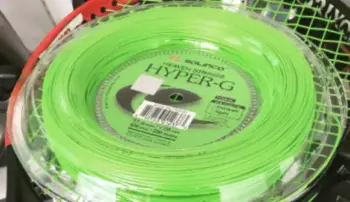
Velocity MLT is not a spin-friendly string compared to polys. Even the textured black version doesn’t snap back like Hyper-G or Tour Bite. The strings bed in quickly and stay relatively static.
I tested it at very low tensions (22/20 kg) trying to encourage string movement, but the mains just wouldn’t snapback aggressively. This is the trade-off for durability and tension maintenance.
If you’re a heavy topspin player who loads up on every ball, you might find this limiting. But if you hit flatter or use moderate spin, it’s perfectly adequate.
When HEAD’s Dennis Fabian spoke on the Tennisnerd podcast, he mentioned HEAD was preparing something big in the multifilament category. I suspect they recognized this spin limitation and were working on solutions. (That eventually became strings like Lynx and Hawk with better movement characteristics.)
Compared to Other Multifilaments
vs. Tecnifibre X-One Biphase:
- Biphase: More power, softer, better feel, shorter lifespan
- Velocity MLT: More control, firmer, excellent durability, less expensive
vs. Babolat Xcel:
- Xcel: Better spin potential, more string movement, frays quickly
- Velocity MLT: Superior durability, better tension maintenance, less spin
vs. Wilson NXT:
- NXT: Softer, more comfortable, available in different versions (Control vs Comfort)
- Velocity MLT: Better tension maintenance, more controlled, equally arm-friendly strings
vs. Tecnifibre Triax:
- Triax: Hybrid construction (poly core with multi wrapping), better spin, unique feel
- Velocity MLT: Pure multifilament, more traditional feel, easier to string
Who Should Use HEAD Velocity MLT
Perfect for:
- Players transitioning from poly who need comfort but don’t want to sacrifice all control
- Recreational players who rarely break strings and want durability
- Flat hitters who don’t rely heavily on spin
- Players with arm issues who still want a firm, precise feel
- Anyone looking for value in a multifilament
Not ideal for:
- Heavy topspin players who need maximum string movement
- Players seeking effortless power (go with X-One Biphase instead)
- String breakers (even 1.30mm won’t last long if you’re ripping through strings)
My Final Verdict
HEAD Velocity MLT is one of my favorite control-oriented multifilaments, and it’s been a regular in my string bag for years.
It’s not flashy. It’s not the softest or most powerful. But it does exactly what it promises: provides arm-friendly comfort with better control and durability than typical multifilaments.
For the price point (usually around $10-12), it’s exceptional value. I recommend it constantly to players dealing with arm issues who aren’t ready to commit to natural gut prices.
The black 1.30mm version at 53-54 lbs is my sweet spot. It gives me enough control to feel confident, enough comfort to keep my elbow happy, and enough durability that I’m not restringing every week.
If you value control more than power in your string setup and want a multifilament that behaves more like a firm, controlled poly without the harshness—this is it.
Rating: 8/10
HEAD Velocity MLT Specifications:
- Material: Multifilament
- Gauges: 1.25mm, 1.30mm
- Colors: Black (textured), Natural/Neon Yellow
- Construction: Control-oriented multifilament with enhanced durability
- Best for: Control, comfort, tension maintenance
- Price: ~$10-12 per 12m set
Where to buy
Find it via these links: Tennis Warehouse, Tennis Warehouse Europe (use code TNERD10 for 10% off), Tennis Only (Australia) or your local pro shop.
Have you played with HEAD Velocity MLT? What’s your experience with control-oriented multifilaments? Let me know in the comments below






I’m a USPTA pro with 50 years of stringing experience. MLT as a full bed is something I recommend to students all the time, who would benefit from something closer to, but way more comfortable than full poly. I have used MLT 17 in the mains and Isospeed Cream in the crosses myself for at least 10 years. Isospeed Cream, in full bed or hybrid , is a fantastic (“mostly poly”) string for comfort and still provides a slippery surface for the MLT to snap back. My experience with the softer multis that you mentioned however, was different than yours. Yes, they are softer and more powerful, however I found that they were stickier, and notched sooner, which cut down on the snapback a lot sooner . That sounds different than your experience? Also, have you tried MLT PWR? I switched to it recently and find it even more comfortable. And like you mentioned, my setup, like what you describe, is best for players needing more comfort, better control then full multi, less than maximum power, not needing massive spin, and don’t need extreme durability since they don’t have extremely high racket head speed.
Hi Bob,
what tension do you recommend for a full bed of MLT? for reference, I’m a female 3.0 player who’s been trying different poly at 46-52 lbs tensions, want to try multi for comfort as I’ve been having arm issues lately, even with 46lbs poly (Kirshbaum super smash orange).
Thanks!
Iris
Hi Iris,
I would do 50 lbs. Depends a little on the racquet, but it is a good reference tension.