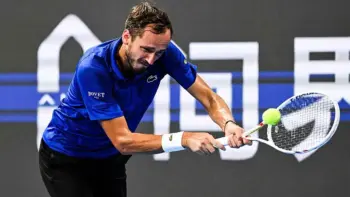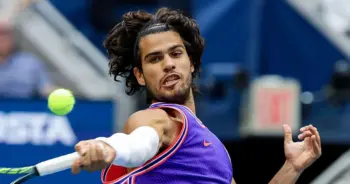
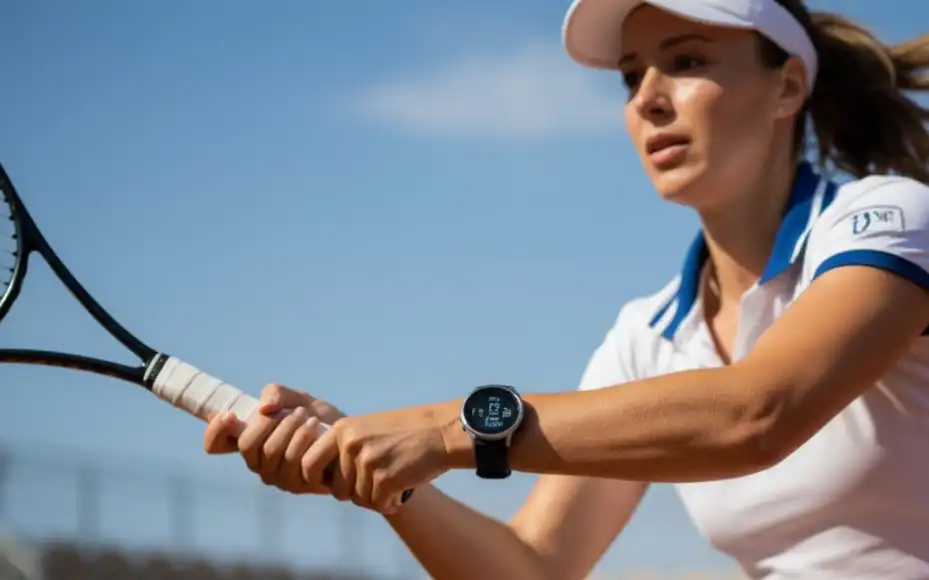
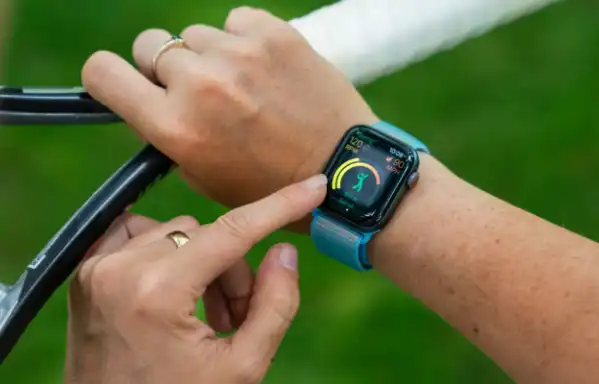
Tennis is still a lot about traditions, but technology is quietly pushing performance boundaries, and not only when it comes to racquets. While Hawk-Eye handles line calls, your AI-powered ball machine trains with you, another revolution is also unfolding – wearable technology for players.
From smartwatches to miniature sensors, elite and semi-elite players are increasingly leveraging these devices to get data that can improve training, recovery and even match strategy.
Let’s look more into details of how this works and what data can be collected from these devices for now.
The Physiology “Black Box”: Heart Rate, Recovery and more
If there’s one data point nearly every player collects, it’s heart rate. Whether through a chest strap or a smartwatch, it’s the foundation of modern training. But the real insight comes from tracking heart rate trends over time, not just in isolation.
Training Load: Coaches use heart rate zones to quantify how hard an athlete is really working. Are they hitting the right intensity to build endurance or speed, or just spinning their wheels?
Recovery Metrics and HRV: Many wearables now track Heart Rate Variability (HRV), the variation between heartbeats, as a window into recovery and nervous system readiness. A higher HRV generally means the body’s primed to perform; a low HRV might signal fatigue or overtraining. The key is reading it in context, alongside other trends of course.
Sleep Quality and Staging: Most top players already track sleep, not just duration, but quality. Devices estimate light, deep and REM cycles using motion and pulse data. It’s not exactly medical-grade accuracy, but it’s enough to see patterns that might affect your performance.
Extra Metrics: Today’s devices go well beyond heart rate though. They track resting HR, breathing rate, oxygen saturation and even skin temperature.
Modern recovery-focused wearables can run for days, monitor ECG signals and flag potential health issues early. Still, the predictive power of these metrics ( especially for injury prevention) remains an evolving science. Coaches use them as guides mostly.
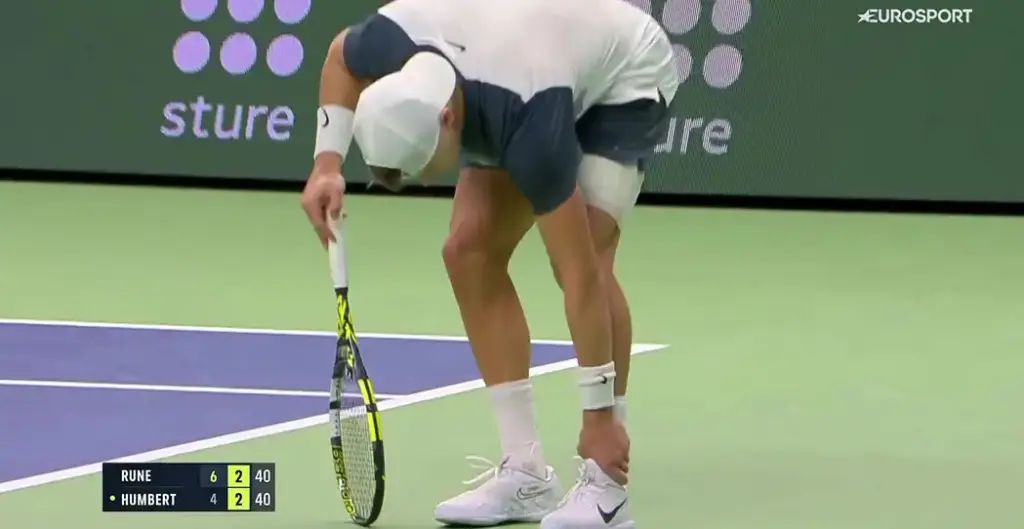
Movement Analytics
On the court, data gets even more interesting. In training, small motion sensors (called IMUs – inertial measurement units) inside wristbands, racquet handles or apparel can get the fine details of every swing and movement.
Stroke Metrics: These sensors measure racquet head speed, swing plane, spin rate, impact point and consistency across sessions. Small dips in racquet speed late in practice, for instance, can show fatigue before it’s visible.
Movement Analysis: Wearables and smart court systems track acceleration, deceleration, sprint bursts and change-of-direction forces. This gives coaches hard data on how efficiently a player moves and whether fatigue affects their footwork or recovery time.
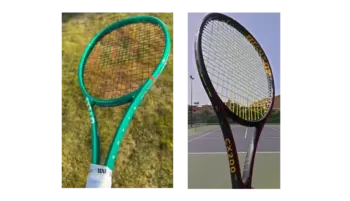
And now, sensor-integrated racquets, from brands like Babolat and Wilson, are stepping things up. They record real-time stroke data directly from the racquet, giving insights on spin, power and impact location without extra attachments. These racquets have been approved for competition use by the ATP, marking a shift in how technology and live play intersect.
For years we’ve been seeing players wearing smart vests with fitness tracking sensors during training but nowadays they are smaller and close to invisible.
Real-Time Coaching and Feedback
For years, tennis had strict limits on mid-match coaching. But that’s starting to change. The ATP and WTA now allow certain wearables and analytics tools during matches, enabling coaches to monitor live data and provide limited real-time feedback. That could mean adjusting tactics based on movement intensity, or knowing when a player’s heart rate suggests they’re pushing into fatigue territory.
Metabolic, Biochemical and Predictive Health Data
So what’s coming next? Now it seems to be moving from external sensors to internal insights.
Continuous Glucose Monitoring (CGM): Originally designed for medical use, CGMs are now helping some athletes fine-tune nutrition by ensuring energy levels stay steady through long matches or intense training blocks.
Sweat Biochemistry: Prototype wearables can analyze sweat composition to monitor hydration and electrolyte loss in real time. Knowing exactly when and how much to rehydrate could be a match-saver during summer tournaments.
Muscle Oxygenation: Near-infrared sensors (NIRS) can measure oxygen levels in muscles, helping identify localized fatigue before it becomes a strain or injury. These are mostly lab-based for now but are getting smaller every year.
Psychophysiology and State Monitoring: Researchers are exploring how to detect stress, focus and even “flow state” using biometric and AI models. Imagine knowing, in real time, when a player is starting to unravel.
Using the Data
Collecting data is easy. Making it useful? That’s the hard part.
Load Management and Injury Prevention: Coaches monitor training load, both internal (heart rate, HRV) and external (movement, stroke volume), to balance effort and recovery.
Performance Tuning: Stroke analytics help refine technique, while movement data optimises court positioning and energy conservation. The difference between a late forehand and a clean winner can literally come down to timing data from a sensor.
Personalised Coaching: No two players respond the same way to stress, travel or training. Wearables make it possible to tailor programs daily.
Avoiding Data Overload: With so much information available, one of the biggest challenges is avoiding “metric fatigue.” The smartest systems now summarise and prioritise, basically turning A LOT of data points into one clear recommendation.
Tactical Integration: Soon, we’ll see wearable data combined with live match analytics: for example helping players decide when to push, or how to adapt to an opponent’s tempo.
The Future: Smarter and more Integrated
We might be entering an era where nearly every serve, sprint and hour of sleep can be measured.
What’s next?
AI-Driven Insights: Advanced algorithms will help translate biomechanics into plain-language feedback players and coaches can act on immediately.
Smaller, Seamless Sensors: Textile-based wearables and ultra-light sensors embedded in tennis gear will make tracking invisible and easier to use.
Full-Body Data Fusion: The ultimate goal: integrating biomechanical, physiological, and psychological data into one easy model.
What’s your take on these developments, is it too much already? Give your opinion in the comments below.