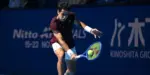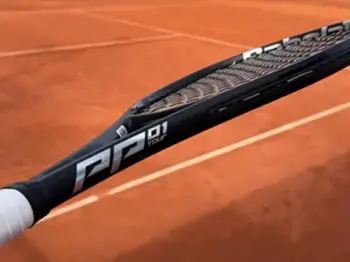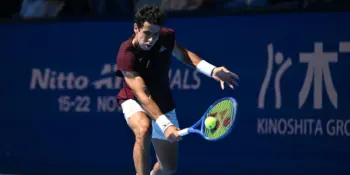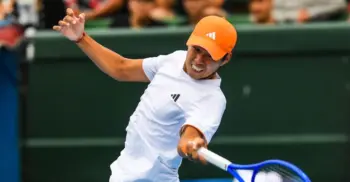
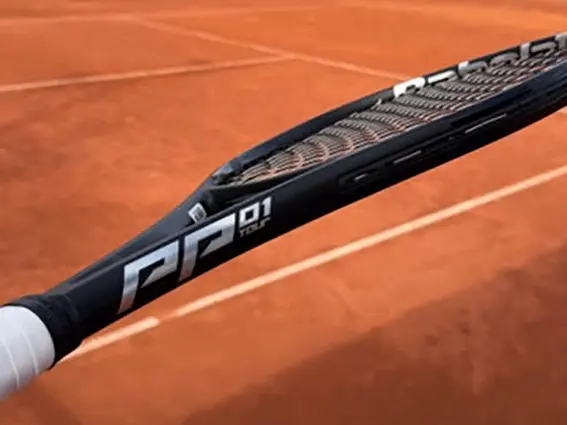
Babolat is working on something very different. You might already have spotted this unusual-looking racquet in the hands of players such as Diego Dedura-Palomero and Hugo Blanchet. The prototype is currently called the Babolat PP01, and I’ve now had the chance to test both the regular version and the heavier Tour model.
And yes, the head shape looks strange. It reminds me a little of an old Fox/Bosworth racquet mixed with something from the Yonex Muse school of unconventional head shapes. Whatever comparison you want to make, this is clearly not another traditional oval Babolat frame. The PP01 has a 100 sq inch head and an 18×18 string pattern, which already tells you Babolat is trying something different here. After my first proper sessions with both versions, I’m still trying to figure out exactly what that something is, but I am curious to find out more.
A Racquet You Need to Learn
My strongest first impression is that the PP01 requires some adjustment. The unusual head shape changes the way you perceive the contact point and sweet spot, and I found myself wondering whether I should strike the ball exactly in the centre or slightly higher in the string bed like many modern racquets. That uncertainty made the racquet feel somewhat unpredictable at first, but it got better as I hit more with it. It could simply be an adaptation issue, and I think you need to spend quite a bit of time with this frame before you really understand how it wants to be played.
But I like that Babolat has taken a risk. Tennis racquets are traditionally quite conservative products, and players like familiar shapes, familiar cosmetics and familiar concepts. The PP01 is clearly trying to challenge some of those conventions. Whether players will embrace it is another question.
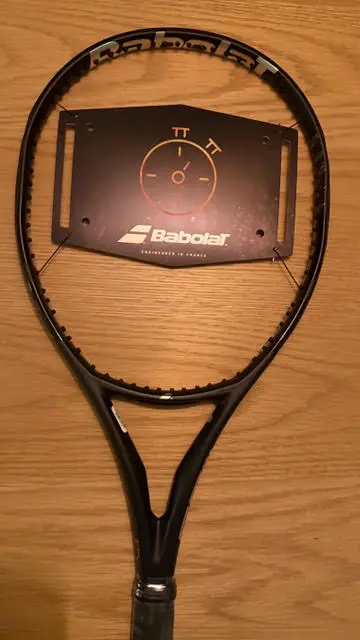
Regular PP01 vs PP01 Tour
I tested two versions. The Tour is the heavier racquet and the one I initially found more difficult. My sample had a strung swing weight somewhere in the strung 330 range, which is at the upper range of what I like for a 100 sq inch racquet. But you get more power and stability with the Tour version over the regular PP01. The stability of these racquets is perhaps the most impressive feat; you never feel like the racquet will twist on off-center shots.
My hitting partner Alex actually preferred the Tour. He liked the additional mass in the head and felt it gave him more control and stability, which makes sense since he generally prefers slightly heavier racquets. I preferred the lighter PP01, which was more user-friendly for me and easier to move around. Measuring the swing weight on my Metortune, it was still 327 strung with Yonex PolyTour Pro, so not a light racquet, but pretty maneuverable. Despite the unusual appearance, neither racquet felt particularly cumbersome through the air. The Tour has considerable substance, but it didn’t feel as clunky as you might expect from looking at it.
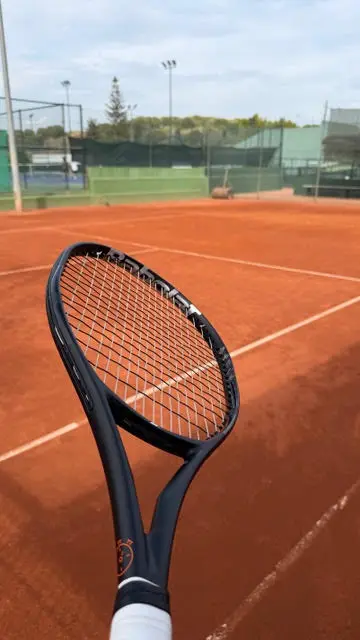
How Does the PP01 Play?
This is where things become difficult to describe, because the PP01 doesn’t immediately fit into an obvious Babolat category. It’s not a Pure Aero, it’s not a Pure Drive, and it doesn’t really feel like one of the extremely flexible, comfort-oriented racquets from other brands either (Clash or Muse). The best comparison I can make is that there’s perhaps a little of the Speed-style all-round character in there.
Power is moderate. There’s some free depth, but nowhere near the level of a Pure Drive or Pure Aero. The launch angle is also relatively low, and that became one of the clearest characteristics during the test.
Very Good for Flatter Ball Striking
Players who hit through the court with relatively flat strokes might find the PP01 particularly interesting. When I flattened the ball out, the racquet behaved very well. The 18×18 pattern and lower trajectory gave me confidence when driving through shots, and during our warm-up, with both of us using PP01 racquets, we barely missed a ball for quite a while. The control on flatter strokes was impressive for a 100 sq inch racquet.
You can still generate spin, but this is definitely not a racquet that naturally produces the high, aggressive launch you get from something like a Pure Aero. That became more obvious when attacking short balls. When I wanted to get underneath the ball, create more shape and lift it aggressively over the net, I struggled more, and I hit the tape quite a few times on attacking shots and approaches. So far, I’d say flat hitting is very good, while heavy topspin attacking feels less natural. That doesn’t mean you can’t play spin with it, but the racquet seems to reward driving through the ball.
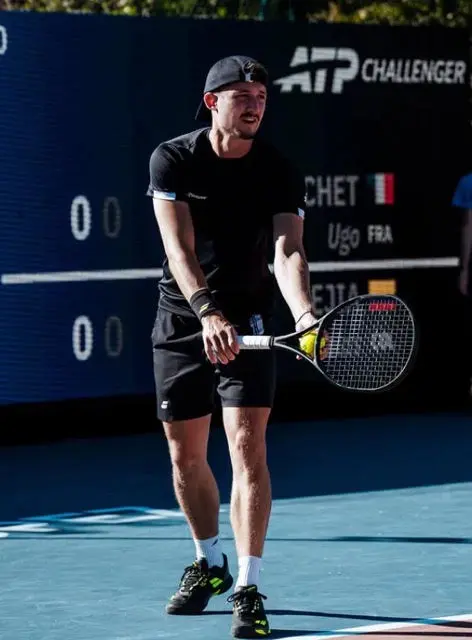
Stability Might Be the Big Story
One characteristic stood out more and more as I played with the PP01, and that’s stability. The racquet handles incoming pace extremely well, which makes me wonder whether one of the main ideas behind this frame is modern baseline tennis: big hitters standing deep in the court, absorbing heavy shots and redirecting pace.
Defensively, I thought the PP01 was excellent. When I was stretched or under pressure and needed to hit a passing shot or redirect a difficult ball, I could find my targets surprisingly well, and the sweet spot felt quite forgiving. For me, this might eventually become the defining characteristic of the PP01: a stable racquet designed to deal with the increasingly heavy ball you see in modern tennis. That would also make sense when you look at the professionals currently testing or using the frame.
What About Comfort?
Another pleasant surprise was comfort. Babolat racquets have historically had a reputation for being relatively firm, but the PP01 doesn’t feel like a stereotypically stiff Babolat. There’s noticeably more flex here. It still has a slightly metallic (vibrational) response that reminds me somewhat of recent Pure Aero racquets, but overall it feels softer and more flexible.
I didn’t experience any significant discomfort while testing it, which is particularly relevant for me because I’ve had wrist issues with certain racquets, including the Pure Aero 98 2023 (which I love dearly despite it). So far, the PP01 has been considerably friendlier to my wrist, and that’s a definite positive. It isn’t ultra-flexible in the way something like a Clash can be, though, and there’s still enough firmness in the response to keep the ball moving through the court.
Feel and Pocketing
Feel is another difficult category. I wouldn’t describe the PP01 as having a classic Prestige-style sensation, but the ball pocketing is quite pleasant. There’s enough flex and dwell time to make the racquet feel comfortable without it becoming excessively muted or disconnected.
Again, this is one of those frames where I think my description will evolve after another ten hours of play. My reaction after the first session was essentially “interesting,” and I probably said that word twenty times during the YouTube members video. But it really is the best description.
String Setups
In the Tour version, I tested a hybrid of Vamos in the mains at 53 lbs and RPM Blast 1.25 in the crosses at 51 lbs, while the lighter frame was strung with Yonex Poly Tour Pro at approximately 53 lbs. Both setups worked reasonably well. My early feeling is that you probably don’t want to string the PP01 too loosely, as there’s enough power and movement from the string bed that it could become somewhat lively if you drop the tension too far. The low-50-pound range felt sensible during these first tests, though I’ll obviously experiment more.
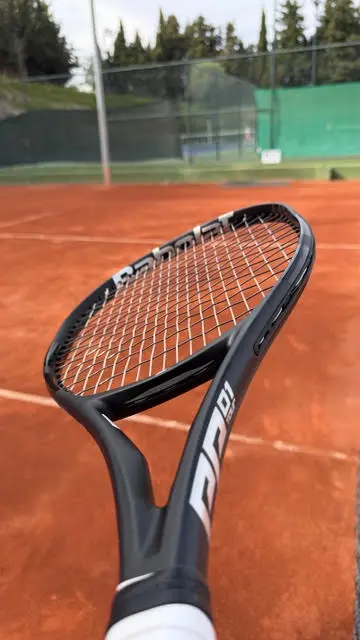
One-Handed Backhand and Serve
A lot of Tennisnerd readers play one-handed backhands, so this is always worth mentioning. I actually liked the PP01 on the one-hander. The forgiving string bed helped, and despite the unusual head shape, I didn’t struggle to move the racquet through the shot.
Serving was also decent. I wouldn’t call it an exceptional serving racquet based on my first sessions, but I hit some aces and served perfectly well with it.
Who Is the PP01 For?
This is the question I still can’t answer, and perhaps that’s what makes the racquet interesting. It doesn’t feel like Babolat has simply created another racquet for an existing category. Instead, the PP01 seems to sit somewhere between several concepts. You get a forgiving 100 sq inch head with an unusual 18×18 string pattern, relatively low launch, good stability and moderate power. On top of that, there’s more flex than in a typical Babolat, strong performance when absorbing heavy pace, and surprisingly good manoeuvrability considering the shape. That combination isn’t something we see every day.
My current theory is that Babolat might be looking at where professional and high-level baseline tennis is heading. Modern players need to handle lots of pace from the back of the court. They need stability, forgiveness and the ability to defend, but they also need racquets fast enough to react quickly. Viewed through that lens, the PP01 makes quite a lot of sense. Whether that concept translates well to the recreational market remains to be seen.
The Shape Will Divide Opinion
There’s also the obvious elephant in the room: it looks weird. Tennis players can be extremely traditional when it comes to racquets, and a lot of them want a classic oval head, a clean cosmetic and something that looks like the racquets they already know. The PP01 is definitely not that. Some players will probably dismiss it simply because of the shape, while others will appreciate that Babolat is willing to experiment.
Personally, I like seeing brands try something genuinely different. We get a lot of racquet updates where the specifications change slightly and the paint changes considerably. This is not one of those updates. Babolat is clearly exploring a different idea.
First-Impression Verdict
The PP01 wasn’t love at first hit, but it wasn’t a disappointment either. It made me curious. The lighter version worked better for me initially, while players who prefer more mass and stability might gravitate toward the Tour.
The biggest positives so far are stability, comfort, flat-ball control, forgiveness and defensive performance. The biggest question marks are the unusual contact sensation, the lower launch angle on attacking shots, and exactly which type of player Babolat is designing it for.
I need much more time with these racquets before reaching any firm conclusions. I’ll also be visiting Babolat HQ, where I hope to learn more about the thinking behind the PP01 and what they’re trying to accomplish with this unusual design. Until then, I’ll keep playing with both versions, including some competitive points and match play.
This might end up being one of the more interesting racquet releases we’ve seen in a while. Not necessarily because it’s immediately one of the best racquets, but because Babolat appears to be asking a different question about what a modern tennis racquet should be, and I’m very curious to hear their answer.
Make sure to subscribe to our YouTube channel, newsletter and check back to the site often for more tennisnerd content :)