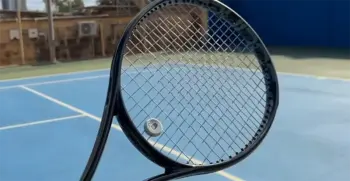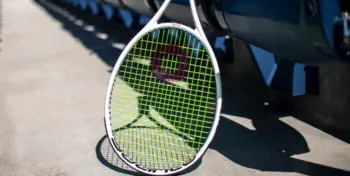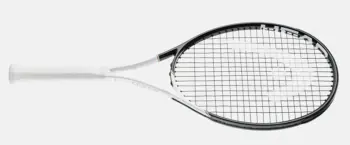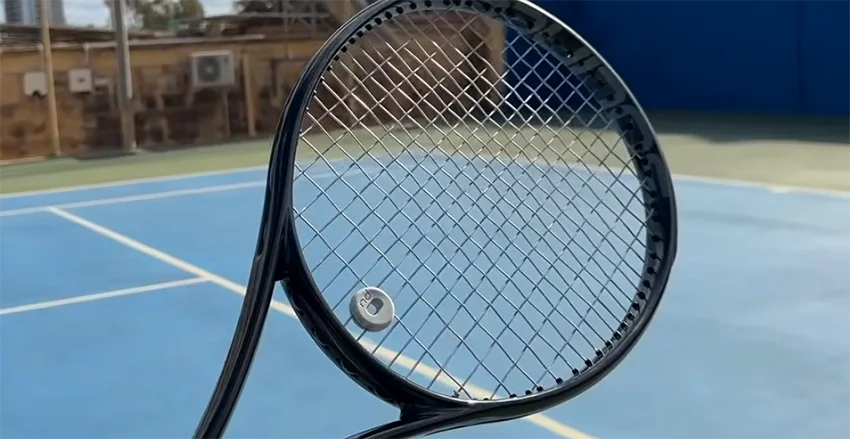
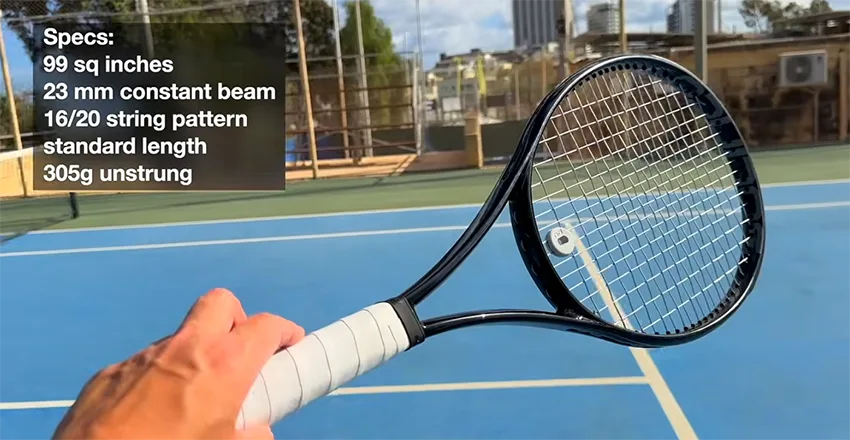
The Solinco Chroma is the best racquet Solinco has made so far, and I can say that without hesitation. It’s a 99 sq in, 16×20 frame with a 23 mm beam that sits right between power, spin, and control. It suits flat, aggressive hitters better than heavy-topspin baseliners.
I’ve been playing a Pro Stock prototype of the Chroma, more or less exclusively for the last week. The retail version is coming soon, or may already be out by the time you read this, so treat the specs below as prototype numbers until we can measure a retail frame. Tennis Warehouse has also been running a playtest of the Chroma prototype, so expect more opinions to land soon.
Quick verdict: a modern, slightly lively control frame with real power. It takes some time to dial in, but it gets better the more you play with it. For me, it’s edging into switch-worthy territory.
Specs and where it fits in the Solinco lineup
The Chroma slots between the power-and-spin Blackout and the precision-focused Whiteout. It’s a 99 rather than a 98 or 100, with a beam closer to the Blackout and a denser pattern than either.
| Spec | Chroma (prototype) | Whiteout V2 305 16×19 | Blackout V2 300 |
|---|---|---|---|
| Head size | 99 sq in | 98 sq in | 100 sq in |
| String pattern | 16×20 | 16×19 | 16×19 |
| Beam | 23 mm | 21.7 mm | 23.5 / 26 / 23 mm |
| Swingweight (strung) | ~328 (as tested, no added weight) | 328 | 317 |
| Strung weight unstrung | 305g | 323g | 320g |
| Stiffness (RA) | TBC on retail | 64 | 66 |
I haven’t added any lead to the prototype. It plays well as is, with enough balance that the racquet does some of the work for you.
Groundstrokes: built for hitting through the court
From the baseline, the Chroma rewards flat, penetrating swings. I like to hit through the court, and this frame lets me swing out with confidence and trust the racquet to bring the ball down.
The 16×20 pattern is the key decision here. I’ve always said the Steam 99 needed a denser pattern than its 16×18, and it feels like Solinco listened. You still get access to spin from the 16 mains, while the 20 crosses keep the center of the string bed under control. It’s not 18×20 precise, but it does the job.
Power is medium, helped by the 23 mm beam. The response is fairly even through the middle of the stringbed and opens up toward the edges.
Spin players get decent spin potential, but this isn’t the heavy-topspin baseliner’s dream. It feels a bit slower through the air than the more aerodynamic spin frames on the market.
Serve, volleys and touch
The Chroma has no real weak area, though serving isn’t its biggest strength. I can serve decently with it, but it’s not my biggest serving weapon.
At the net it’s very stable on volleys. The touch shots are where it surprised me most: I can put drop shots on a dime. The slice stays low and controlled, and the frame handles heavy topspin and flat drives just as well.
Feel, stability and the one catch
The feel on impact is very nice, at least on this Pro Stock prototype. It feels fast through the air for a 23 mm beam, and it’s stable enough to drive through the ball.
The catch is the stringbed. It’s livelier than some people will like, and if you’re a bit late on the ball it can give you a surprise. You need your contact point dialed in. When I switch between racquets, I notice a little more inconsistency from the Chroma than from the average control frame. That’s the trade-off for the extra power and spin.
This is a racquet you need to give time. Find the right string setup, maybe add some weight, and it starts to shine.
How it compares
If you’ve played a Steam 99 or a Wilson Ultra Pro 99, you’ll feel at home with the Chroma. It has the same confidence to swing flat. To me those frames were a little flyy, with too open a string bed in 16×18. The Chroma’s 16×20 tightens that up without killing the spin.
| Racquet | How the Chroma compares |
|---|---|
| Steam 99 (16×18) | Similar medium power and flat-hitting feel; Chroma’s 16×20 gives more center control and less fly |
| Wilson Ultra Pro 99 | Same swing-through-the-court character; Chroma feels a touch more controlled |
| Solinco Blackout V2 | Blackout is the spin-and-power option; Chroma is more control-oriented and more modern in feel |
| Solinco Whiteout V2 | Whiteout is the precision frame; Chroma adds power and spin while staying in control territory |
| Aero-style spin frames | Chroma is slower through the air and less spin-friendly; pick those if heavy topspin is your game |
The Blackout and Whiteout were both good racquets. The Chroma just feels like the most modern frame Solinco has made, and the most interesting racquet for advanced players.

Who should play the Solinco Chroma?
The Chroma is for 4.0 NTRP and up, and especially for flat hitters who want a bit more power and spin from a control racquet. Some intermediate players will find it challenging to swing. If you want maximum forgiveness, or you build your game on heavy topspin, look elsewhere.
Pros
- Excellent blend of power, spin and control for a 99
- 16×20 pattern fixes the flyy feel of 16×18 frames
- Very stable on volleys, great touch on drop shots
- Swing-through-the-court confidence for flat hitters
- Plays well stock, with no added weight needed
- Blacked-out cosmetics are a stunner
Cons
- Lively stringbed punishes late contact
- Less consistent than a classic control frame when switching racquets
- Not the most aerodynamic or spin-friendly
- Not a big serving weapon
Verdict
The Chroma isn’t a crazy home run. Players who have tried it with me see the potential but aren’t sure it’s switch-worthy. For me, it is edging there. It suits my game, it gets better with every session, and I’ll keep playing it. Give it time, find your string setup, and it lands in a sweet spot between the power, spin and control categories.
More to come when the retail version is out and I can measure it.